SEC Clears a Path for Tokenized Stocks After Clarity Act Stumbles
 EleanorTerrettUpdated 2 months Ago3 Mins read

In brief
- Days after the Clarity Act stalled in the Senate, the SEC rolled out an “Innovation Exemption” letting qualifying “Tokenized Securities Venues” trade tokenized U.S. stocks via automated market makers on permissionless blockchains without registering as national exchanges; it takes effect immediately for up to five years.
- The exemption covers only genuine tokenized stocks carrying full rights like dividends and voting—not offshore-popular “synthetics”—and lets issuers object within 30 days to third-party tokenization of their shares.
- Officials framed it as a temporary bridge toward permanent rulemaking; observers say it could push DeFi platforms into direct competition with traditional exchanges.
The Securities and Exchange Commission is wasting no time plowing ahead with more of its own crypto agenda following the Clarity Act’s failure to advance in the Senate this week.
This morning, the agency rolled out one of its most highly anticipated crypto initiatives: an exemption that will provide a compliant pathway for bringing tokenized U.S. equities onchain as tokenization gains momentum across traditional finance and crypto.
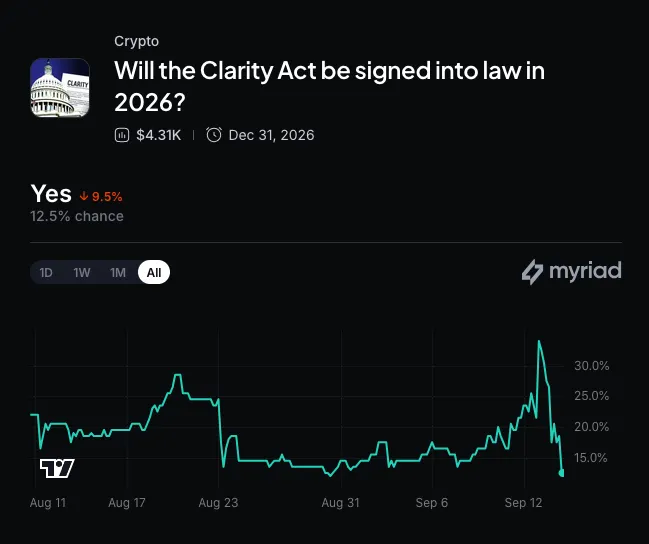
“Earlier this week, Congress was unsuccessful in advancing the CLARITY Act despite the tireless efforts of many,” SEC Chairman Paul Atkins said in a statement. “So today, the Securities and Exchange Commission is taking a significant step forward, within its statutory authority, to bring America’s capital markets into the digital age by facilitating onchain trading of certain tokenized stocks through the ‘Innovation Exemption.’”
How it works: According to SEC officials, qualifying platforms, known as Tokenized Securities Venues, or TSVs, will be able to facilitate trading in tokenized versions of U.S.-listed stocks using automated market makers, or AMMs, and liquidity pools on public, permissionless blockchains without having to register as national securities exchanges.
Certain firms supplying liquidity to those markets will also receive separate relief from dealer registration requirements.
But there are important limits.
The exemption, which takes effect immediately and lasts up to five years, only covers actual tokenized stocks carrying the same rights as their traditional counterparts, including dividends and voting rights. It excludes so-called “synthetics” that only track a stock’s price, products that have gained traction on offshore crypto trading venues but drawn significant pushback from traditional Wall Street firms.
Although the TSV will operate on a permissionless blockchain, access to the trading venue itself will be permissioned, meaning users and liquidity providers must meet the TSV’s eligibility requirements to participate. The SEC will not individually approve each TSV. Instead, a firm that meets the requirements can notify the Commission and operate under the exemption, subject to its conditions.
The SEC is also starting small, with limits on both the number of stocks each TSV can offer and how much of any individual stock’s daily trading volume can take place on the venue.
Perhaps most importantly, the exemption allows an unaffiliated third party to tokenize a public company’s stock, but the issuer gets the final say over whether it can trade. A TSV must notify the issuer and give it 30 days to object. If the company says no, the tokenized shares cannot trade on the venue.
Chris Hayes, executive director of the Coalition for Tokenized Markets and a partner at Thorn Run Partners, pointed to the issuer protections as a positive step, saying the ability of companies to object to unauthorized third-party tokenization, coupled with requirements that investors receive the same rights as traditional stockholders, “should help curb synthetic tokenization and give investors greater clarity about what they are buying.”
The potential impact could extend well beyond the relatively small tokenized stock market today.
“The innovation exemption could put DeFi trading platforms and liquidity pools in much more direct competition with traditional exchanges and alternative trading systems, while operating under a more flexible regulatory framework,” Hayes said. “That could encourage more traditional market participants to move activity into tokenized markets and help accelerate adoption.”
SEC officials described the exemption as a temporary bridge toward permanent rulemaking and potentially future legislation from Congress.
Daily Debrief Newsletter
Start every day with the top news stories right now, plus original features, a podcast, videos and more.






How Wall Street Is Racing to Claim the Onchain Dollar
In brief Wall Street’s push into stablecoins has accelerated sharply, led by...
Bitcoin ETFs Lose $2.1 Billion in November as Outflow Streak Hits Seven Days
In brief U.S. spot Bitcoin ETFs lost about $829 million this week,...

CZ denies Binance sold crypto as Bitcoin bounces from four-month low near $62,000
The price moves across the market led to $2 billion in crypto...
Traders claim $6 million profit by spotting BitGo’s public pull request and frontrunning memecoin listing
A public BitGo code change on July 27 added support for Cash...