Canada Will ‘Never Be the 28th State’ of EU, Poilievre Says
 The Canadian PressUpdated 2 days Ago1 Mins read
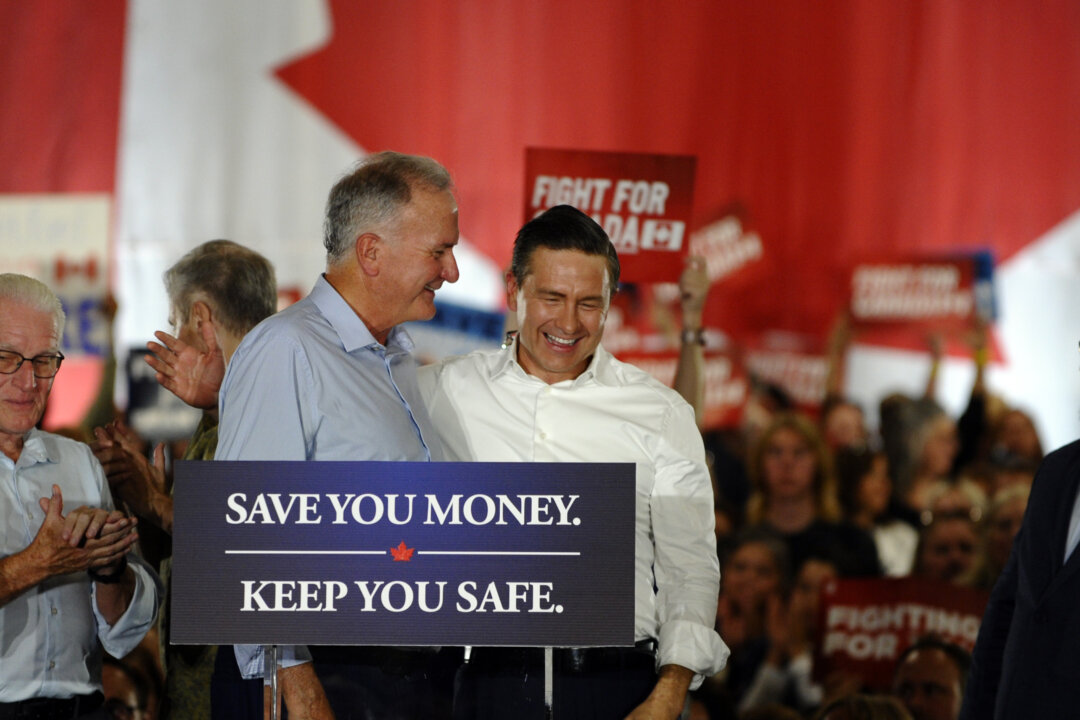

Conservative Party Leader Pierre Poilievre appears with Brantford Mayor Kevin Davis at a rally in Brantford, Ont.,on Sept. 20, 2026. The Canadian Press/Ian Stewart
BRANTFORD—Pierre Poilievre is doubling down on his objection to Canada becoming an associate member of the European Union.
During a rally in Brantford, Ont., on Sunday, the Opposition Conservative leader said Canada will “never be the 28th state” of the EU.
His comments come as Prime Minister Mark Carney pursues deeper ties with Europe amid a trade war with the United States.
During a visit to the European Parliament last week, European Commission President Ursula von der Leyen said she wants Canada to become the first “associate member” of the EU.
Carney has said he welcomes von der Leyen’s ambitions for Canadian partnership but the nature of the new arrangement has yet to be determined.
Poilievre told a crowd of Conservative supporters on Sunday that Canada already has a free trade agreement with Europe and close defence ties with the continent through NATO, but he doesn’t support European taxes, laws and what he called “reckless European-style immigration” being brought to domestic shores.
He said last week that decisions for Canada “must not be made in Washington, Beijing or Brussels, but by Canadians here at home.”
Carney has said he’s interested in expanding a number of ties, including opportunities for young people, and an integrated market for financial services. The prime minister has also said the House of Commons will debate and vote on the partnership.
Back in Brantford, Poilievre also reiterated his criticism of Carney and the reigning Liberals on affordability as Canadians struggle with high housing and grocery costs. He promised more gas tax breaks and cuts to foreign aid and federal spending on consultants.
He also announced the Conservatives will put forward Brantford Mayor Kevin Davis as their nominee in the newly-vacated riding of Brantford-Brant South.
Former Conservative MP Larry Brock, who attended Sunday’s rally, held the seat for five years before resigning to rejoin the Crown attorney’s office. Brock is the seventh Conservative to leave the party since the last election, four of whom crossed the aisle to join the Liberals.






EU Removes 2 Russian Oligarchs From Sanctions List
Ambassadors of the European Union’s 27 member states removed three people and...
EU Strikes Free Trade Deal With Philippines in Bid to Ease Reliance on Major Powers
The European Union has struck a new free trade deal with the...

Russia Plans Tax Changes to Help Businesses Hit by Ukrainian Drone Attacks
Russian Deputy Finance Minister Alexey Sazanov said on Monday that the country...

Morocco Goes to the Polls After Its Young People’s Mass Attempt to Reach Europe
RABAT, Morocco—Morocco, a close U.S. ally, elects a new Parliament on Wednesday...