One in Six French Fuel Stations Runs Short as Diesel Prices Soar
 Owen EvansUpdated 1 day Ago3 Mins read
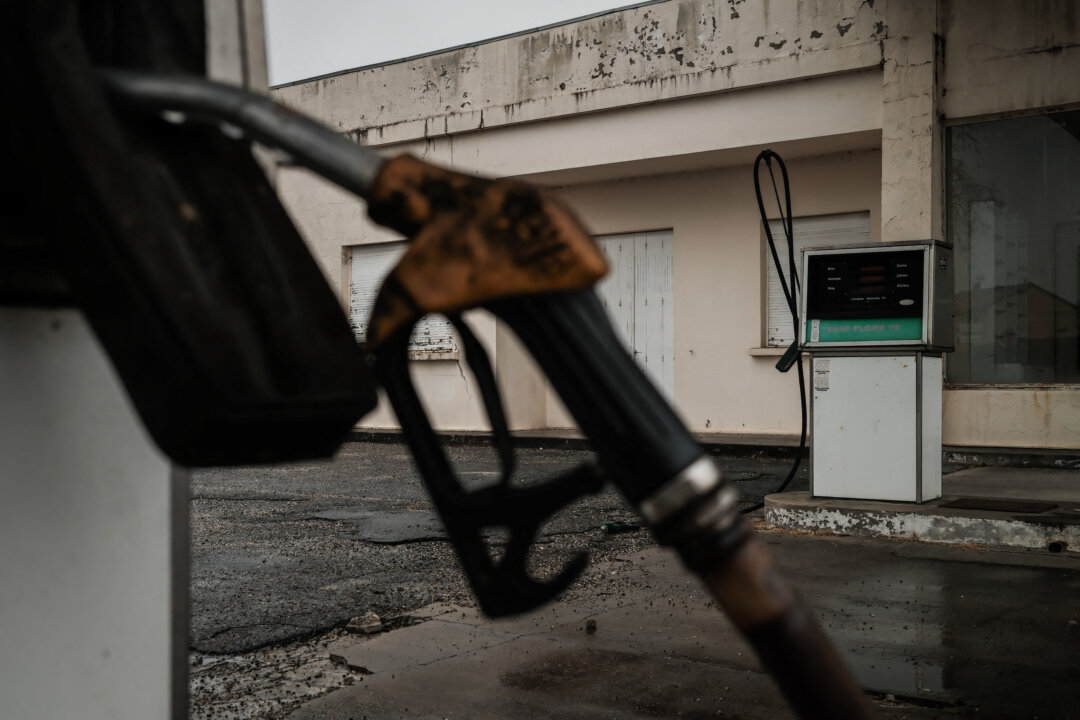
Official French pump data on Monday showed that 16 percent of stations are short of at least one main fuel, diesel or petrol.
That was slightly better than Sunday evening (17 percent) but worse than Friday (13 percent). About 9,900 stations are in the count, according to prix-carburants.gouv.fr.
Shortages were worst this morning in Pays de la Loire (20 percent); Grand Est (19 percent); Île-de-France, Centre-Val de Loire, and Normandy (18 percent); Nouvelle-Aquitaine (17 percent); and Brittany, Hauts-de-France, and Occitanie (16 percent).
Conflict in Iran and Russia has severely disrupted diesel supplies, draining inventories to historic lows and sending prices to record highs.
European diesel inventories are low.
Stocks in the Amsterdam-Rotterdam-Antwerp storage, refining, and trading hub were 16 percent below the five-year average in July, according to the latest data available from Insights Global.
French newspaper Franceinfo on Monday calculated that the national average diesel price is about 2.41 euros ($2.64) a liter, which it said is an increase of 41 percent from the prices charged on the eve of the outbreak of the war in the Middle East, on Feb. 28 this year.
French President Emmanuel Macron responded to the pressure after an emergency security meeting with the party leaders in the Elysée Palace on Sept. 18, when he was asked whether the French will have to prepare for a higher diesel price that could go toward 2.50 euros ($2.87) by the end of the year, or even toward 3 euros ($3.44).
“The situation we are experiencing today on pump prices, as on all fossil hydrocarbon prices, is not the consequence of government decisions; it is the consequence of the geopolitical situation,” said Macron.
He said that the government “protected the French people enormously, much more than elsewhere in Europe, during the COVID-19 crisis as well as during the energy crisis we suffered, which was also imported and was the result of the Russian war in Ukraine.”
“Today, we also have a responsibility regarding public finances,” he said.
“Therefore, those who deplored the consequences of past measures shouldn’t turn around and ask us to do the exact same thing again.”
He said that before spending a maximum amount of money, which will translate “into either a larger deficit or higher taxes,” France has to address the root causes by pushing for peace and reopening trade routes.
France has a long record of mass strikes when fuel prices start to bite.
For example, the Gilets Jaunes (Yellow Vests) movement started in autumn 2018 over a diesel and carbon-tax rise, when diesel fuel was about 1.45 to 1,47 euros a liter, compared to 2.30 euros today.
The protesters, who wore the fluorescent jackets that French motorists are required by law to carry in their car, developed into a broader revolt against the government that mobilized tens of thousands each weekend.
On TikTok, a “Yellow Vest 2026” account, followed by more than 10,000 people, called for demonstrations on Oct. 17.
The Epoch Times has not been able to independently verify whether demonstrations on this date are officially happening.
Left-wing groups said they would support this date.
The National Secretary of France’s Communist Party (PCF), Fabien Roussel, explicitly called for people to occupy roundabouts.
“I am calling for strikes at the roundabouts, in the workplaces … I will be there,” Roussel told the French news channel BFM on Sept. 12.
When asked whether he was going to the Oct. 17 protest, he said: “We must hear them and support them, and in fact, I call for a great union of all workers and all citizens beyond our differences, with trade unions, with political forces that choose to do so, whatever the vest: yellow, red, blue, or orange. Let’s unite.”
Manuel Bompard of the hard-left La France Insoumise (LFI) told France Info on Sept. 13 that he would also support upcoming yellow vest protests.
“I don’t know what form Oct. 17 will take, but if these strikes take off and become a popular movement, yes, the Insoumis [LFI] will be supportive and will be present in the mobilization,” he said.
Last year the “Bloquons tout” (“Block Everything”) movement became active in an attempt to bring France to a halt over major government spending cuts.
Protesters disrupted traffic and clashed with police, declaring their goal was to “block everything” in opposition to France’s political class.
In September 2025, the government deployed 80,000 police and gendarmes throughout the country.
Nearly 300 arrests were made amid scattered actions in cities including Paris and Marseille.
Reuters and Emmanuelle Bourdy contributed to this report.






At UN, Trump threatens Iran with ‘hell,’ then after reveals the two sides had ‘very productive’ talks
U.S. President Donald Trump addresses the United Nations General Assembly at the...
EU tells Zelenskyy to strengthen rule of law in Ukraine before any more monetary aid comes
Ukraine's President Volodymyr Zelensky meets with European Commission President Ursula von der...

Republican senator calls for probe into Trump family’s financial dealings
U.S. President Donald Trump with his son Donald Trump Jr. in May...
EU Removes 2 Russian Oligarchs From Sanctions List
Ambassadors of the European Union’s 27 member states removed three people and...