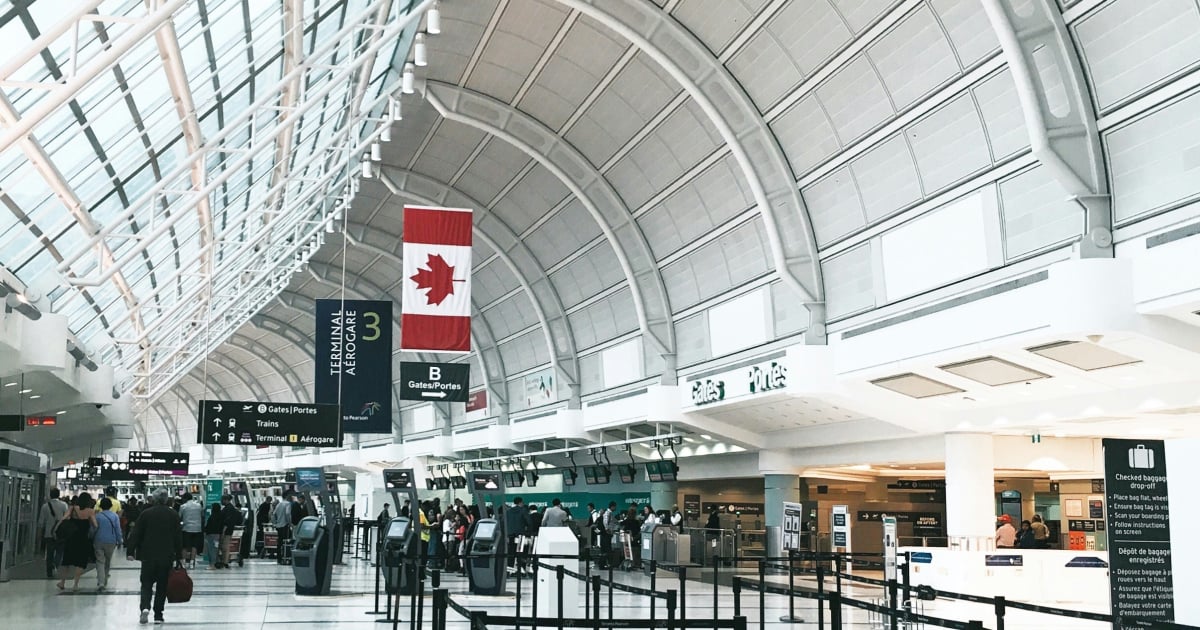
As Ottawa moves to privatize four of Canada’s biggest airports, one thing is missing from debate about the plan: climate.
Last week, Prime Minister Mark Carney announced that the federal government will seek private operators for Toronto Pearson, Montreal Trudeau, Calgary and the Vancouver airports. The plan would see Canada maintain ownership of the land, while private companies take over day-to-day operations. Details are expected in the coming weeks.
The announcement is already drawing pushback over costs and jobs. The NDP says it won’t support selling off “our airports, water systems, highways and more to the highest bidder.” The Canadian Labour Congress is urging Ottawa to reconsider.
But observers say the potential climate impact isn’t considered in the discussion.
“Private sector investors like US private equity firms, sovereign funds, even pensions, are driven to maximize profits, not make market concessions to improve customer experiences or reduce climate pollution,” said Richard Brooks, climate finance program director at Stand.earth.
Australia offers a preview of the proposed change. It privatized its major airports between 1997 and 2003, and a study in the Journal of Air Transport Management found the sell-off “unleashed an unprecedented development wave as corporate lessees implemented ambitious business plans.” By 2009, Australia’s own aviation policy white paper reported almost $2 billion Cdn already invested in new aviation infrastructure, with billions more planned.
A newer, larger study backs up the pattern. Published this year in the Review of Financial Studies, research analyzing 2,444 airports in 217 countries found terminal size grew 30 per cent on average after airports were bought by private equity investors.
London’s Heathrow Airport shows what that can mean for emissions. A Tyndall Centre for Climate Change Research report published this month found “no credible scenario” in which a proposed third runway at the privately-owned airport fits within Britain’s legally binding carbon budgets. The UK’s own climate advisers, the Climate Change Committee, said in a report published this month that the expansion would add 4.5 megatonnes of CO2 a year once complete in 2054 — nearly seven per cent of the country’s entire projected emissions that year.
“For developed countries, sustainable fuels and secure carbon removals aren’t in a place where we can increase airport capacities now without contributing to climate risks,” said Dr. Christopher Jones, a co-author of the Tyndall report.
David Macdonald, senior economist at the Canadian Centre for Policy Alternatives, doubts Canada will see the same kind of passenger growth. Its biggest airports already handle most of the country’s international traffic, he said, with no nearby rivals to steal passengers.
But Macdonald sees a different risk: private airport operators lobbying against high-speed rail to protect their own airline traffic.
“Once you’ve got private actors that have a profit incentive to run high-speed rail off the rails to maintain their airline traffic, you’re building a strong lobby against high-speed rail and other forms of lower-carbon transport,” he said.
It’s happened before. Heathrow’s former owner, BAA, set up a lobby group called Flying Matters in 2006 to make the case for airport expansion. The Guardian reported in 2009 that Britain’s transport department asked the group to help keep aircraft emissions out of the UK’s Climate Change Bill — something the group’s own chief executive confirmed, though the department denied it.
Something similar may already be underway in Canada. Air Canada — a major tenant at all four airports slated for privatization — has joined Cadence, one of the private groups bidding to build Canada’s Alto high-speed rail line between Toronto and Quebec City. Rail advocates have called the airline’s involvement “suspect,” pointing to its history of opposing high-speed rail on its most profitable routes. Air Canada didn’t respond to a request for comment in time for publication.
Brooks says Ottawa hasn’t said enough about how the airport deals will actually work.
“The announcement from Carney was so opaque and out of the blue that we have few details on whether a verbal deal has already been done, [or] if there are any restrictions or rules around these airport sales,” he said.
The Greater Toronto Airports Authority, which runs Pearson, said in a statement that it “recognizes the federal government’s plan,” pointing to the airport’s economic role. It didn’t mention emissions, expansion or any climate conditions.
Transport Minister Steven MacKinnon said the government plans “informal consultations with stakeholders” before finalizing the deal.
September 21st 2026