Toronto mayoral candidate Brad Bradford is promising to freeze property taxes for one year if elected, while criticizing incumbent Olivia Chow for raising them during her three-year tenure.
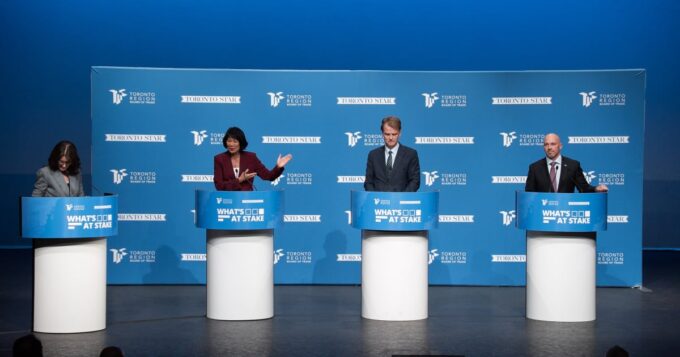
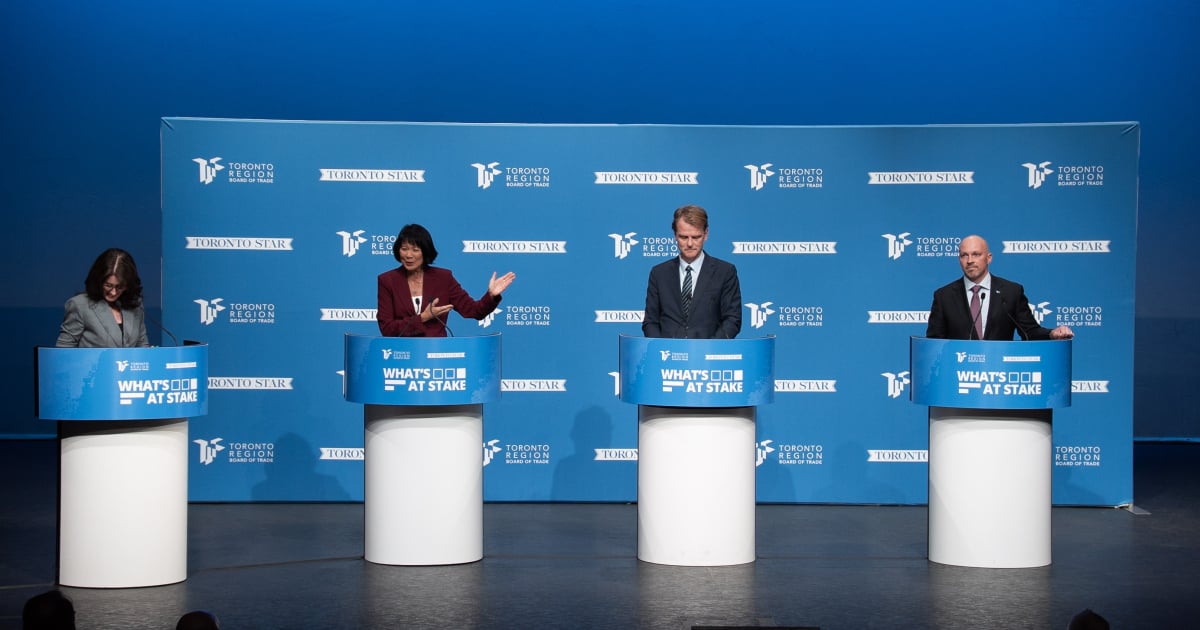
Bradford made the pledge Tuesday night at the Toronto mayoral debate moderated by Nicole MacIntyre, editor-in-chief of the Toronto Star. The event saw Chow, Bradford and Chris Alexander, a federal minister under former prime minister Stephen Harper, debate affordability, housing, transit and more.
In the 2026 budget, Toronto passed a 2.2 per cent property tax increase. In 2024, Chow supported a 9.5 per cent increase in property taxes to address an almost $2-billion deficit. She has promised to keep taxes at around inflation levels, while Alexander is also committed to a first-year freeze.
At the debate, Chow said she spent the last three years addressing the “mess” left behind by the previous administration, which included Bradford, on council since 2018.
Addressing Bradford, Chow said, “You were the vice chair of the budget committee… for four years, and you left us with a close to $2-billion hole in our budget. So you can’t run away from your record.”
A poll released Tuesday morning by Liason Strategies found that 47 per cent of decided and leaning voters supported Chow, while 40 per cent supported Bradford and 10 per cent were behind Alexander.
“Chow’s cushion is smaller. Her lead has gone from 11 points to seven, with Chow down three points and Bradford up one. It’s a closer result, but not enough to establish a new trend. Bradford has gained some ground without overtaking the mayor,” David Valentin, principal at Liaison Strategies, said.
On Wednesday, Ipsos also released a poll, which put Chow 15 points ahead of Bradford. That survey included an undecided option, which 30 per cent of respondents chose.
Bradford said he would find the cash needed to freeze property taxes (which make up about 30 per cent of city revenue) by conducting a “line-by-line review” of the city’s budget. The last external review was done under former mayor Rob Ford, cost $3.5 million and suggested cuts to library branches and ending water fluoridation. At the time, council voted against many of the cuts, but supported $26 million in reductions.
Bradford has also vowed to hire 1,000 more police officers, install platform-edge doors in subway stations (which are barriers between waiting areas and subway tracks) and refund transit fares after delays of 15 minutes or more.
The three candidates were also asked about data centres. MacIntyre noted that Mississauga has passed a temporary ban on new data centres, while Toronto “does not yet have a clear policy.” Alexander said the industry does need to be regulated, but “we need to be able to keep and process our data here.”
Bradford — who is using a campaign app that encourages supporters to post AI-generated comments — also did not say that he would support a data centre moratorium.
“It would be irresponsible to blindly oppose infrastructure projects that create jobs, support the internet and email — things that we use and rely on every day,” Bradford said.
Speaking after the debate, Chow also did not commit to a pause on data centres. She said the city is looking at recent guidelines from the federal and provincial governments.
“Data sovereignty is important, but also, not getting the costs onto ordinary folks, whether it’s hydro or water rate[s],” she said.
Strong mayor powers and congestion
MacIntyre asked if the candidates would use strong mayoral powers — which have been criticized for being undemocratic — to push forward a housing development that they felt was “important to the city.” Chow said no, while Alexander and Bradford said yes.
Also on housing, Chow said cutting development charges has made a significant impact, while Bradford criticized her for not making enough progress on the city’s target of 65,000 new rent-controlled homes by 2030. Since 2020, about 4,200 rent-controlled homes have been built, while nearly 35,000 homes under the plan have been approved.
Candidates were pressed on congestion and, specifically, the RapidTO program, which is attempting to make transit quicker in part through priority bus and streetcar lanes. Bradford, who has said he would remove bike lanes along Bloor Street West, said transit in the city isn’t “safe or reliable” and “some of those rapid bus lanes are not working.” He also said people aren’t using transit because some are “using drugs on their transit system.”
Chow said the city needs to increase transit signal priority (which adjusts intersection timing for buses and streetcars), touted the efficiency of rapid transit lanes and vowed after 10 rides a week, the rest would be free. She said 130 traffic agents now work in the city, up from two when she was first elected and traffic can “move so much faster.” She vowed to hire more.
The candidates also discussed whether Toronto should have been more involved in last week’s federal investment summit. Prime Minister Mark Carney wants to attract $1 trillion in investment to Canada over the next five years to finance major fossil fuel infrastructure projects and clean energy developments.
Bradford said Toronto should have proposed projects, while Chow said the summit was about resource development and the government pitching major investors, rather than municipalities asking the feds to support projects.
“We should have been present on the agenda at that Canada Investment Summit, but you’re not going to ask BlackRock to invest in Toronto transit,” said Alexander. He also asked Bradford if he wants to privatize the Toronto Transit Commission. Bradford said no.
Voting day in Toronto is Oct. 26.
September 23rd 2026