Trump, Rodriguez Discuss Venezuela Debt Overhaul, Rubio Says
 Guy BirchallUpdated 3 hours Ago3 Mins read
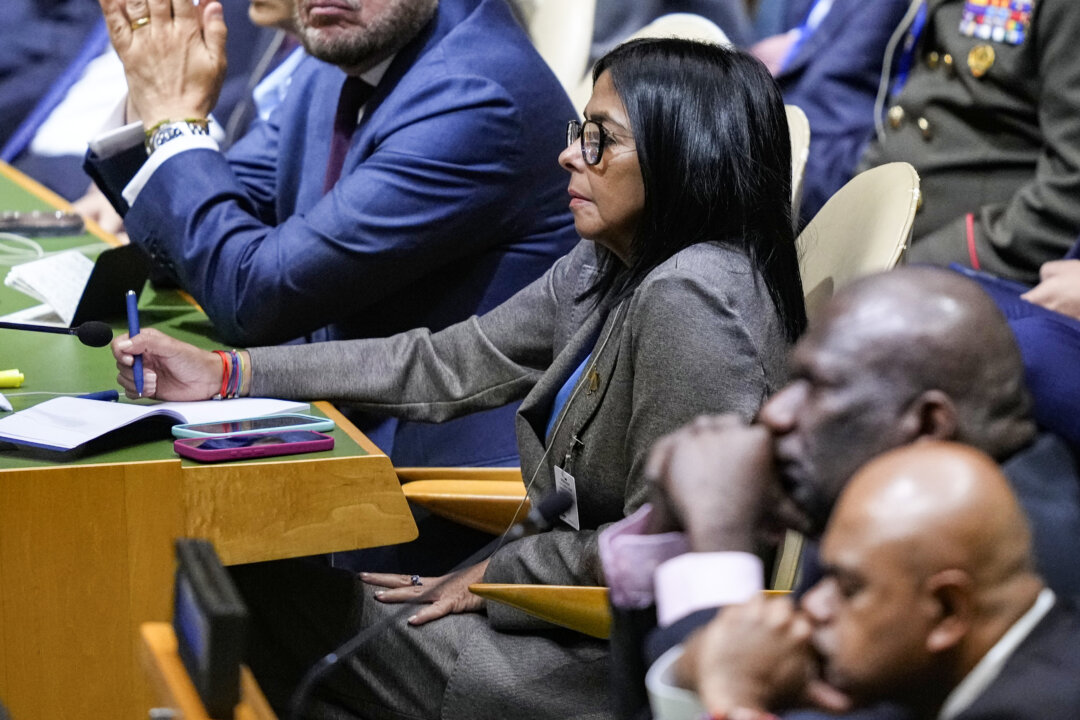
President Donald Trump and Venezuelan interim President Delcy Rodriguez talked about restructuring the country’s sovereign debt in a brief meeting on Tuesday night, U.S. Secretary of State Marco Rubio said on Wednesday.
The conversation happened on the sidelines of the United Nations General Assembly in New York City, in what marked Rodriguez’s first trip to the United States since the capture and rendition of the South American nation’s former leader Nicolás Maduro by American forces in January.
Since Maduro’s ouster, the Trump administration has been a prominent backer of the new government in Caracas, pushing to reconnect it with the world of international finance from which it had been cut off due to years of defaulting on its debts and U.S.-backed sanctions aimed at isolating the socialist regimes of Maduro and his predecessor, Hugo Chávez.
Rubio said that Venezuela has “probably the world’s largest sovereign debt that has to be restructured,” describing the country, which also possesses the world’s largest known oil reserves, as having an economy “still suffering from the remnants of kleptocracy and graft,” and saying the “glue” that held the previous regime together was “corruption.”
He added there is “a lot that needs to be fixed in order for Venezuela to be successful,” and called debt restructuring key to improving the country’s prospects, but stressed that it “has to be done in the right way.”
Caracas announced on May 13 it would begin restructuring its external debt, which has been in default since 2017.
In its announcement, the Venezuelan Ministry of Economy and Finance said that, over the past decade, the economy “has been severely impacted by external shocks” which resulted in a “sharp economic contraction, a protracted default since 2017, and a ballooning of public sector liabilities.”
“The country nonetheless possesses a strong economic potential, including unique hydrocarbon and mineral endowments,” the ministry said. “A recovery is underway.”
Venezuela itself has not published full debt data for years but, according to an analysis published by New York-based financial management company VanEck on Aug. 28, the size of the debt Venezuela needs to restructure sits at $229 billion, making it the largest emerging market sovereign restructuring on record.
The company views legitimate elections being held in the country as a precondition for any reforms to be effective, along with the country undergoing dollarization, adopting property-rights reforms, and significant investment in its oil sector.
Investment in Oil
The Venezuelan oil industry is already seeing investment from American firms, with Chevron announcing on Sept. 2 that its Venezuelan joint ventures will include investing more than $7 billion over the next five years, part of an expansion expected to more than double the company’s production in the country.
Trump has also said that ExxonMobil is reestablishing its presence in the country, after it was forced out in a 2007 nationalization drive.
“We have Exxon going in, we have Chevron going in, we have our big oil companies going in, and everybody’s bidding,” Trump said at a press event in the Oval Office on Aug 31.
“We’re making a fortune, and they’re making a fortune. They’re starting to make real money.”
ExxonMobil itself has not yet confirmed that it is going back into business in Venezuela.
Political Reform
Rubio, in his Sept. 23 comments, also addressed political reform in Venezuela, calling it “equally important” to its economic reconstruction.
He said the groundwork for political reform was already underway in the country, paving the way for free and fair elections.
The secretary said that three things are required to ensure those elections are successful: proper media coverage, the rebuilding of competing political parties, and an electoral process Venezuelans have faith in.
He said what the United States ultimately wants to see for the country is “a stable democracy with a functional economy that allows its people to have prosperity and allows many of the millions of Venezuelans who have had to leave the opportunity to go back and live in their country again, invest in their country again, participate in their country again.”



Millions of Canadians got their news from Front Page Challenge
The cast of Front Page Challenge with Gordon Sinclair, Fred Davis (standing),...
Randall Denley: Ontario’s fiscal mess isn’t just bad — it’s getting worse
On the deficit, even the Ford government’s own numbers aren’t good. Ontario’s...
Canada’s population growth continues to slow, consistent with lowered immigration targets
Canada has had its lowest year-over year population growth since World War...

‘There will be surprises’: Netanyahu departs for U.S. ahead of UN General Assembly speech
Israeli Prime Minister Benjamin Netanyahu departed for the U.N. General Assembly in...