Boeing Secures Order for up to 150 737 MAX Planes From Turkish Airlines
 Naveen AthrappullyUpdated 2 hours Ago2 Mins read
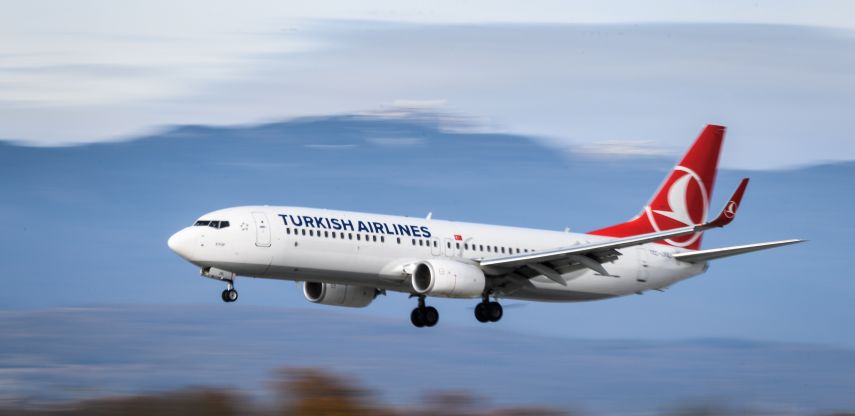
Boeing has finalized an order of up to 150 planes for Turkish Airlines, the largest single-aisle aircraft order placed by the airline with the U.S. company.
The order includes the purchase of 100 737-8 airplanes and options for buying an additional 50 737 MAX jets, Boeing said in a Sept. 23 statement. The airline has the right to switch to the 737-10, the largest model in the 737 MAX line. On Wednesday, Boeing also announced that Bangladesh’s Biman Bangladesh Airlines placed an order for 11 aircraft.
President Donald Trump referred to these sales in a Sept. 24 post on Truth Social as a “big day” for Boeing and American manufacturing. Turkey and Bangladesh placed the orders with support from the U.S. Department of Commerce and Secretary of Commerce Howard Lutnick, Trump said.
“TENS of BILLIONS of Dollars in Sales, and huge U.S. Exports, supporting tens of thousands of American Jobs across our Country,” Trump wrote. “The Market is recognizing what Boeing and I have known all along: When you build in America, export from America, and support American workers, you make your Company stronger. Congratulations to Boeing, and its incredible workforce.”
Turkish Airlines already runs a fleet of over 200 Boeing planes, including the 737 Max and other variants, Boeing said. Adding more 737-8 aircraft to the fleet is expected to enable the airline to serve high-demand routes due to the plane’s range, fuel efficiency, and payload flexibility.
The 737-8 model has a range of up to 4,026 miles, about 10 percent lower than the lineup’s top model, the Boeing 737-7. The 737 MAX line cuts emissions and fuel use by 20 percent compared to the planes they replace, which allows for lower cost of operation.
“This order reflects the trust and shared vision that have defined our long-standing partnership with Turkish Airlines,” Stephanie Pope, president and CEO of Boeing Commercial Airplanes, said in the statement. Last year, Turkish Airlines placed an order for up to 75 787 Dreamliner aircraft.
Turkish Airlines has a total of 567 aircraft in service and flies to 358 destinations worldwide.
Regulatory Challenges
The new orders come as Boeing recently recovered full authority to issue
airworthiness
certificates for all its 737 MAX and 787 planes.
An airworthiness certificate is issued at the last stage of an aircraft’s production process and is a confirmation that planes are safe to operate. The Federal Aviation Administration (FAA) had previously stopped Boeing from issuing these certificates due to concerns about quality and safety.
For 737 MAX planes, this restriction came into effect in 2019 following two plane crashes that resulted in 346 deaths. Meanwhile, restrictions for 787 planes came into effect in 2022 due to production quality issues.
Last year, the FAA allowed Boeing to issue the certificates on some of the planes on alternating weeks, with the agency issuing them on other weeks.
In a July 17 statement, the FAA had announced that it determined Boeing can now handle this responsibility. “The decision follows months of thorough data and safety review demonstrating consistent production quality and reflects the FAA’s confidence in Boeing’s ability to issue airworthiness certificates under FAA oversight,” the agency said in its statement.
Boeing also recently secured FAA certification for its 737-7 airplane, clearing the aircraft for commercial service, the company said in an Aug. 3 statement.
The testing program for 737-7 began in 2018 and included over 1,000 hours of ground and flight testing, as well as extensive safety analysis of various systems.
“With this certification program, Boeing has developed a clearer understanding of the latest regulatory requirements, which is expected to accelerate future airplane development with a renewed emphasis on human factors, safety and quality,” Mike Sinnett, senior vice president of Product Strategy, Product Development and Development Programs, said in the statement.
Meanwhile, Boeing secured another large order this month, with Korean Air finalizing an order for 103 planes.
Korean Air ordered 50 737-10 planes, 25 787-10 aircraft, 20 777-9 airplanes, and eight 777-8 freighter aircraft, the company said.




Protest Outside Chinese Embassy Against State Visit by Chinese Leader Xi Jinping
China NewsMark Us Preferred on GoogleTrailer0:00/0:00Members of the Free Tibet movement protest...
LIVE NOW: Rights Groups Rally to Demand End to CCP Persecution During Xi’s Visit to Washington
Faith and human rights leaders, joined by over 300 Falun Gong practitioners,...

13 Stock Market Jargon Terms That Sound Like Horror Movies (And What They Actually Mean)
Have you ever turned on the financial news and wondered if you...
US Industry Groups Urge Trump to Reject Diesel Export Ban
More than 30 U.S. business, energy, and manufacturing groups on Wednesday urged...