Morocco Becomes 2nd Arab Country to Appoint Female Head of Government
 Etienne FauchaireUpdated 16 hours Ago3 Mins read
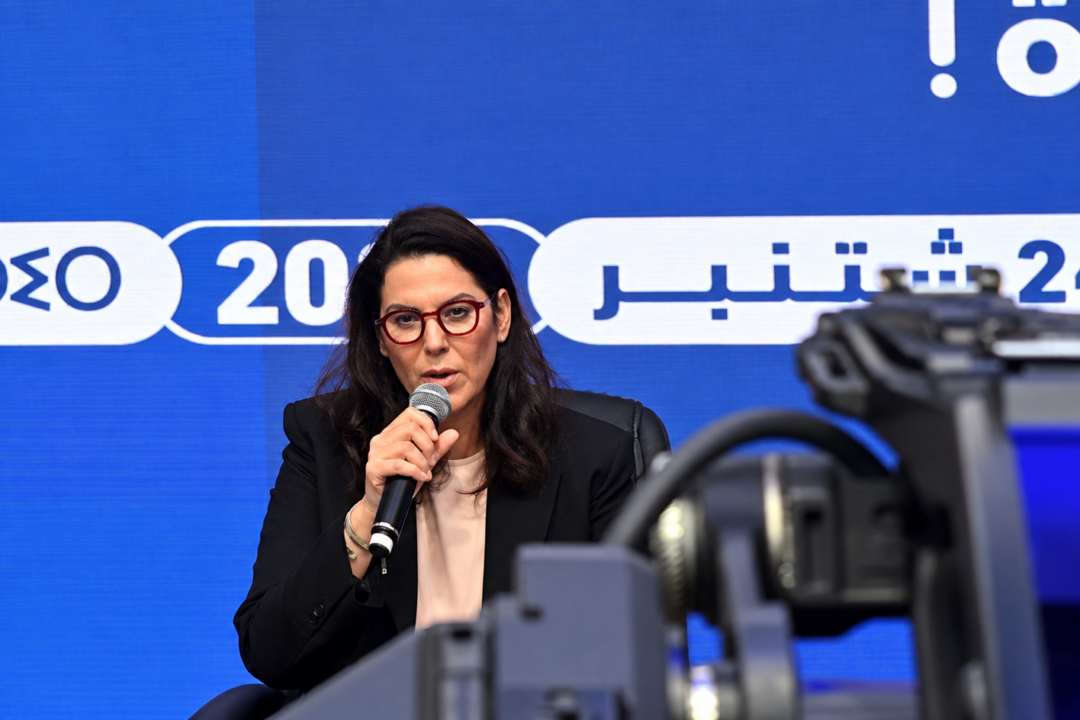
King Mohammed VI on Sept. 29 appointed Fatima Ezzahra El Mansouri as Morocco’s head of government, the post equivalent to prime minister, making her the first woman to lead the North African kingdom’s Cabinet.
The royal household said the king asked her to form a government.
The 50-year-old heads the Authenticity and Modernity Party (PAM), which won the Sept. 23 general election, securing 97 seats out of the total 395 seats in the country’s parliament.
On Sept. 30, El Mansouri initiated the formation of a coalition government with the parties that came in second and third in the parliamentary polls, the National Rally of Independents and the Istiqlal Party.
Referring to her appointment as “a historic moment for our country,” she hailed it as a source of pride for all Moroccan women, according to Morocco’s state news agency MAP.
Third Woman to Lead an Arab Government
Mehdi Alioua, a Moroccan sociologist and professor at the International University of Rabat, described El Mansouri’s appointment as “a great historic moment.”
“Appointing a woman to head the government in a way that respects the Constitution is a milestone. There will be a before and an after,” he told The Epoch Times.
El Mansouri is the third woman to lead an Arab government. Morocco is the second Arab country, after Tunisia, to appoint a woman prime minister. Tunisian women Najla Bouden and Sarra Zaafrani Zenzri held the position from 2021 to 2023 and since March 2025, respectively.
But unlike Morocco, which chose a woman heading the party that won the most seats in the parliamentary polls, those two were appointed by the Tunisian president Kais Saied after he took over extensive executive powers in 2021.
From Marrakech City Hall to the Cabinet
Born in the southern Moroccan city of Marrakech in 1976, El Mansouri is a lawyer who studied in Rabat, Montpellier in France, and at Pace University in New York. In 2009, she became the first woman to be appointed mayor of Marrakech.
She joined the PAM when it was founded in 2008, and she served as the chairwoman of the party’s national council from 2015 to 2024. She has since coordinated the collective leadership of the party. She also served as the minister of urban planning and housing in the former government.
The PAM was founded by the king’s childhood friend, Fouad Ali El Himma, who currently serves as an adviser to the Moroccan king. The party is seen as a counterweight to the influence of the Islamist Party of Justice and Development (PJD).
How the King Decided
According to the 2011 constitution, the head of government should be chosen from the party that won the most seats in the parliamentary polls, but it does not state who that should be.
Said Saddiki, a professor of international relations at Sidi Mohamed Ben Abdellah University in Fez, told The Epoch Times that El Mansouri’s gender may not have been the deciding factor in the king’s choice.
Saddiki said that since 2011, the Moroccan king has always appointed the head of the winning party.
“Even though the king constitutionally retains the discretionary power to appoint someone from the party, it seems Morocco is going to entrench this practice as a constitutional custom, as is adopted by other democratic countries,” he said.
Before the announcement of El Mansouri’s appointment, the head of the Royal Moroccan Football Federation, Fouzi Lekjaa, who had recently joined the PAM, was seen as another possible choice for the post.
“If the king had appointed another leader from the party rather than its coordinator, who is a woman, this could have been interpreted as reflecting doubts about a woman’s ability to lead the government,” Saddiki said.
Alioua said El Mansouri’s appointment sends a message that the Moroccan system is “very sure of itself, to the point where it can even appoint a woman.”
However, he added that El Mansouri’s appointment raises some protocol questions in a system “which has never been designed to place a woman at the top of responsibilities.”
“For example, when there is a state ceremony where the king and the government pray, where should the woman stand? Morocco is a Muslim state, it has a Muslim history, and there is a patriarchal frame of reference, a religious one,” he said.
Still, Alioua observed that since taking over in 1999, King Mohammed VI has pushed for what he called “social modernization,” steering Moroccan society toward greater secularization.
“When we go back to the year 2004, a woman could not travel outside Morocco without the permission of a man,” he said.




Randall Denley: Ford wisely keeps his cool over Stelco’s layoffs
Ontario Premier Doug Ford outside his office on Friday, September 25, 2026....
10/3 podcast: B.C. heads to the polls amid Conservative turmoil and municipal election fallout
British Columbia Premier David Eby arrives for a First Ministers meeting in...

What we know about the Flydubai suspect who allegedly ‘refused to shake hands with women’
A plane carries passengers on a flyDubai plane to Israel after the...
High-speed rail costs could reach $113 billion, 25% more than estimated, PBO warns
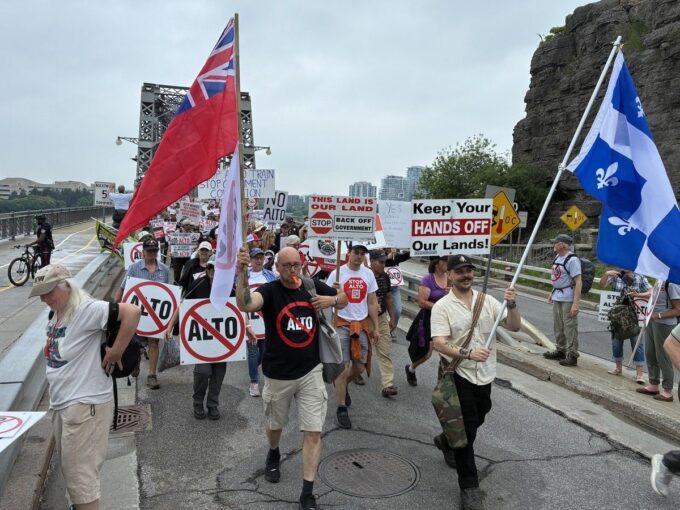
Kingston-area opponents of the Alto high-speed rail project lead a march with...