A Growing Share of Insurance Claims Close Without Payment—Here’s Why
 Autumn SpredemannUpdated 12 hours Ago6 Mins read
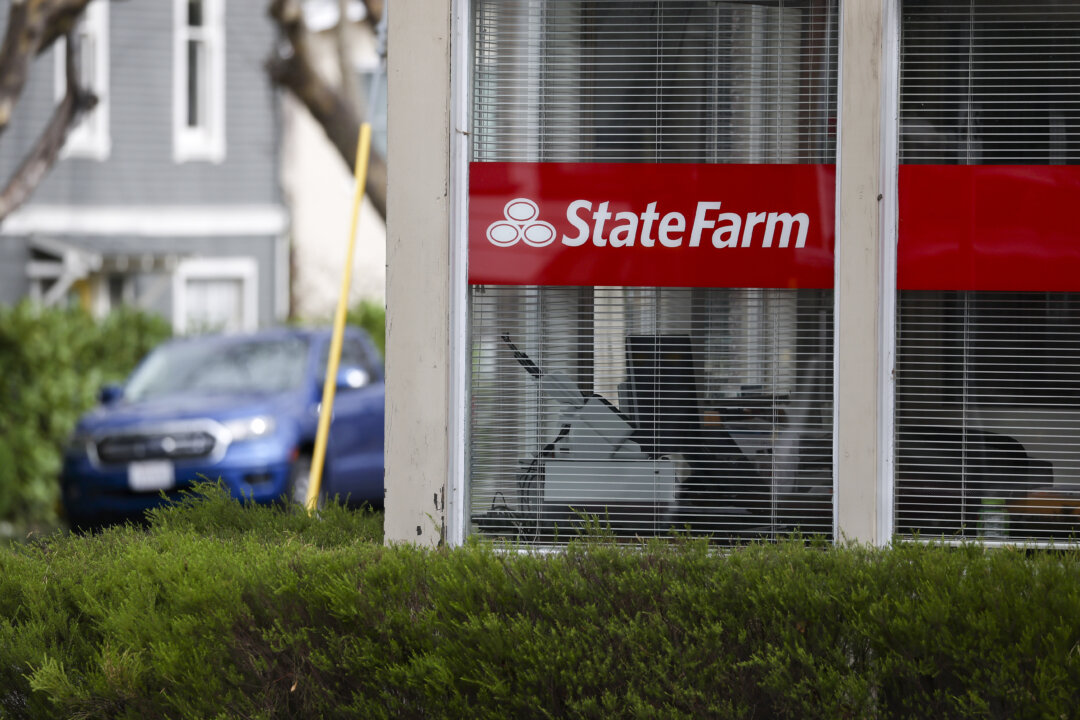
Americans are paying increasingly steep premiums to insure their homes and vehicles, yet a growing share of insurance claims are being closed without a payout.
Industry experts interviewed by The Epoch Times say the trend has several possible explanations, including rising deductibles and gaps between what policyholders believe their insurance covers and what their policies actually provide.
Some believe the “why” matters more than ever, especially when many consumers are paying more for financial protection, but struggle to access it when needed.
“The no-payment rate for collision and comprehensive claims has barely moved in 10 years. The increase is in liability and medical claims, and that’s where the fights are,” Brion Morriss, a personal injury attorney at Attorneys of Idaho, told The Epoch Times.
Morriss said any payment delays come down to the details.
“Was the crash hard enough to hurt anyone? Why was there a gap in treatment? Was this a preexisting condition? Were the medical bills reasonable? Those can be fair questions. They can also wear people down,” he said.
And that’s the part he said simple numbers can’t capture.
“Someone with a sore neck and $4,000 in bills gets a low offer or a flat no, and they’re also trying to keep up with work and family. Hiring a lawyer or filing suit may not make financial sense, so they give up. The claim closes, but that doesn’t mean nothing was owed,” Morriss said.
Morriss acknowledged that insurers face higher medical and repair costs and fraud, but it doesn’t change what’s owed on a valid claim.
“When a claim is small, the cost of fighting it is leverage for the insurer,” he said.
This has raised questions in Washington about the large volume of claims that closed in 2025 without payment. According to a Weiss Ratings analysis, 15 large home insurers closed 50 percent or more of their claims in 2025 without payment.
A recent Wall Street Journal report also showed that 45 percent of U.S. auto liability and medical claims closed in 2025 without payment.
The Wall Street Journal findings represent a 10-percentage-point spike from just a decade earlier, prompting Sens. Elizabeth Warren (D-Mass.) and Josh Hawley (R-Mo.) to send inquiries to six major insurance companies for an explanation.
The companies queried were State Farm, Allstate, USAA, Farmers Insurance, Liberty Mutual, and American Family.
In a statement to The Epoch Times, State Farm disputed the characterization of claims closed without payment, arguing that the underlying data was “inaccurate” and “incomplete.”
“The information is cherry-picked to drive an inaccurate narrative,” the State Farm representative said, highlighting how things like misunderstood coverage policies and higher deductibles can contribute to elevated rates of unpaid claims.
“Some homeowners file claims simply to document damage while they apply for federal disaster assistance, even if their homeowners policy does not cover that type of damage.”
The Epoch Times reached out to Allstate, USAA, Farmers Insurance, Liberty Mutual, and American Family for comment but received no reply by publication time.
At the same time, insurance companies can make millions by delaying claims payouts. Attorneys say the longer an insurance company holds off on paying a claim, the bigger the reward on their end.
“This means that by delaying payment, even by a few weeks or months, insurers can make millions of dollars in additional profit simply through the power of time and investment,” attorney Alexander D. Licznerski states on his website.
The earnings potential from delayed claims settlement was outlined in a Weiss Ratings report. Its 2024 estimate showed the insurance industry could earn $8.8 million a day by delaying homeowner claims payments.
Most of this comes from either investing the money elsewhere before settling or interest on high-balance accounts, he states.
“Insurance companies cancel us if we are late on a premium payment, but when they are late on a claim payment, they make money,” said Douglas Heller, director of insurance for the Consumer Federation of America.

An Allstate office in Miami on Jan. 17, 2008. Joe Raedle/Getty Images
“Instead of incentivizing insurers to delay claims, there should be consequences. The customer waiting for their claim to be paid, not the company causing the delay, should earn the interest that accumulates.”
In October, the U.S. Chamber of Commerce highlighted that claims closed without payment do not always mean wrongful denial of coverage.
The director of the Center for Capital Markets Competitiveness at the Chamber of Commerce, Alex Swindle, said the spike in claims going unpaid doesn’t paint the whole picture.
Swindle pointed to instances such as when the damage falls below the deductible, the loss is excluded from policy coverage, or another carrier pays.
Industry Insight
Insurance experts say there are important considerations when looking at an uptick in unsettled claims.
“That figure includes claims under the deductible, duplicate reports, and claims policyholders withdrew, often because the damage fell below the deductible or they worried about their premium or renewal,” Clint Riley, chief operating officer of Globe Midwest Adjusters International, told The Epoch Times.
Riley said one of the biggest drivers is policy changes.
“For example, some carriers, particularly in storm-prone areas, have replaced flat-dollar wind and hail deductibles with percentage-based deductibles tied to dwelling coverage,” he said.
Riley used the example of a home insured for $300,000, where a 2 percent deductible amounts to $6,000. He noted the average wind and hail claim is roughly $13,500 in recent years.
“Before the deductible applies, cosmetic damage exclusions and findings such as wear and tear or pre-existing damage can remove items from the claim, and actual cash value roof schedules pay only the depreciated value of an older roof,” he said.
After those adjustments, Riley said, an average claim can fall below the deductible. He sees this as a “disclosure problem,” instead of an issue with the insurance policy itself.
From his perspective, Riley believes regulators should require carriers to show deductibles in dollars at every renewal and give plain-language notice whenever coverage changes.
“When a claim closes without payment, policyholders should get a clear explanation of why, along with their options, including appraisal and independent representation where state law permits,” he said.
Chief legal officer for Windward Risk Managers, Stacey Giulianti, agreed.
“It is important to realize that as houses get stronger and more resilient, claims which used to be payable in the past may fall under the deductible,” Giulianti told The Epoch Times.
“Hurricane winds that used to cause moderate to severe damage now cause minimal to moderate damage, since the building codes and construction techniques have improved to the point where storms and other perils cause less damage. Therefore, some of the ‘closed without payment’ files are attributable to the positive effects of enhanced building codes and modern home building techniques,” he said.

A home is boarded up ahead of Hurricane Isaias’s expected landfall along the Gulf Coast in Dauphin Island, Ala., on Oct. 8, 2026. Octavio Jones/AP Photo
Rob Pfarr, owner of Pfarr Insurance Agency, has also seen high deductibles become a friction point for policyholders.
“I understand why people are frustrated. They’re paying more for insurance, but more claims are being closed without payment. I don’t think that automatically means insurance companies are trying to avoid paying claims,” Pfarr told The Epoch Times.
He pointed out that when a claim is filed, but the deductible isn’t met, it’s technically marked as closed without payment.
“I also see people who don’t fully understand what their insurance covers. Someone might think their homeowners policy covers every type of water damage, or that liability insurance will pay to fix their own car. Unfortunately, that’s not always how it works,” Pfarr said.
The insurance industry is under a lot of pressure to pay out claims, but also tighten the company’s purse strings, according to Pfarr. He pointed out that the general cost of fixing vehicles and homes is much more than it used to be, but that insurance companies have a responsibility to “handle claims fairly.”
“I’d like to see insurance companies do a better job explaining why a claim wasn’t paid. There’s a big difference between a denied claim and one that falls below the deductible. People deserve to know which one happened,” Pfarr said.
Morriss seconded that.
“For reforms, I’d start with public, company-by-company data showing why claims closed: paid elsewhere, withdrawn, excluded, or disputed on liability or injury,” he said.
“Every denial should also explain in plain English which facts and policy language the insurer relied on. Finally, policies should clearly explain uninsured and underinsured motorist coverage at purchase, because many people don’t know what it does until they’re hurt and need it.”
Deductible Gambit
In July, digital financial services company SoFi released its homeowners’ insurance report. The findings showed 48 percent of 520 surveyed homeowners would consider raising their deductibles or switching to lower-tier policies if prices doubled next year.
Behind the wheel, a Jerry survey of American drivers observed that 31 percent of respondents chose a higher deductible to lower monthly insurance payments in April 2025, up from 21 percent in August 2023.
Gulzaib Ghauri, founder of insurance education website CoverWise, said he’s witnessed the same trend.
“Premiums and payouts are moving in opposite directions for a simple reason: As prices rise, households protect themselves by taking higher deductibles and narrower coverage,” Ghauri told The Epoch Times.
In his work, Ghauri has seen how higher repair costs, disaster losses, and litigation have created a cause-and-effect protocol among insurers.
“When a roof or a bumper costs far more to fix than it did five years ago, and catastrophe losses keep hitting the same regions, insurers respond by tightening underwriting, raising deductibles, and examining claims more closely to protect their margins,” he said.
The Federal Reserve Bank of St. Louis observed that the cost of fixing and maintaining cars has increased steadily since 1970, but the sharpest price surge has occurred since 2019.
Home repair costs have also soared, with the median cost of a home improvement project rising more than 76 percent from 2015 to 2025, according to a LendingTree analysis.
Ultimately, Ghauri said, the consumer feels the pinch in two places: higher premiums during policy renewal, and a harder path toward a paid claim.
He believes greater transparency is needed for more informed consumer choices.
“Publishing closed-without-payment rates by state and carrier would also let consumers compare insurers on outcomes, not just price,” he said.





US Bars 2 Logistics Firms From USPS Over Counterfeit Postage on Packages From China
A federal court in Brooklyn on Nov. 25 permanently barred two U.S....
US Goods Trade Deficit Widens Sharply as Imports Hit Record High
The U.S. goods trade deficit widened sharply in October as imports surged...
How Are Trusts Taxed?
How a trust is taxed depends largely on the type of trust...

Trump Says Putin Can Attend G20 Summit If He Wants
U.S. President Donald Trump said on Thursday that Russian leader Vladimir Putin...