Xi Jinping Accelerates Military Leadership Reshuffle Amid Expanding Purge
 Michael ZhuangUpdated 7 hours Ago3 Mins read
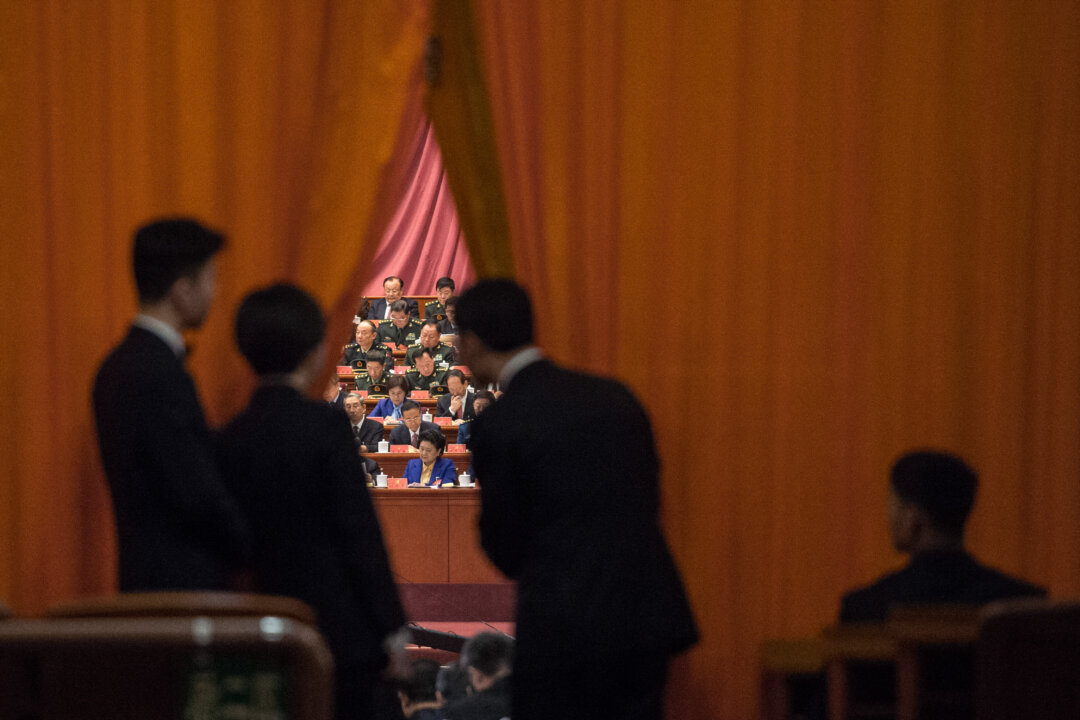
Chinese leader Xi Jinping is accelerating a reshuffle of the military’s top command and regional leadership, extending his anti-corruption purge that has already removed several senior generals, according to an insider who spoke to The Epoch Times.
The latest changes include the removal of a previously considered candidate for vice chairman of the Central Military Commission (CMC), the replacement of officials in key military departments, and planned personnel changes among disciplinary officials overseeing China’s five military theater commands, the insider said.
The insider said Han Shengyan, commander of the People’s Liberation Army’s (PLA) Central Theater Command, had failed a disciplinary review and was no longer under consideration for a senior CMC position. He said Eastern Theater Command chief Yang Zhibin and former Southern Theater Command commander Wu Yanan were now among those being assessed as potential candidates for CMC vice chairman.
The Chinese regime has not announced these personnel changes or confirmed an investigation into Han.
The reshuffle is unusual because the changes are taking place simultaneously at the military’s highest levels and across lower command structures, rather than following the gradual succession process normally expected ahead of the Chinese Communist Party’s (CCP) 21st National Congress in 2027.
The insider said the accelerated timetable could indicate that Xi needs to address urgent military matters, although he provided no details.
Vacancies in Military Commands
The CMC, China’s highest military command body, has been severely weakened by successive purges. Of the seven members appointed at the CCP’s 20th National Congress in 2022, only Xi and Zhang Shengmin remain. Former vice chairmen Zhang Youxia and He Weidong, along with three other commission members, have been removed and purged.
The insider said several key military departments, including those responsible for equipment development, political affairs, and logistics, had also lost their senior leaders. The vacancies have complicated efforts to rebuild the military’s command structure.
The proposed reshuffle would draw senior officers from the theater commands and military branches to fill positions at the CMC, but promoting those commanders would create further vacancies in the lower ranks, potentially requiring another round of appointments.
“Now you are moving the commanders and political commissars of the various military branches, as well as theater command commanders, upward. Once you move them, there will not be enough people below,” the insider said.
He added that the shortage of senior officers could lead to unusually rapid promotions, with some lieutenant generals advancing to full general sooner than would normally be expected.
The timing is particularly significant because the CMC oversees the PLA’s overall command, planning, and coordination. Vacancies in its leadership and subordinate departments could complicate military decision-making at a time when Beijing continues to emphasize combat readiness.
The insider suggested the accelerated appointments might be connected to urgent military requirements.
“Perhaps they need to move troops on a large scale or direct military forces. How are the heads of the various departments above supposed to command them? There may be urgent matters that need to be handled,” he said.
He did not provide evidence of a specific military operation or establish whether the reported changes were connected to tensions across the Taiwan Strait.
Key Appointments Could Reshape Military Oversight
The insider’s revelation about personnel changes also involves the CMC’s political and disciplinary apparatus, which plays a central role in controlling the military and investigating misconduct.
One particularly important position is the head of the CMC’s political work department, which oversees military personnel appointments, Party organizations, and political indoctrination. The insider compared its role to that of the CCP’s organization department, which manages senior personnel appointments.
He said Zhang Shuguang, the current head of the military’s disciplinary commission, could move into that position. Another possibility is Zhu Chuansheng, a deputy chief of the CMC’s joint staff department.
The insider also said the reshuffle would involve the heads of the CMC’s logistics and equipment departments, as well as senior officials in the joint staff structure. Some appointments for the next CMC leadership team had effectively been decided, he said, although the officers had not yet received formal titles.
The insider said the theater commands’ disciplinary chiefs would also be replaced as part of preparations for further investigations into mid-level military officers.
“Before, when Zhang Youxia and the others were removed, [Xi] did not touch these people below,” the insider said. “Because at that time, he couldn’t move them. If he removed everyone, there would be no military commanders left.”
He said the current reshuffle suggested Xi was now in a position to extend the purge further down the military hierarchy.
The changes could have implications beyond individual appointments. The theater commands’ disciplinary chiefs oversee investigations into officers, making their replacement potentially important to the next phase of the military purge. However, the insider did not identify the officials expected to take over those positions.
Under the CCP’s constitution, the Central Committee has the authority to appoint additional CMC members before the next Party congress. Until such appointments are formally approved, officers assigned to perform senior duties do not automatically hold official CMC membership.
The insider’s reported appointments remain unconfirmed by the CCP. The Epoch Times cannot independently verify the insider’s claims.
Leng Feng and Bai Luping contributed to this report.




China’s Space Program Could Hand Its Military an Edge in Future Wars, Analysts Warn
Beijing’s space program is closely tied to its armed forces and could...

US Bars 2 Logistics Firms From USPS Over Counterfeit Postage on Packages From China
A federal court in Brooklyn on Nov. 25 permanently barred two U.S....
Taiwan’s Local Elections: 5 Things to Know About the China Factor
Nearly 19.6 million Taiwanese are eligible to vote for mayors and county...
Analysts Welcome New Australia-Solomons Defence Pact, but Warn of Next Battleground
Security analysts have welcomed the Australia-Solomon Islands defence treaty but warned Beijing...