Adjustable Mortgage Demand Rises as Fixed Rates Hit 15-Month High: Report
 Bill PanUpdated 2 hours Ago2 Mins read
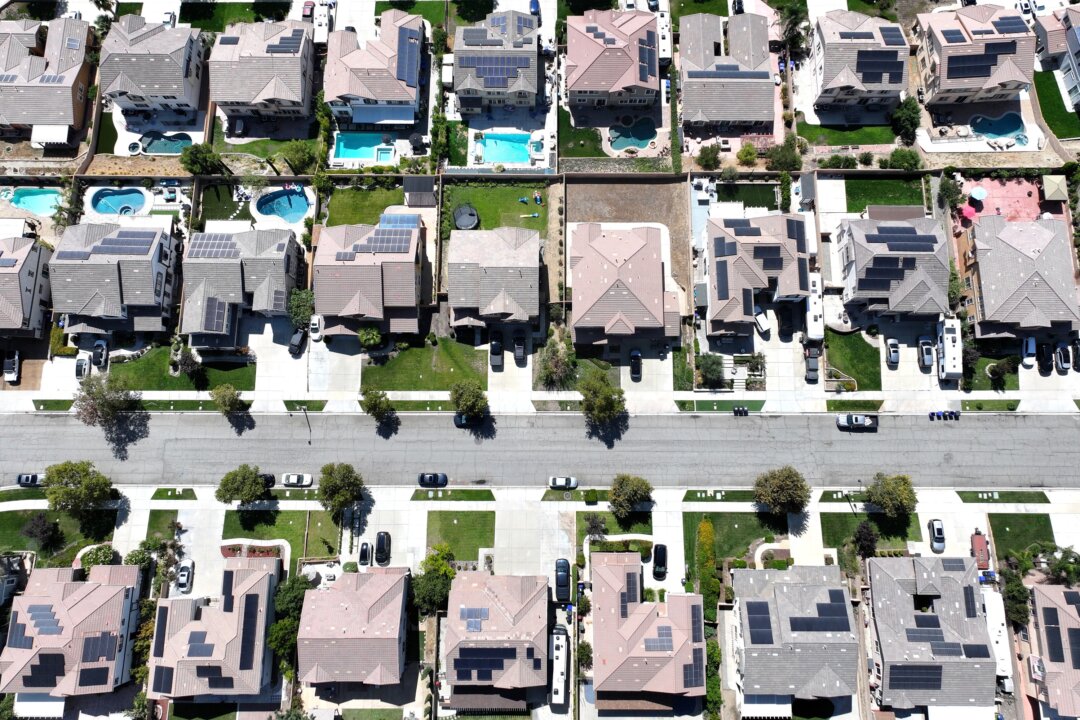

Homes in Fontana, Calif., on Sept. 17, 2025. Mario Tama/Getty Images
Higher mortgage rates are pushing more homebuyers toward adjustable-rate mortgages as they look for ways to lower their initial borrowing costs.
Adjustable-rate mortgages, or ARMs, accounted for 8.5 percent of all mortgage applications for the week ending Sept. 4, according to the Mortgage Bankers Association’s latest weekly survey. That was their highest share since June.
The shift came as the average rate on a 30-year fixed mortgage rose to 6.85 percent from 6.79 percent a week earlier. That was the highest level since June 2025 and 36 basis points above the rate a year ago.
At the same time, the average rate on a five-year ARM fell to 5.82 percent from 5.94 percent, making the loans increasingly attractive to borrowers looking for a lower initial rate.
Unlike a fixed-rate mortgage, an ARM typically offers a fixed interest rate for an introductory period before periodically adjusting based on market rates.
That can make an ARM cheaper at first, but it can also expose borrowers to significantly higher rates and monthly payments when the adjustment kicks in.
Mortgage Applications Slipped
Overall mortgage demand weakened during the week.
MBA’s Market Composite Index, which measures total mortgage application volume, fell 2.7 percent on a seasonally adjusted basis from the previous week.
“Higher mortgage rates continue to weigh on prospective homebuyers looking to act, even as housing inventory has increased in many markets,” said Joel Kan, MBA’s vice president and deputy chief economist.
Refinance applications dropped 6 percent for the week and were 25 percent lower than a year earlier. MBA said refinancing activity fell to its slowest weekly pace since May 2025.
Home-purchase demand was more stable. The seasonally adjusted Purchase Index declined just 0.2 percent from the previous week.
On an unadjusted basis, purchase applications were down 3 percent for the week but remained 4 percent higher than the same period a year earlier.
Mortgage rates are closely tied to yields on longer-term U.S. Treasury securities, particularly the 10-year Treasury note.
Those yields are influenced by investors’ expectations for inflation, economic growth, federal borrowing, and the future path of monetary policy.
The Federal Reserve has kept its benchmark federal funds rate in a range of 3.5 percent to 3.75 percent at every meeting so far this year. At its July 29 meeting, the central bank said inflation was still above its 2 percent goal.
The Fed’s next two-day policy meeting is scheduled for Sept. 15 and 16.
Although the Fed does not directly set mortgage rates, changes in expectations about its policy can influence Treasury yields and, in turn, borrowing costs for homebuyers.





Gas Prices Expected to Drop in 2027, Energy Information Administration Says
A customer at a Los Angeles gas station on July 1, 2025....

How Major US Stock Indexes Fared Sept. 9
Stocks fell on Wall Street as the price of crude oil topped...

Data Centers and AI Should Keep Driving Earnings Higher
CommentaryWith the latest earnings season now wrapped up, The Wall Street Journal...

Google Commits Record $15 Billion to Expand AI Infrastructure in Finland
Google headquarters in Mountain View, Calif., on July 31, 2025. John Fredricks/The...