Data Centers and AI Should Keep Driving Earnings Higher
 Louis NavellierUpdated 6 hours Ago3 Mins read

Commentary
With the latest earnings season now wrapped up, The Wall Street Journal reported the S&P 500’s second-quarter earnings soared 53%, and sales rose 16%. Tariff refunds apparently helped boost this robust rate of earnings growth, but no matter how you analyze it, earnings momentum peaked in the second quarter and will likely decelerate in upcoming quarters. But there’s no reason to panic, as the S&P 500’s earnings growth should still be around a 30% annual pace and price-to-earnings (P/E) ratios will remain under compression. In my opinion, the stock market remains grossly undervalued relative to the bond market.
Most AI-related stocks are resurging. Last Wednesday, Dell Computer (DELL) announced record revenues of $47 billion, up 58% in the past year. The company’s earnings surged 273% to $6.34 per share. Excluding extraordinary items, Dell’s operating earnings were $7.04 per share, or 43% above analysts’ consensus estimate of $4.92 per share. The company also raised its revenue guidance above analyst expectations and said it would have even stronger sales of AI servers if there were no memory shortage.
In addition, Broadcom (AVGO), Hewlett Packard (HPE) and Ciena (CIEN) have all beat analyst sales and earnings estimates and raised their guidance.
Here are the most important developments recently and what they mean:
– The annual Apple product announcement on September 9th is shaping up to be a potential blockbuster. Multiple sources, including Bloomberg, have confirmed that Apple’s first folding phone, the iPhone Ultra, will be announced. John Ternus is expected to lead the Apple presentation that will also announce an iPhone 18 in a new color, Dark Cherry.
– The big stock news was that it was disclosed on August 21st in an SEC filing that Nancy Pelosi’s husband bought up to $12 million of Bloom Energy (BE), including two big option bets, which sparked a big stock rally. On Tuesday, it was announced that Bloom Energy will be added to the S&P 500 on September 21st. What can I say other than Nancy and Paul Pelosi are great investors.
– The Producer Price Index (PPI) and the Consumer Price Index (CPI) will be announced on September 10th and 11th. Economists are expecting that both the PPI and CPI will rise 0.4% in August. The core PPI, excluding food and energy, is expected to rise 0.3%, while the core CPI is expected to rise 0.2%. If inflation comes in below economists’ expectations, a Fed rate hike can be postponed.
– The eurozone announced that retail sales declined 0.6% in July, which was substantially below economists’ consensus expectation of a 0.3% increase. Germany’s retail sales plunged 3.4% in July, while Spain’s retail sales dropped 0.9%. Spain was previously the hottest economy in the eurozone, so the outlook for economic growth in the eurozone is now grim.
– As the mid-term elections approach in the U.S., the political chaos in Germany and Spain is demonstrating that “it is the economy stupid” as far as many voters are concerned. President Trump recently sent a delegation to Russia to try to unwind the war with Ukraine, so clearly the Trump Administration is looking to resolve global problems. When Chinese President Xi visits the White House on September 24th, the Trump Administration is striving for China to reiterate that Iran stop interfering with the Strait of Hormuz. Crude oil prices should be moderating in the upcoming weeks as worldwide seasonal demand ebbs and crude oil tanker transit increases through the Strait of Hormuz.
– In the meantime, the U.S. Navy’s blockade since mid-July has been very effective. According to ship tracker Kpler, no Iranian crude oil has passed through the naval blockade. Furthermore, the U.S. struck three Iranian crude oil tankers after missiles were fired at the U.S. Navy. These attacks caused crude oil prices to temporarily spike. Despite these military actions, the war between Iran and the U.S. has evolved into an economic war as Treasury Secretary Bessent imposes a monetary squeeze on Iran.
– On Tuesday, U.S. central command said it destroyed five Iranian crude oil vessels, four in the Gulf of Oman and one near Kharg Island, where 90% of Iran’s oil exports are handled. U.S. Central Command also said Iran’s Revolutionary Guard Corps targeted a U.S. Navy warship with ballistic missiles twice in the last two days. In the meantime, crude oil is now significantly above $100 per barrel, which is unsustainable politically, so I expect that if Iran refuses to sign a ceasefire agreement, then the U.S. will seek to control Kharg Island.
Overall, September is normally a seasonally weak month due to predominantly investors having to raise capital for estimated tax payments on September 15th, but the second half of September is seasonally stronger. Fundamentally superior stocks normally benefit from the quarter-end window dressing in late September, so if you have more capital to invest, the last two weeks of September would be a great time to add money.




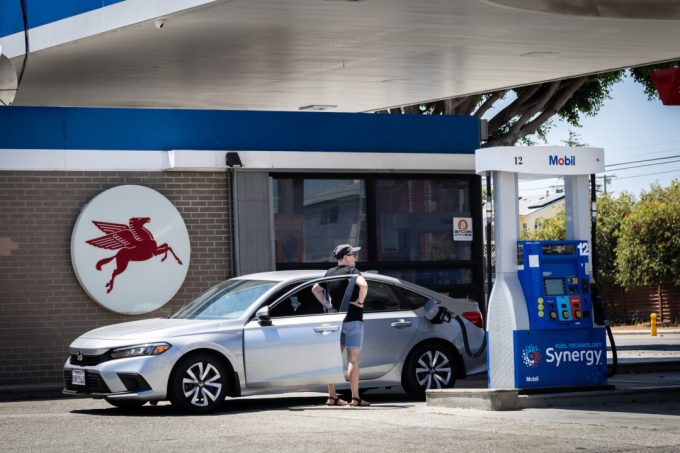
Gas Prices Expected to Drop in 2027, Energy Information Administration Says
A customer at a Los Angeles gas station on July 1, 2025....

How Major US Stock Indexes Fared Sept. 9
Stocks fell on Wall Street as the price of crude oil topped...
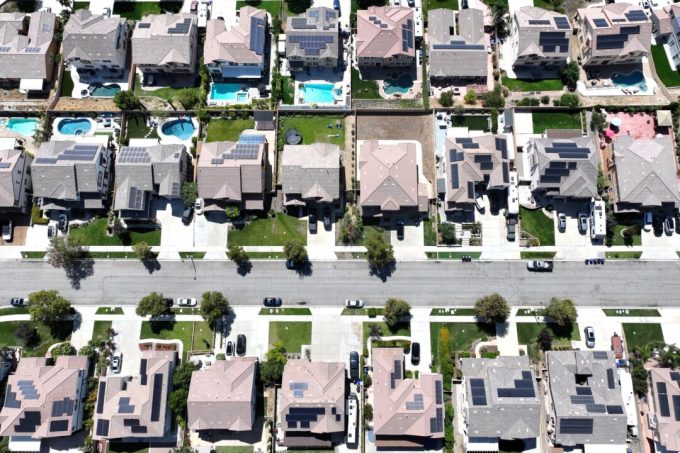
Adjustable Mortgage Demand Rises as Fixed Rates Hit 15-Month High: Report
Homes in Fontana, Calif., on Sept. 17, 2025. Mario Tama/Getty ImagesHigher mortgage...

Solana treasury firm SkyAI faces board challenge from would-be acquirer Forward Industries, shareholder group
SkyAI’s proposed equity plan would authorize 5.145 million shares for stock-based compensation,...