Anthony Furey: Now’s the time to scrap Toronto’s land transfer tax
 Jesse KlineUpdated 2 months Ago3 Mins read

Article content
Shortly after becoming mayor of Toronto in 2010, Rob Ford tried to reduce the amount of the city’s municipal land transfer tax (LTT).

THIS CONTENT IS RESERVED FOR SUBSCRIBERS
Enjoy the latest local, national and international news.
- Exclusive articles by Conrad Black, Barbara Kay and others. Plus, special edition NP Platformed and First Reading newsletters and virtual events.
- Unlimited online access to National Post.
- National Post ePaper, an electronic replica of the print edition to view on any device, share and comment on.
- Daily puzzles including the New York Times Crossword.
- Support local journalism.
SUBSCRIBE FOR MORE ARTICLES
Enjoy the latest local, national and international news.
- Exclusive articles by Conrad Black, Barbara Kay and others. Plus, special edition NP Platformed and First Reading newsletters and virtual events.
- Unlimited online access to National Post.
- National Post ePaper, an electronic replica of the print edition to view on any device, share and comment on.
- Daily puzzles including the New York Times Crossword.
- Support local journalism.
REGISTER / SIGN IN TO UNLOCK MORE ARTICLES
Create an account or sign in to continue with your reading experience.
- Access articles from across Canada with one account.
- Share your thoughts and join the conversation in the comments.
- Enjoy additional articles per month.
- Get email updates from your favourite authors.
THIS ARTICLE IS FREE TO READ REGISTER TO UNLOCK.
Create an account or sign in to continue with your reading experience.
- Access articles from across Canada with one account
- Share your thoughts and join the conversation in the comments
- Enjoy additional articles per month
- Get email updates from your favourite authors
Sign In or Create an Account
or
Article content
The much-loathed tax placed on the purchase of new homes within city limits had only come into effect a couple years earlier, introduced by then-mayor David Miller. It was a duplicate tax — replicating the Ontario provincial land transfer tax that buyers were already paying.
Article content
Article content
Article content
As a councillor, Ford was often one of the few advocates of fiscal sanity. He’d opposed the tax from Day 1 and, during his successful mayoral campaign, pledged to eliminate the whole darn thing.
Article content
By signing up you consent to receive the above newsletter from Postmedia Network Inc.
Article content
But, once in office, Ford was encouraged by those around him to temper his plans and only reduce the tax by 10 per cent. Even that proved too steep a hill to climb at city hall.
Article content
The bureaucracy and media did what they always did with Ford and went into attack mode, saying that such a cut to revenue — it would have meant a reduction of about $35 million — would harm the city coffers and Ford would need to account for how he’d make it up. Alas, the cut never came to be and the tax was normalized in the minds of home-buyers and voters.
Article content
Many years have passed since that policy battle, and we now hear regularly from politicians and bureaucrats concerned about the housing crisis and housing affordability. There has been a continual stream of press conferences, policy proposals and funding announcements about how to reduce the cost of housing.
Article content
Yet there has been little to no suggestion from Toronto city hall to implement the only cost reduction directly within the control of municipal government: reducing or eliminating the LTT. While reducing development charges can lower costs, this is an indirect lever because the builder pays them. The LTT, on the other hand, is paid directly by the buyer on closing.
Article content
Article content
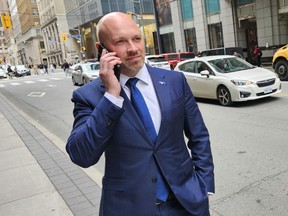
The conversation is now back in the spotlight thanks to Toronto mayoral candidate Brad Bradford, who has promised to eliminate the municipal LTT for many buyers if he’s elected.
Article content
Article content
Bradford announced on Tuesday that he will change the LTT so first-time buyers, or any Toronto homeowner selling one home within the city and then buying another, will pay no tax on the first $1.1 million of the purchase. The tax will still apply to investors and corporations.
Article content
“Three of four Toronto renters don’t believe they’ll ever be able to afford to buy a home here,” Bradford said. “I refuse to accept that’s the best we can do.”
Article content
There’s always been something inherently wrong on a moral level with double taxing a family on their home purchase, and even more so during a housing crisis.
Article content
Young buyers need to be informed that older generations weren’t subject to the same cash grab when they were starting out. Bradford is promoting generational fairness.
Article content
This will be an uphill battle, though. Right on cue, Bradford is facing the exact same push-back levelled against Ford.
Article content
The talking point is that Bradford must account for where he is going to make up the revenue shortfall and that unless he can answer that first, such a policy shouldn’t go ahead.


Opposition Says WA Should Not Be Included in National Gas Reserve Scheme
The federal opposition is marking its turf on plans to create a...

Greens Elect Former MP Mike Morrice, the Sole Candidate, to Lead Party
Newly elected Green Party Leader Mike Morrice points as he speaks at...
Breast Milk Can Be Lifesaving for Premature Babies, Quebec Charity Says
When Annie Sicotte gave birth to her first daughter 11 weeks early,...
Is Autumn Glow the Next Winx? Inside the Making of a Racing Superstar
Autumn Glow now has six Group 1 victories—and she is fast becoming...