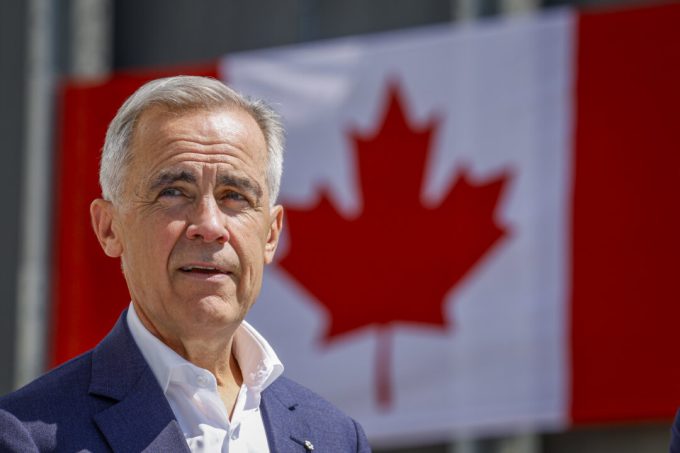

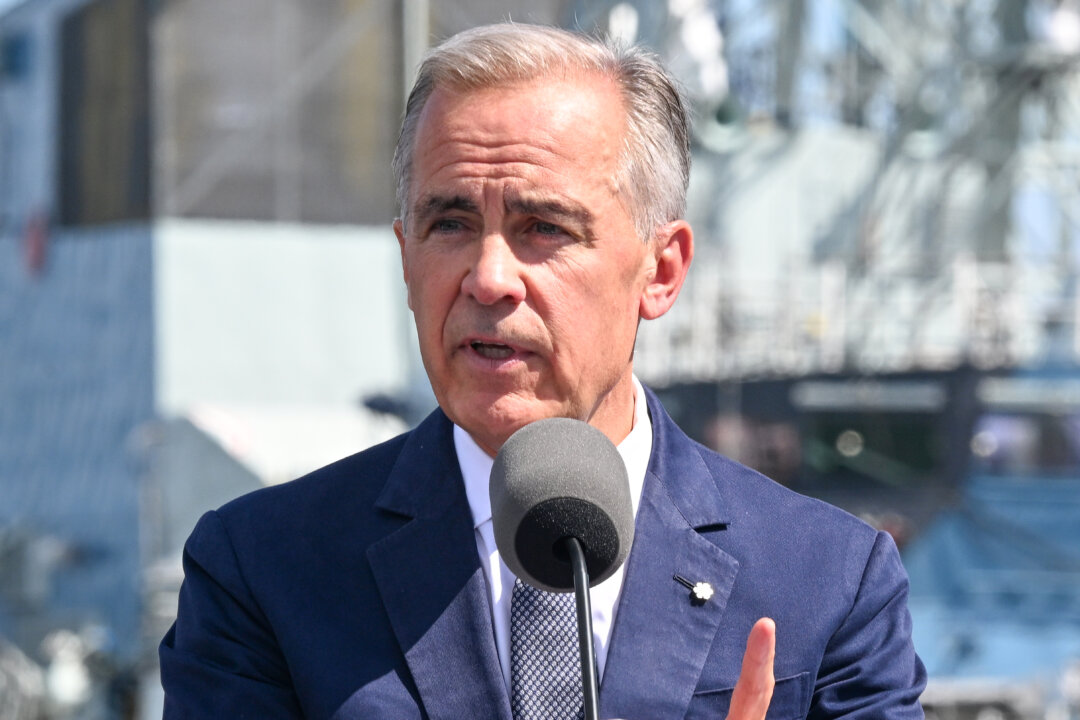

Prime Minister Mark Carney speaks in Levis, Quebec, on Aug. 24, 2026. The Canadian Press/Jacques Boissinot
Prime Minister Mark Carney named the United States along with Russia as unreliable trade partners, as trade tensions between Canada and the United States escalate.
“We are seeking reliable partners around the world, and we’re finding them, except in the U.S. and Russia,” Carney told reporters in Quebec on Aug. 24.
Carney’s comments came hours after U.S. President Donald Trump announced he would impose new 50 percent tariffs on all Canadian vehicles beginning in 2027. Trade talks between Ottawa and Washington broke down on Aug. 21, leading to new 50 percent U.S. tariffs on US$20 billion (CA$28 billion) of Canadian products taking effect on Aug. 22. Canada has said it will retaliate with counter-tariffs beginning Sept. 8.
Washington has previously said only two countries have retaliated against U.S. tariffs: China and Canada.
U.S. officials have increasingly raised concerns about Canada–China relations, with several criticizing Ottawa’s decision to allow Chinese electric vehicle imports at the most-favoured nation tariff rate of 6.1 percent.
“We can’t let Canada become an opening [for] the Chinese to pour their cheap goods into the U.S.,” U.S. Treasury Secretary Scott Bessent said earlier this year.
Carney visited China in January, where he said Ottawa is in a “strategic partnership” with Beijing, and that this “sets us up well for the new world order.” A few days later, in a speech at the World Economic Forum in Davos, Switzerland, Carney alluded to the United States and China as “great powers” without distinguishing between them, while urging “middle powers” such as Canada to band together against them and their protectionist measures.
Carney’s more recent attempts to get closer to China stand in contrast to his declaration during the 2025 election campaign that China was Canada’s number-one security threat.
A public inquiry concluded in its final report in 2025 that Beijing is the most active foreign power meddling in Canada’s affairs.
Escalation
Trump said on Aug. 24 that Canada has been “ripping off the United States of America for years,” and that Canada will be “treated like a State no longer.”
“On Trade, and in other ways, also, they are among the worst Nations in the World to deal with. They feel entitled, and yet, WE DON’T NEED CANADA, THEY NEED US!”
The prime minister told reporters that while Trump has repeatedly said Canada doesn’t need anything that Canada provides, “that’s not true,” because it exports critical minerals, energy, and “products in their supply chains for the automotive industry and other industries.”
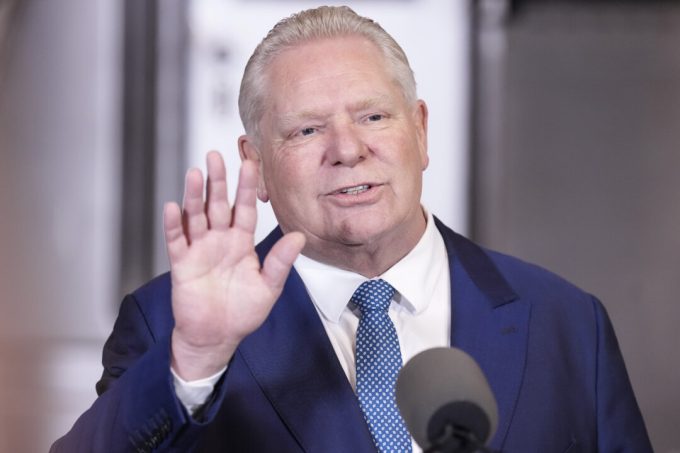
When asked if Ottawa would consider the suggestion of Ontario Premier Doug Ford to cut off critical minerals and electricity supplies to the United States, Carney said he wants to pursue a “positive approach,” adding that, “if we need to do more, well, we’ll see.”
Carney said during an Aug. 22 address to the nation that Canada would impose “dollar-for-dollar” retaliatory tariffs on the United States on Sept. 8, targeting American steel, dairy, appliances, agricultural equipment, pulp and paper, and electronics. However, he said on Aug. 24 that since the U.S. economy is “much, much bigger” than Canada’s, “it will be difficult to have dollar-for-dollar retaliation,” and instead Canada would pursue a more targeted approach.
Carney says that trade talks broke down because the United States imposed new trade terms, including tariff relief for autos not applying to Canadian medium- and heavy-duty automotives and light trucks, restricting Canada’s ability to have trade deals with other countries, and wanting to restrict Canada’s French content and labelling requirements.
He said Canada would return to the negotiation table when Washington has “the right attitude towards our industries and a true partnership.”
U.S. Trade Representative Jamieson Greer blames Canada for walking away from a “nearly completed deal” at the last moment, saying Canada has had the lowest tariffs for its exports to the United States.
“I don’t know if it was political for them. It certainly doesn’t make economic sense,” Greer told CNBC, in comments shared by the White House. “They came in and they wanted more, and we weren’t prepared to do that.”