China’s Gig Workers Struggle to Survive as Stable Jobs Become Scarcer
 Michael ZhuangUpdated 19 minutes Ago4 Mins read
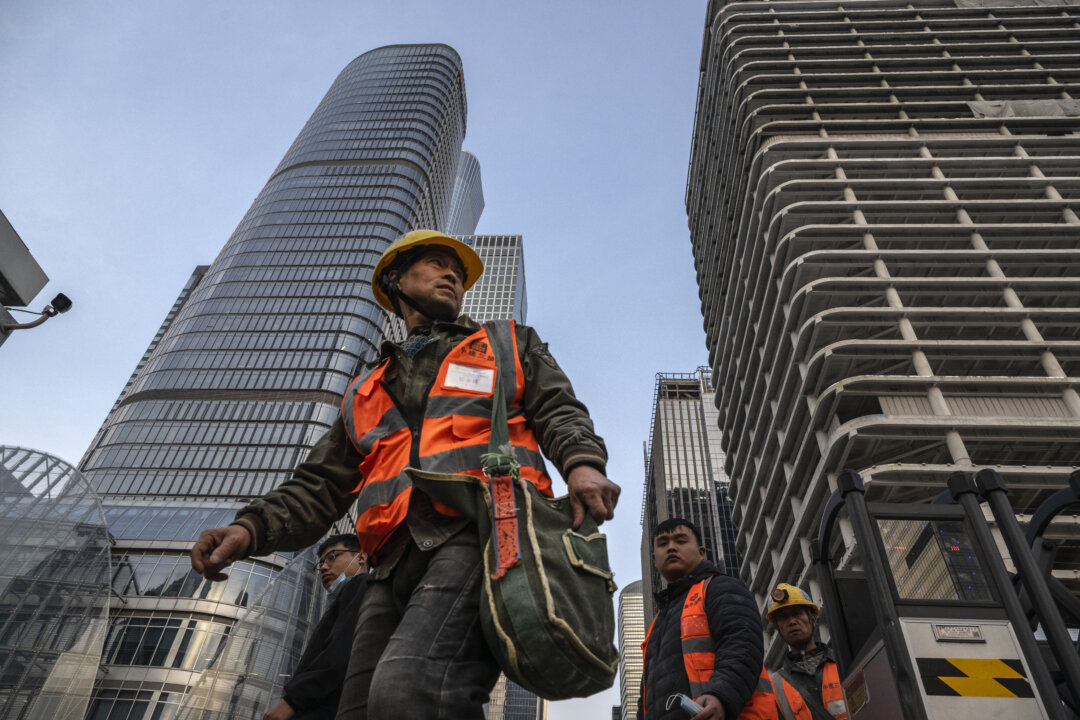
As China’s economic slowdown squeezes employment opportunities, an increasing number of people are turning to temporary, low-paid work to make ends meet, with some saying they can barely afford basic living expenses.
Two gig workers in the southern cities of Shenzhen and Guangzhou told The Epoch Times that finding stable employment has become increasingly difficult, forcing them to take short-term factory and service jobs without social insurance. They spoke on condition of anonymity out of fear of reprisal.
The accounts come amid renewed attention to China’s informal labor market after a popular online video documenting day laborers in Beijing was removed from Chinese social media platforms.
One of the gig workers, a 39-year-old man surnamed Niu who moved to Shenzhen in May after losing his job in Shanghai, told The Epoch Times that he had submitted about 9,000 job applications over six months without securing permanent employment.
“I studied computer science. I’m 39 years old. Once you’re over 35, your résumé is read, but there’s no response,” he told The Epoch Times.
Unable to find work in his field, Niu turned to factory jobs assembling products, including tightening screws on production lines. He said most factory positions available through local labor agencies were temporary, as companies seek to reduce labor costs.
Related Story

Niu said he earns about 178 yuan ($27) for a 10-hour shift. The work provides no social insurance, and the number of people competing for temporary jobs keeps wages low.
He said his monthly earnings are barely enough to cover rent and food, leaving little money for anything else.
“You have to save money to get by. My wages go toward rent first, and whatever remains is used for food and looking for work,” he said.
Niu added that the situation was particularly difficult for people supporting families, saying temporary work would not provide a sustainable livelihood.
The other gig worker who spoke to The Epoch Times is a woman surnamed Qin, who takes short-term dishwashing jobs at restaurants in Guangzhou and daily factory shifts. She described a similar struggle but said she preferred the flexibility of temporary employment.
“I make a little over 1,000 to 2,000 yuan ($150-300) a month. I just want to cover my living expenses and give myself time to do things I enjoy. If it works, it works. If it doesn’t, then I’ll go back to work when I run out of money,” she told The Epoch Times.
Qin said she had worked in dishwashing, factory work, promotional sales, and product demonstrations, often working only a few days before looking for another job.
After leaving her video-editing job about a year ago, she struggled to find stable employment, she said.
A Growing Informal Workforce
China’s gig economy has expanded amid the economic downturn.
According to the Chinese Communist Party’s (CCP’s) official figures, the number of gig workers had already reached 200 million in 2022. A Chinese state media Global Times editorial in June cited the China New Employment Forms Research Center, a research institute focused on emerging employment patterns, which estimated that the number of people without fixed full-time employment contracts would rise from 280 million in 2025 to 320 million in 2026, representing more than 40 percent of China’s urban workforce.
The scale of the informal labor market has been highlighted by videos documenting workers gathering at hiring sites before dawn in search of daily jobs.
On Oct. 25, Chinese online personality Zhou Lifeng released a roughly 25-minute documentary showing his experience working as a day laborer in Beijing’s Majuqiao area.
The video, titled “A Day Working as a Day Laborer in Majuqiao,” attracted more than 2.7 million views on Chinese platform Bilibili within a day. However, it was made unavailable on the platform on the evening of Oct. 27.
The documentary showed large numbers of workers gathering before sunrise at street corners and outside labor agencies, waiting for employers to select workers for temporary jobs. Common positions included warehouse sorting, loading and unloading, and general manual labor.
Daily wages typically ranged from 150 to 260 yuan ($23 to $39), with some jobs providing a meal. Workers were generally paid at the end of the day. Zhou worked for about five hours and received 180 yuan ($27).
Several workers interviewed in the documentary said they had turned to day labor because of unemployment, debt, or the need to get through a period without stable income.
The video sparked widespread online discussion about the living conditions of China’s low-income workers. Its removal prompted online speculation that regime authorities were seeking to limit public attention to the issue.
Wider Employment Pressures
Majuqiao, located in China’s capital, Beijing, has become a major gathering point for day laborers seeking short-term employment.
Other online videos and accounts have described workers arriving before dawn to compete for jobs, sometimes accepting 12-hour shifts for as little as 160 yuan ($24).
One middle-aged worker said in a video that competition had intensified, with far more people seeking work than available positions. He said laborers were sometimes treated like machines, with restrictions on taking breaks, drinking water, or using the restroom.
A separate documentary, titled “An Unemployed Programmer Wandering in Majuqiao,” which documented a former programmer’s experience of temporary work and homelessness in Beijing, also resurfaced on YouTube after being removed on multiple Chinese platforms.
The struggles of these workers have renewed attention to remarks made by the late former Chinese Premier Li Keqiang in 2020, when he said that about 600 million Chinese people earned approximately 1,000 yuan ($150) a month—an income he said was insufficient to afford rent in a medium-sized city.
For workers such as Niu and Qin, the challenge is no longer simply finding a better job but securing enough work to cover basic living costs.
Tang Bing and Gu Xiaohua contributed to this report.






Former Hubei Party Chief Wang Zhonglin Under Investigation, Family Members Also Probed
Former Hubei Province Party chief Wang Zhonglin is under investigation for suspected...

Womens’ Rights Advocate to Run for One Nation in NSW
Former Liberal candidate for Warringah Katherine Deves waits for Prime Minister Scott...
How a Secret Chinese Police ‘Liaison’ Officer in Vancouver Contacted a Student to Conduct ‘Ideological Work’
When a Chinese student in Vancouver stopped speaking to his parents, an...

Megaspeed Says Alice Huang Left Company in 2025
A photo shows Nvidia CEO Jensen Huang with a woman confirmed by...