Chinese surveillance cameras are still around, despite ban in government buildings
 Christopher NardiUpdated 1 month Ago2 Mins read

Article content
“Since entering the Canadian market, we have followed all applicable laws and regulations, and will continue to defend our position that Hikvision products and technology have not endangered the national security of Canada or any other country in which we operate,” Hikvision said in response to the June 2025 order.
Article content
In September 2025, a judge refused to temporarily suspend the application of the order pending a final judicial decision, citing the “serious public interest harms” linked to the national security risks posed by Hikvision.
Article content
According to a 2024 document tabled in Parliament, over a dozen federal departments and agencies declared using Hikvision gear. Many more said they had previously purchased or used equipment from the company but had since stopped, sometimes citing security concerns.
Article content
Contacted by National Post in recent weeks, the majority of the federal bodies who declared Hikvision gear on their properties in 2024 said they had complied with the June 2025 to remove the equipment. That included Justice Canada, Via Rail, Veteran Affairs Canada and the Military Police Complaints Commission.
Article content
Article content
But a slew of departments and agencies, including some who host troves of sensitive personal data such as ESDC or conduct classified research and work like the Canadian Space Agency, refused to say if they’d complied with the 2025 order.
Article content
In all cases, they pointed to Hikvision’s lawsuit against the government to justify their silence.
Article content
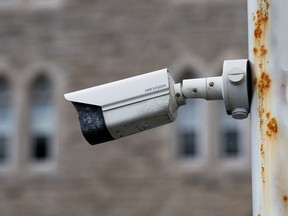
But more surprisingly to national security specialists is the fact that the National Research Council (NRC) and Windsor-Detroit Bridge Authority continue to use such gear, in apparent violation of Joly’s 2025 order.
Article content
Article content
“The cameras referenced in the 2024 (document) remain in use at WDBA’s community office, which serves as a space for WDBA to share non-confidential information with the public. The cameras will no longer be in service as of November 2026,” said bridge authority spokesperson Heather Grondin.
Article content
In a statement, NRC spokesperson Pamela Pilon said the organization removed all Hikvision gear from its security systems in 2025, but continues to use them to monitor “non-sensitive experiments and work areas.”
Article content
“None of the NRC’s remaining Hikvision cameras are connected to the internet or NRC networks,” Pilon said. “The cameras used in research will be eliminated this year.
Article content
Article content
Neither of those explanations satisfied Molinaro or Andrew Kirsch, a former CSIS intelligence officer and founder of risk consultancy Kirsch Group.
Article content
“You’d like to think that if the government’s going to implement a ban, at the very least the government can follow it, right?,” Kirsch said.
Article content
“If it’s important enough for us to want to look at it, it may be important enough for someone else to want to look at,” Kirsch said.
Article content
For Molinaro, the Chinese government’s or hackers’ interests in espionage isn’t just towards classified or sensitive information. Seeing who may be transiting through a federal office, everyday conversations or finding out more about NRC experiments can all be extremely valuable to a foreign intelligence service.
Article content
Andrew Elvish, vice-president at Montreal-based security software firm Genetic, said that his company has essentially barred clients from connecting Hikvision hardware to their tech because of the risks.
Article content
“If you should wish to make a terrible technology decision, you will have to sign a waiver to hold us harmless when the sh-t hits the fan, as we believe it surely will, and (you) did that against our own financial interests,” Elvish said.







Opposition Says WA Should Not Be Included in National Gas Reserve Scheme
The federal opposition is marking its turf on plans to create a...

Greens Elect Former MP Mike Morrice, the Sole Candidate, to Lead Party
Newly elected Green Party Leader Mike Morrice points as he speaks at...
Breast Milk Can Be Lifesaving for Premature Babies, Quebec Charity Says
When Annie Sicotte gave birth to her first daughter 11 weeks early,...

Is Autumn Glow the Next Winx? Inside the Making of a Racing Superstar
Autumn Glow now has six Group 1 victories—and she is fast becoming...