Chris Selley: If judges now can’t even tell what a ‘fact’ is, we’re really cooked
 Chris SelleyUpdated 2 hours Ago3 Mins read

Article content
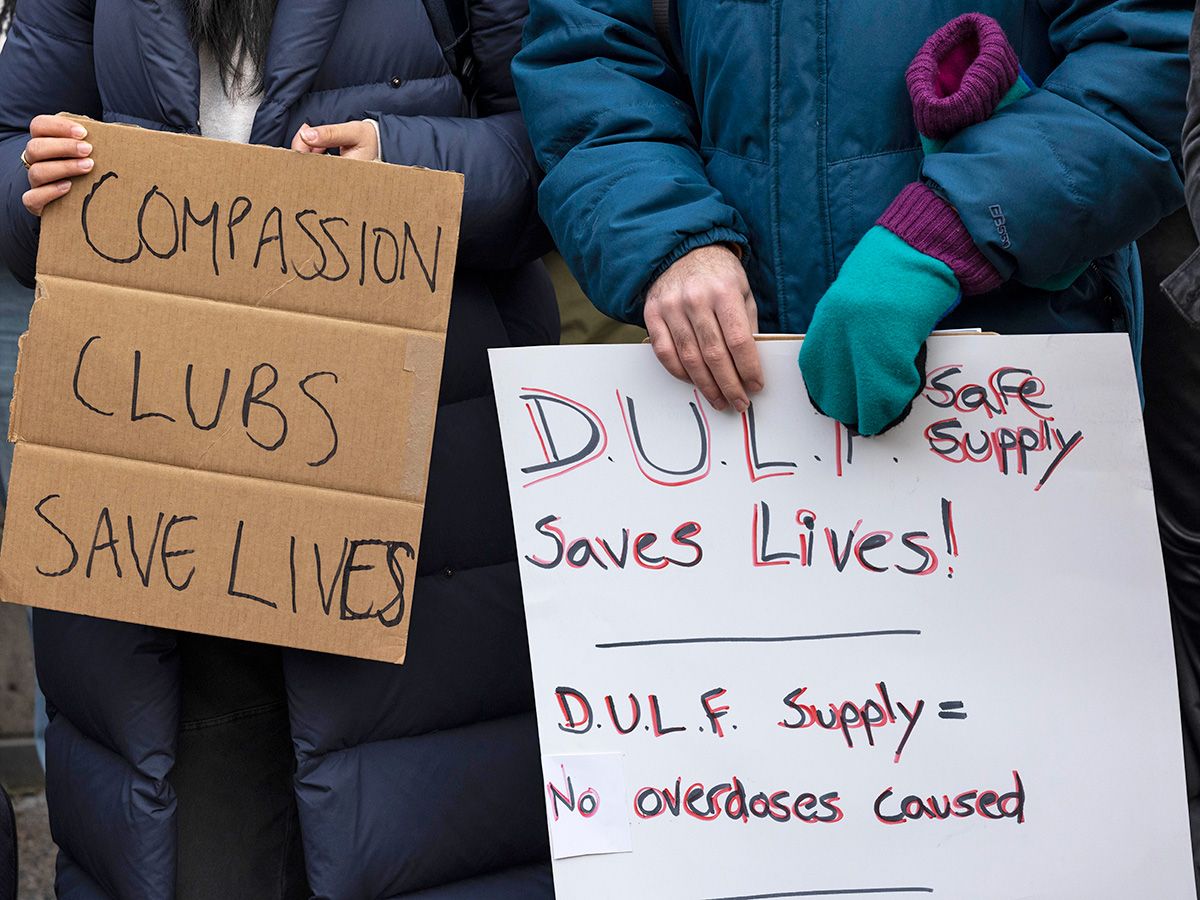
B.C. Supreme Court Justice Catherine Murray added a notable item to Canada’s rich library of addlepated court rulings this week when she ruled in favour of the proprietors of the Drug User Liberation Front (DULF), who are by any dictionary definition — and, police allege, by the criminal definition — drug dealers. They sell cocaine, meth and heroin, only the best! But they do not want to face consequences for dealing drugs, because they’re not that kind of drug dealers. They’re a “compassion club,” you understand. They screen out the riff-raff, apparently.

THIS CONTENT IS RESERVED FOR SUBSCRIBERS
Enjoy the latest local, national and international news.
- Exclusive articles by Conrad Black, Barbara Kay and others. Plus, special edition NP Platformed and First Reading newsletters and virtual events.
- Unlimited online access to National Post.
- National Post ePaper, an electronic replica of the print edition to view on any device, share and comment on.
- Daily puzzles including the New York Times Crossword.
- Support local journalism.
SUBSCRIBE FOR MORE ARTICLES
Enjoy the latest local, national and international news.
- Exclusive articles by Conrad Black, Barbara Kay and others. Plus, special edition NP Platformed and First Reading newsletters and virtual events.
- Unlimited online access to National Post.
- National Post ePaper, an electronic replica of the print edition to view on any device, share and comment on.
- Daily puzzles including the New York Times Crossword.
- Support local journalism.
REGISTER / SIGN IN TO UNLOCK MORE ARTICLES
Create an account or sign in to continue with your reading experience.
- Access articles from across Canada with one account.
- Share your thoughts and join the conversation in the comments.
- Enjoy additional articles per month.
- Get email updates from your favourite authors.
THIS ARTICLE IS FREE TO READ REGISTER TO UNLOCK.
Create an account or sign in to continue with your reading experience.
- Access articles from across Canada with one account
- Share your thoughts and join the conversation in the comments
- Enjoy additional articles per month
- Get email updates from your favourite authors
Sign In or Create an Account
or
Article content
Article content
Murray decided that Section 5(2) of the Controlled Drugs and Substances Act — “no person shall, for the purpose of trafficking, possess (a listed prohibited) substance” — violated both “the right to life and security of the person,” i.e., Section 7 of the Charter, and also the right to equality before the law, i.e., Section 15.
Article content
Recommended Videos
Article content
By signing up you consent to receive the above newsletter from Postmedia Network Inc.
Article content
Now, that’s crazy enough on its own. I’m so sympathetic to harm-reduction efforts that I’m furious how much their implementers have buggered it up. But to say the Canadian government effectively cannot ban the distribution for profit of certain substances and be in Charter compliance is … well, something I would expect a group called the Drug User Liberation Front to argue. Not a Canadian court. Murray is a former prosecutor!
Article content
It is unreasonable to ask or expect that your average Canadian would read Murray’s 22,000-word court ruling, or any other. John le Carré, they are not. It’s the media’s job to condense those rulings down to a digestible format, and we do a reasonable job, sometimes much better. (Subscribe to National Post!) But if you want to drive lunatics from the bench, which I do, and which I think most Canadians would support as a group endeavour, it’s difficult to really drive home how much truly unhinged thinking goes on in some rulings without reading at least the juiciest parts. And Murray’s ruling is juicy like a ripe pineapple plucked straight from a Polynesian shrub.
Article content
Article content
The most jaw-dropping elements, from a layman’s standpoint, are some of the things Murray considers “facts.”
Article content
Article content
“Fact: There is a need for non-medicalized safer supply,” she writes.
Article content
“Safer supply” refers to the notion of providing pharmaceutical-grade drugs to addicts as a sort of remedial maintenance procedure, ideally leading to lasting treatment — but even if not, at least they know what they’re taking and can measure the dose against their tolerance.
Article content
“Non-medicalized” means “no doctors involved.”
Article content
Safe supply went terribly wrong even with doctors involved, as Adam Zivo has compellingly reported in National Post, with opioids intended for doctors’ patients being resold on the street in exchange for precisely the junk the program is meant to get addicts off. (Most Canadians suffering from debilitating drug addictions are not addicted to hydromorphone — the most commonly prescribed “safer supply” opioid — but rather to fentanyl. I have never quite understood the point of trying to manage an addiction to one drug with a clean supply of a weaker one. The outcome that occurred seems near-inevitable.) Removing the medical profession from the equation entirely does not seem like a guaranteed victory.







Anti-Israel Oct. 7 event to ‘honour martyrs’ will not proceed on U of T campus: university
University College at University of Toronto in Toronto, Ontario on Wednesday, September...
Conrad Black: Carney’s invasion musings
Prime Minister Mark Carney speaks during a Liberal caucus meeting on Parliament...

Co-Pilot Used Crash Axe in Attempted Terrorist Attack on Israel-Bound Flight, UAE Says
The United Arab Emirates prosecutor general said Saturday that the co-pilot of...

Week in Photos: FlyDubai Flight Rescued, SpaceX Starship Flight 14, and US Military Withdrawal From Iraq
|October 02, 2026Updated:October 03, 2026French firefighters wave flares and trade union flags...