Article content
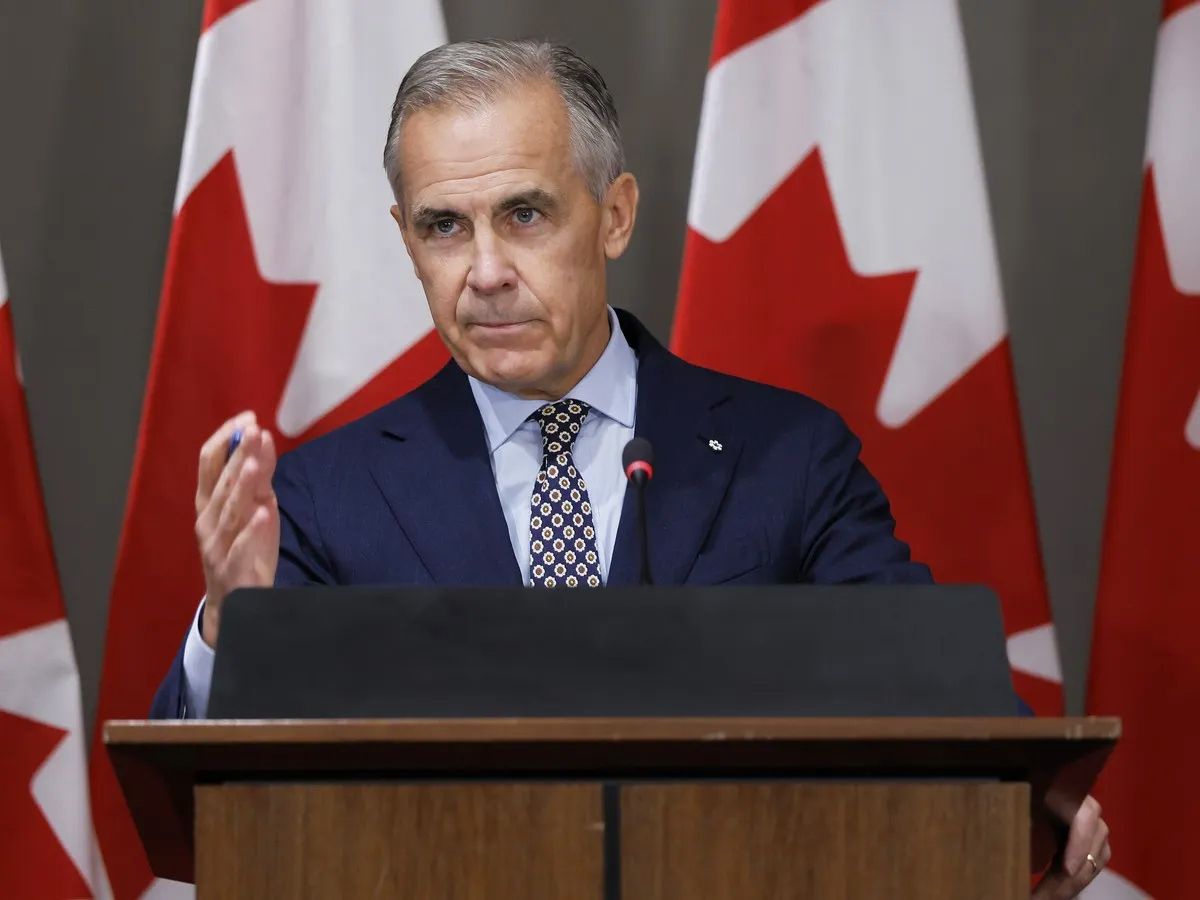
The green shoots of rational thought may finally be surging out of the ground in the current imbroglio between Canada and the United States. In his recent interview with the New York Times, Prime Minister Carney made a good many appropriate conciliatory noises, without backing down an inch on the legitimate points of Canadian sovereignty that he has been making. It was perhaps foreordained that before this exchange reverted to reasonable civility between apparently responsible people, it was necessary that reference be made to the possibility of armed conflict between Canada and the United States.

THIS CONTENT IS RESERVED FOR SUBSCRIBERS
Enjoy the latest local, national and international news.
- Exclusive articles by Conrad Black, Barbara Kay and others. Plus, special edition NP Platformed and First Reading newsletters and virtual events.
- Unlimited online access to National Post.
- National Post ePaper, an electronic replica of the print edition to view on any device, share and comment on.
- Daily puzzles including the New York Times Crossword.
- Support local journalism.
SUBSCRIBE FOR MORE ARTICLES
Enjoy the latest local, national and international news.
- Exclusive articles by Conrad Black, Barbara Kay and others. Plus, special edition NP Platformed and First Reading newsletters and virtual events.
- Unlimited online access to National Post.
- National Post ePaper, an electronic replica of the print edition to view on any device, share and comment on.
- Daily puzzles including the New York Times Crossword.
- Support local journalism.
REGISTER / SIGN IN TO UNLOCK MORE ARTICLES
Create an account or sign in to continue with your reading experience.
- Access articles from across Canada with one account.
- Share your thoughts and join the conversation in the comments.
- Enjoy additional articles per month.
- Get email updates from your favourite authors.
THIS ARTICLE IS FREE TO READ REGISTER TO UNLOCK.
Create an account or sign in to continue with your reading experience.
- Access articles from across Canada with one account
- Share your thoughts and join the conversation in the comments
- Enjoy additional articles per month
- Get email updates from your favourite authors
Sign In or Create an Account
or
Article content
Article content
Ive described this elsewhere as equivalent in likelihood to an invasion of Martians or of angry elves commanded by Santa Claus. In the early 1920s Canadian Lt.-Col. James Buster Sutherland Brown, in charge of strategic planning, conceived of a conflict with United States in which Canada would take the initiative by storming across the border, seizing cities east and west. He was regarded at the time as possibly deranged and transferred to other tasks, but was revived decades later by militant anti-Americans in Canada as a clairvoyant folk hero.
Article content
Recommended Videos
Article content
By signing up you consent to receive the above newsletter from Postmedia Network Inc.
Article content
Of course, there have been moments in the distant past when armed conflict on the Canada-U.S. border was a legitimate consideration. The admirers of the founders of the U.S. Democratic Party, Thomas Jefferson and James Madison, commended themselves for doubling its size of America by the Louisiana Purchase from Napoleon, while shrinking the defense budget. They failed to notice that in disbanding the army of 20,000 trained soldiers that the first president, General George Washington, and his chosen successor John Adams had maintained, they lost all deterrence against abusive conduct by the Royal Navy. The British imposed a naval blockade on the United States and overwhelmed the commerce of New England with smuggling from Canada, and Jefferson invoked the insurrection act in border areas.
Article content
Article content
President Madison, principal author of the Constitution of the United States and one of the greatest lawgivers in history, rising above Hammurabi, Justinian, and Napoleon, plunged into the war of 1812 unaware that he had no forces whatever to expel the British from Canada. He was also unable to overcome the loyalty of the French Canadians to the British crown, which they had promised in exchange for the freedom of religion, language, and the Civil Code that had been assured to them in the Quebec Act of 1774. Many years later, in the last months of his life in 1826, Jefferson described the conquest of Canada as a mere matter of marching. Only if you had the troops to march.
Article content
When Canada became an independent country, July 1, 1867, the minister of defense and the militia, Sir George-Etienne Cartier, in preparation for anticipated cross-border attacks by the American Fenians, recent immigrants from Ireland, fugitives of the famine full of hate for the oppressions of the English in their home country, managed the astounding feat, which would not be easily duplicated today, of raising an armed and trained militia of nearly 40,000 Canadians near border crossing points with the United States from New Brunswick to Southwestern Ontario. This deterred the Fenians, and at the Washington conference of 1871, our first and shamefully desecrated prime minister, John A. Macdonald, joined and was a key player with the British Empire delegation in working out a comprehensive settlement of all American grievances with Britain and gaining the clear recognition of both great powers of Canadas independence.




Anti-Israel Oct. 7 event to ‘honour martyrs’ will not proceed on U of T campus: university
University College at University of Toronto in Toronto, Ontario on Wednesday, September...
Chris Selley: If judges now can’t even tell what a ‘fact’ is, we’re really cooked
Facts? Supporters of the Drug User Liberation Front outside a Vancouver courthouse...
Co-Pilot Used Crash Axe in Attempted Terrorist Attack on Israel-Bound Flight, UAE Says
The United Arab Emirates prosecutor general said Saturday that the co-pilot of...
Week in Photos: FlyDubai Flight Rescued, SpaceX Starship Flight 14, and US Military Withdrawal From Iraq
|October 02, 2026Updated:October 03, 2026French firefighters wave flares and trade union flags...