Conservative MP Calls Attention to Partial Chinese Ownership of Canada’s Biggest LNG Company
 Paul Rowan BrianUpdated 4 hours Ago3 Mins read
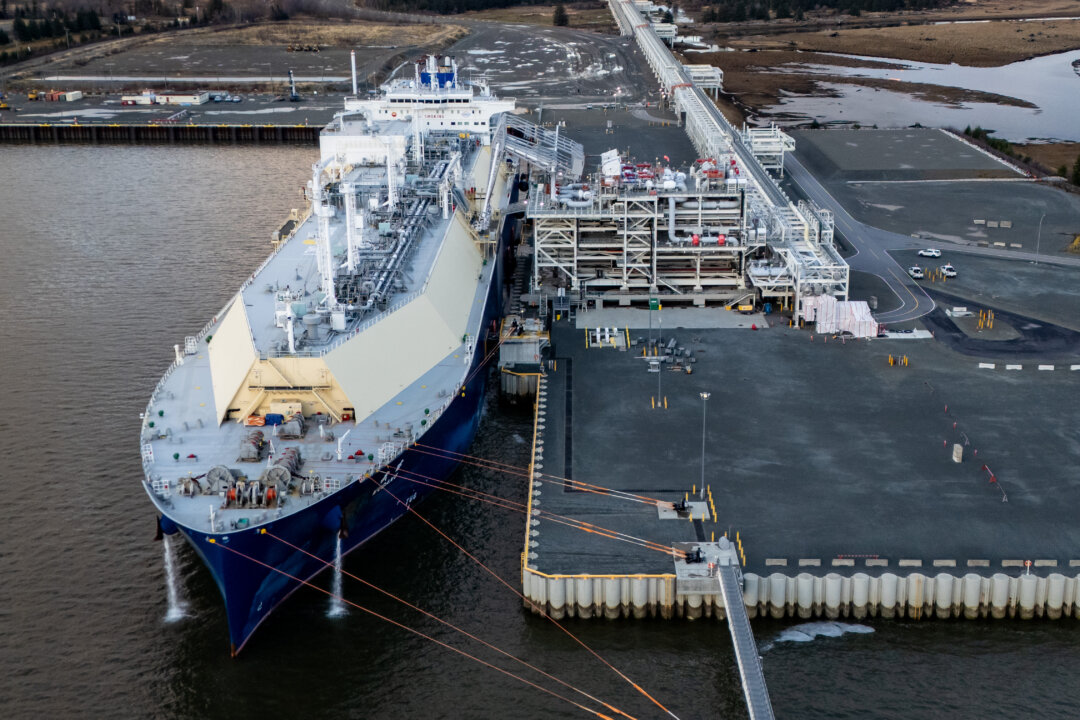
Conservative MP Dean Allison is calling attention to the fact that Chinese state-controlled entity PetroChina owns 15 percent of Canada’s largest LNG company, LNG Canada.
LNG Canada recently announced a final investment decision on Phase Two of its existing liquefied natural gas (LNG) export terminal in northern B.C., which became operational in the summer of 2025 and is Canada’s first large-scale LNG export facility. The company says the expansion will be operational by the early 2030s and double production capacity from the current 14 million tonnes per year to 28 million tonnes.
Ottawa stated that the project expansion is expected to draw approximately $33 billion in private-sector capital and will make the LNG Canada facility the second-largest LNG facility on the globe.
LNG Canada is a joint venture held by Shell at 40 percent, Malaysian company Petronas at 25 percent, Mitsubishi Corporation and PetroChina at 15 percent apiece, and Korea Gas Corporation at 5 percent.
The matter of PetroChina’s stake in LNG Canada has arisen previously during a parliamentary committee hearing this past April when Conservative MP Shannon Stubbs asked Minister of Internal Trade Dominic LeBlanc whether Ottawa had carried out a national security review of PetroChina’s stake.
LeBlanc replied that he had been “briefed regularly” by officials from Canada’s Major Projects Office and Canadian national security officials.
“I am satisfied, after the briefings I received, that the review is done,” LeBlanc told Stubbs.
The government has not publicly disclosed details of the review carried out about PetroChina’s stake in LNG Canada, citing confidentiality rules under the Investment Canada Act.
A 2019 commentary in the Chinese regime state-owned CGTN claimed that the building of the LNG Canada plant in Kitimat and the Kinder Morgan pipeline shipping oil to the B.C. coast were “in large part to serve the Chinese market.”
“PetroChina’s 15 percent stake, the LNG plant is virtually guaranteed financial success. China resetting the relationship could also wean Canada away from over-dependence on the U.S., which already is the destination of over 75 percent of Canadian export,” the commentary said.
China is the major destination of the Kinder Morgan (Trans Mountain) pipeline’s tanker exports of Canadian crude oil
According to figures published by the Canadian Association of Petroleum Producers, from the start of LNG Canada’s operations in June 2025 through January 2026, 41 percent of its exports went to South Korea, 27 percent to Japan, 25 percent to China, and 7 percent to Taiwan.
PetroChina also has interests in other energy assets in Canada, including oilsands and gas production and pipeline assets in Alberta.
LNG Canada has said that large prefabricated sections for its Phase 2 expansion will be built in China using Chinese steel, saying that the components can’t be built in Canada.
Dean Baxendale, CEO of the China Democracy Fund and president of Optimum Publishing International, said that the Chinese regime could use Canada’s energy exports as leverage.
“I think ultimately they’ll hold that over our head, just as they have done with canola,” he said in an interview.
China’s Acquisition of Canadian Energy Companies
Previous concerns over Chinese state-controlled entities buying stakes in Canadian energy occurred in 2012 when the China National Offshore Oil Corporation (CNOOC) took over Calgary-based Nexen.
The Harper administration at the time approved the $15 billion takeover, but announced that any future purchases of companies related to the oilsands by foreign governments would be blocked except under exceptional circumstances, while acquisitions across all other major energy and economic sectors would face significantly stricter national security and regulatory scrutiny.
The acquisition of Nexen by CNOOC took place amid heightened Chinese investment in Canada’s energy sector, with Chinese state-owned companies spending more than $100 billion on acquiring Canadian energy assets from the late 2000s through the early 2010s, including interests in oil sands, natural gas, and LNG projects.
In April, concerns were raised by the NATO Association of Canada on Chinese investment into Canadian energy assets, concluding that while it could speed up infrastructure development and grow Canada’s reach into Indo-Pacific energy markets, Chinese ownership and investment also poses risks around cybersecurity, geopolitics, and governance.
“Even minority equity positions may provide investors with governance rights, operational visibility, and informational access that carries strategic implications,” the association noted, citing PetroChina as one example of a Chinese state-run company that has investments in Canada’s energy sector.





Two Iranian men charged over terror plot against Manchester Jews: U.K. police
Armed police officers talk with members of the nearby community following a...
Carney launches 13-member national council to advise on artificial intelligence
Montreal-based computer scientist Yoshua Bengio, considered one of the godfathers of AI,...

Chinese Rights Lawyer Released After Prison Cancer Diagnosis, Seeks Review of Disbarment
Chinese human rights lawyer Qin Weijin was released from prison on Sept....
Any Chinese Attack on Taiwan May Turn Japan’s Outlying Islands Into a Battleground: Analysts
China is surveying waters near Japan’s southwestern islands to prepare for a...