Throwing something away that is urgently needed, expensive and difficult to source sounds crazy. Yet out of the 60 metals contained in old electronic devices like phones, screens or washing machines, only a few get recycled. That includes precious metals like gold or silver and some other metals like aluminium or copper. The rest are effectively single-use metals, used once then lost during collection or through incineration.
Metals are mined from ore and refined by using a lot of energy and resources as part of complex global supply chains. Think of the diesel needed to power the huge trucks in the mine, the chemicals needed to extract the metals from the ores or the pollution from intense furnaces.
By throwing away metal-rich electronics and not recovering these precious resources, we lose all the effort we put into getting the metals out of the ground. Yet these metals are urgently needed for green technologies such as wind turbines and heat pumps, as well as for conventional industries including car manufacturing, aerospace or the production of machinery. At the same time, most of them are not physically accessible for mining within Europe.
In research published with my colleagues, we investigated the different stages at which metals get wasted when items like LED lights and air conditioners get thrown away.
We identified that a large quantity of electronic waste (56%) in the EU between 2006-21 was not collected. Metals, however, can only be recovered if they end up in the right treatment facilities. Old devices often get thrown into the household waste bin, and then electronics are too mixed up with other rubbish so the metals won’t ever get separated.
While the collected waste quantity has substantially risen in recent years in some EU member states, others still lag behind. Proper e-waste collection thus remains a top priority across the continent.
A large chunk of metals is also lost during the sorting and recycling stages, mostly due to inefficient sorting. For many metals, there are no available recycling technologies. Most precious metals like gold or silver are recovered, while economically critical and in-demand metals like cobalt, gallium, tantalum or tungsten are currently lost in incineration with other undesirable substances.
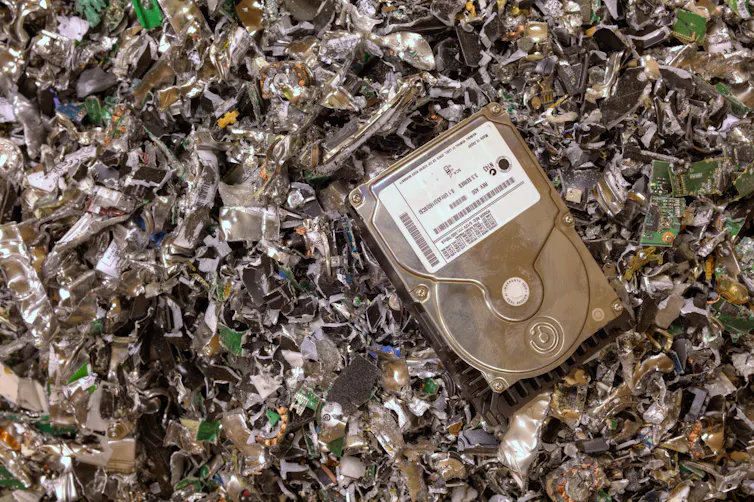
We identified the products that contain the most of each metal. This enables the collection and recycling sectors to prioritise the processing of key products. For neodymium hi-fi devices and speakers, small IT devices like network routers or hard disk drives matter most. Laptops are a rich source of gallium, for example. Our interactive online dashboard outlines information about the metal content of 54 device categories. For a deeper dive, we have published the data available in an open access repository.
Securing the supply chain
E-waste collection and recycling is often overlooked as a resource. For example, the amount of gallium in our e-waste is enough to reduce the EU’s import dependency of this metal by up to 40%. Tantalum quantities are estimated at 23% of total demand, as well as magnesium and tungsten quantities both with 12%, along with several other critical raw materials.
The EU could build its own secure resource supply chain by using secondary European metals from old electronics, batteries and other sources like incineration ash. That protects the EU from geopolitical disruptions in unstable parts of the supply chain while substantially reducing the environmental consequences associated with producing these metals.
This contributes to building a circular economy in which waste becomes a valuable input for new products. It also generates employment and fosters the development of emerging technologies for efficient metal recovery.
To achieve this, the EU needs to focus on where e-waste is currently lost, namely in the wrong waste bins, both from consumers and businesses. Additionally, legal and illegal exports of e-waste from the EU also lead to loss of metal resources.
While primary responsibility lies with the regulatory bodies, consumers can help by taking e-waste to the correct collection facilities and never disposing of it in household waste bins. Combined with the development and deployment of enhanced recycling technologies, the desired metals can be recovered much more efficiently from the waste that is already collected.
Europe is not facing a scarcity problem but a recovery challenge, and one that can be solved. With better collection, targeted interventions and continued innovation in recycling, the metals in our e‑waste can become a secure domestic resource base that strengthens European industry, reduces environmental pressures and accelerates the transition towards a truly circular economy.





Sweden elections: why immigrants are underrepresented at the polls
The Swedish election has turned into a nail-biter. With the majority of...

A Swedish ghost story
Ghosts in Sweden? It sounds strange to place the supernatural in a...
Carney says he’s ‘pleased’ with Stephen Harper’s support during investor summit
Prime Minister Mark Carney speaks during the second day of the inaugural...
Carney says Trump’s White House gift came with odd warning: ‘Maybe they’ll shoot you’
Prime Minister Mark Carney and U.S. President Donald Trump at the White...