Existing-Home Sales Fall to Slowest Pace in More Than a Year
 Bill PanUpdated 2 hours Ago2 Mins read
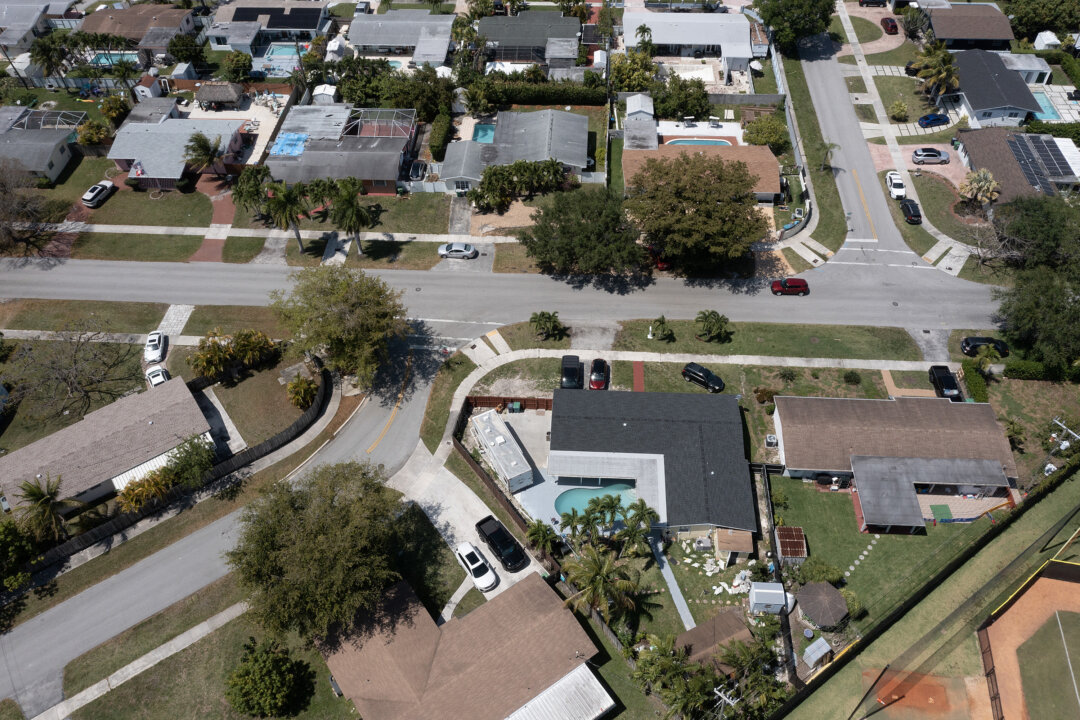
Sales of previously owned homes fell in August to their slowest pace in more than a year, as elevated mortgage rates and home prices continued to keep many prospective buyers on the sidelines.
Existing-home sales declined 2 percent from July to a seasonally adjusted annual rate of 3.98 million, the National Association of Realtors (NAR) said on Thursday.
Sales were also down 1.2 percent from a year earlier.
The last time the annualized sales pace fell below 4 million was in June 2025, when it stood at 3.93 million.
At the regional level, sales were largely unchanged from July in the West but declined in the Northeast, Midwest and South, according to NAR.
Compared with a year earlier, sales fell in every region except the South, where they held steady.
Even as sales slowed, home prices continued to climb.
The median existing-home sales price rose 1.6 percent from a year earlier to $429,100, the highest level on record for an August.
It marked the 38th consecutive month of year-over-year price increases.
The Northeast recorded the largest annual price increase, with the median price rising 4.3 percent to $556,900.
The Midwest followed with a 3.3 percent increase to $340,400, and the South slightly edged up 0.7 percent to $366,500.
The West was the only region to record a decline, with the median price slipping 0.2 percent to $619,100 from last year.
High borrowing costs remain a major obstacle for prospective buyers.
The average rate on a 30-year fixed mortgage stood at 6.71 percent as of Sept. 3, according to Freddie Mac.
This was up from 6.66 percent a week earlier and 6.50 percent a year earlier.
Mortgage rates have since moved higher as U.S. Treasury securities yields rose, driven in part by the market’s concerns about persistent inflation and growing government debt.
Mortgage rates typically track the yield on the 10-year Treasury.
“Mortgage rates and home sales move in opposite directions, so it’s not surprising to see a mild dip in home buying activity due to high mortgage rates,” NAR Chief Economist Lawrence Yun said in a statement.
“Still, home prices are rising, and existing home sales are actually up 1.6 percent year-to-date through the first eight months of the year,” he added.
Despite high borrowing costs, Yun said job creation and wage gains continue to provide some support for housing demand.
Average hourly earnings rose 3.1 percent in August from a year earlier, according to the Labor Department.
NAR also noted that the economy added a net 643,000 jobs during the first eight months of the year.
“Job creation and wage growth typically drive housing demand,” Yun said.
The increase in supply could also give the buyers who are already out there more room to negotiate.
Total housing inventory rose to 1.62 million units in August, up 3.2 percent from July and 5.9 percent from a year earlier, according to NAR.
It was the first time since November 2019 that inventory exceeded 1.6 million units.
At the current sales pace, the available inventory represented a 4.9-month supply, up from 4.6 months in both July and August 2025. That was the highest level in more than a decade.
“The ample supply of homes for sale on the market is giving homebuyers better opportunities to negotiate,” Yun said.






US Weekly Unemployment Claims Dip as Layoffs Stay Low
The number of Americans filing for unemployment benefits dipped last week, signaling...

High Diesel Prices Lift US Producer Inflation in August
U.S. wholesale inflation climbed in August as higher crude oil and gasoline...

Life Insurance You Don’t Need Anymore (And the Kind You Might)
Life insurance can be an important part of your life. This is...

Apple Joins Foldable Phone Race With $1,999 Passport-Shaped iPhone Duo
CUPERTINO, California—Apple on Wednesday redefined its flagship smartphone with the launch of...