Extreme Weather on Prairies This Year Caused Nearly $2B in Insured Damages: Report
 Jason G. AntonioUpdated 2 hours Ago2 Mins read
Extreme weather events across the Prairies this year caused over $1.8 billion in insured damage, with heavy rain and flooding accounting for most of the losses and Edmonton hit especially hard, a new report says.
Alberta, Saskatchewan, and Manitoba were affected by 10 major weather events this summer, the Insurance Bureau of Canada (IBC) said in a report released Sept. 22. While wind, hailstorms, and wildfires are typically among the costliest summer risks on the Prairies, heavy rain and flooding caused the majority of damage across the three provinces this year.
The bureau noted that extreme weather hit Edmonton especially hard, with the city seeing record rainfall in June and July.
Top 10 Weather Events
Flooding, wind, and hail hammered Saskatchewan and Manitoba on June 9 and 10, causing more than $900 million in insured losses, the IBC said.
The storms brought tornadoes, hail, damaging winds, torrential rain, and flash flooding to communities across both provinces, affecting tens of thousands of residents and businesses, according to the report.
From July 4 to 6, strong thunderstorms swept across a wide area stretching from Alberta to northern Ontario. Some residents reported hailstones the size of billiard balls, while parts of the region received up to 100 millimetres of rain and strong wind gusts. The system caused more than $270 million in insured losses, the IBC said.
A slow-moving storm crossed the Prairies from June 26 to 30, triggering extensive flooding. Canmore and Kananaskis County in Alberta declared states of emergency, while insured losses from the event exceeded $160 million.
Prolonged rainfall also caused extensive flooding in Edmonton and surrounding areas on June 20 and 21, overwhelming sewer systems and flooding basements and streets. The event resulted in more than $160 million in insured losses.
Edmonton was hit by another major system on July 10 and 11, bringing flooding, wind and hail as part of a larger weather system that produced 10 tornadoes across Alberta and Saskatchewan. Insured losses exceeded $140 million.
The first major storm system to hit Edmonton came from May 31 to June 2, when prolonged rainfall over central Alberta caused significant flooding. Edmonton received more than a month’s worth of rain in a matter of days, flooding basements, roads and public spaces. The system caused more than $80 million in insured losses.
Severe thunderstorms hit southern Alberta on Aug. 11, bringing significant rainfall and large hailstones and causing nearly $70 million in insured losses.
On July 18, strong storms developed along Alberta’s central foothills, producing two EF2-rated tornadoes near Rocky Mountain House and Leslieville. The system also brought additional rain and flooding to Edmonton and caused more than $40 million in insured losses, the report said.
A windstorm swept through southern Saskatchewan and Manitoba on May 14, creating a dust storm that caused extensive damage to homes and businesses. The event resulted in more than $40 million in insured losses.
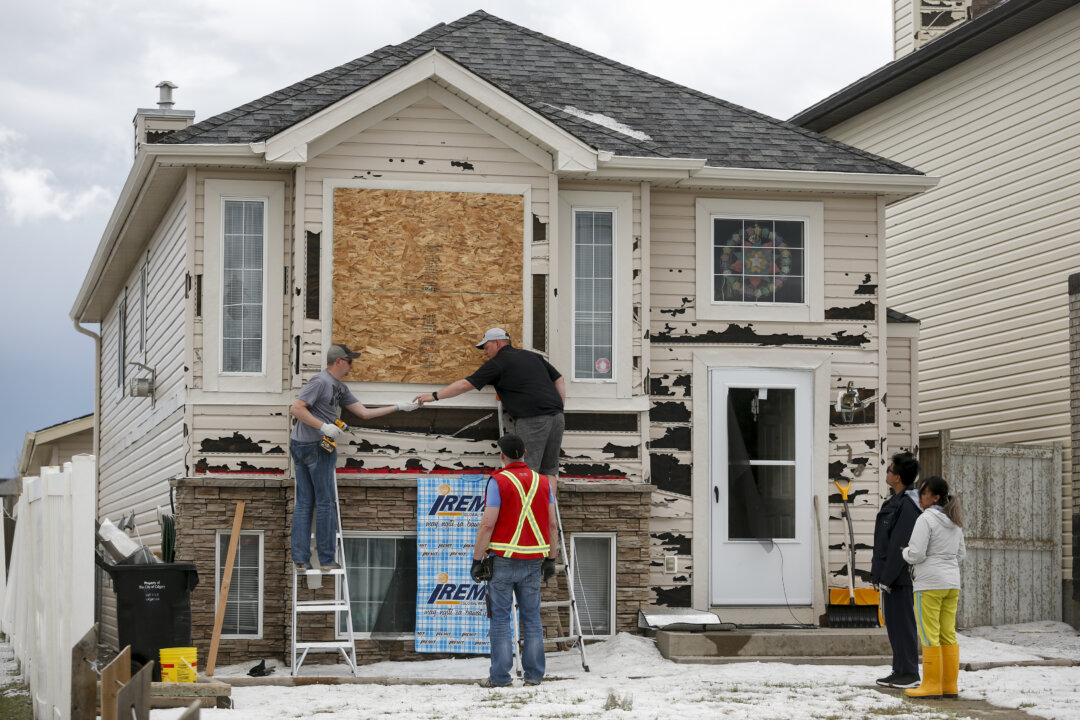
The final event occurred Aug. 23 in central Alberta, where large hailstones struck several communities, including Springbrook south of Red Deer. The hail shredded siding, smashed windows and dented vehicles, causing nearly $40 million in insured losses.
The IBC said insured losses from extreme weather have averaged $3.7 billion annually over the past decade, up from $1.4 billion in the previous decade and $883 million in the decade before that. The report said annual losses have increased by roughly 320 percent since the late 1990s.
Canada also experienced its costliest year on record in 2024, when extreme weather caused $9.4 billion in insured losses, the report said.
“Households, businesses, governments and communities across the country are increasingly affected by these escalating costs,” the IBC said.
The IBC urged governments to help Canadians better withstand extreme weather by limiting development in high-risk areas, encouraging more resilient homes, strengthening community protections and building codes, investing in infrastructure, and providing clearer guidance on reducing risks.





Afternoon front page: Synagogue shooting suspect dies; CBC journalist has run-in with protesters outside Yom Kippur service; and more
Sean Ward, the suspect in a shooting outside a Belleville, Ont., synagogue....
Avi Lewis defends Yom Kippur message called ‘despicable,’ claims critics are after ‘partisan points’
New Democratic Party leader Avi Lewis speaks during a press conference in...

Made in Canada: Pumpkin spice is nice, but have you tried banana bread? Five seasonal scents to fall for
Article contentWe always know when fall is in the air because, well,...

John Ivison: Carney throws the NDP a lifeline with his new labour bill
New Democratic Party leader Avi Lewis speaks during a press conference at...