Fed Hikes Interest Rates for First Time in 3 Years
 Andrew MoranUpdated 2 hours Ago3 Mins read
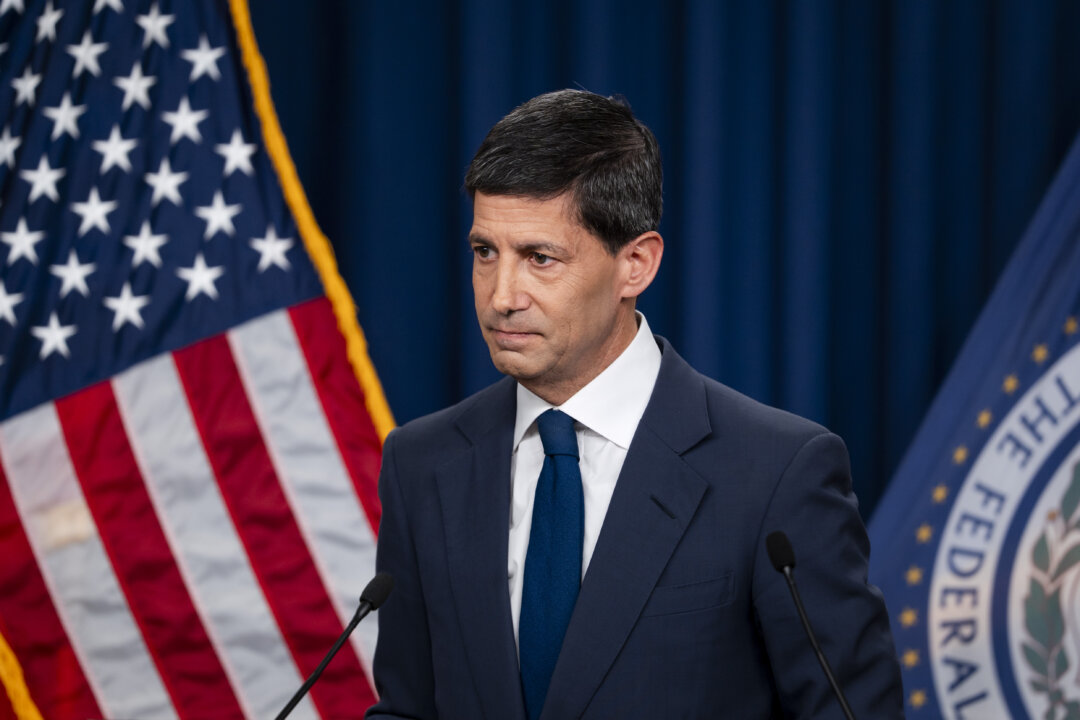
The Federal Reserve followed through on its first interest rate hike in more than three years on Sept. 16.
Officials voted 12–0 to increase the benchmark federal funds rate—a key policy rate that influences borrowing costs for businesses and consumers—by a quarter point to a new target range of 3.75 percent to 4 percent.
This was the first rate hike since July 2023.
“Economic activity is expanding at a solid pace. While uncertainty remains elevated owing, in part, to geopolitical developments, domestic spending has been resilient,” the Fed said in a post-meeting statement.
“Productivity growth is strong, and capital investment is robust. Job gains have kept pace with the workforce, and the unemployment rate has changed little.”
In his post-meeting press conference, Chairman Kevin Warsh stated that inflation is still too high.
Both major inflation measures—the Consumer Price Index and the Fed’s go-to Personal Consumption Expenditures (PCE) Price Index—show the annual headline rate is well above 3 percent. Core PCE, which omits the volatile energy and food categories, is also above the central bank’s 2 percent target.
Warsh said that neither he nor his colleagues are satisfied with the current pace of inflation.
“We must be confident that underlying inflation is moving to our objective, clearly and at sufficient speed,” Warsh told reporters.
“Today, the [Federal Open Market Committee] decided that this standard has not been satisfied. The committee’s unanimous vote shows our resolve to achieve price stability on a timelier basis.”
The U.S. policy rate is now the highest among G7 countries, according to LPL Financial data shared with The Epoch Times.
Summary of Economic Projections
In addition to the rate decision, the Fed released its Summary of Economic Projections, a quarterly outlook for policy and the economy.
Updated projections suggest a majority of policymakers anticipate another hike later this year, with the median policy rate at 4.1 percent. Officials do not expect another rate increase next year.
On the inflation front, the Fed’s go-to measure—the personal consumption expenditures (PCE) price index—was adjusted a bit higher for 2026, from 3.6 percent to 3.7 percent. Core PCE, which strips out the volatile energy and food prices, was also revised up to 3.4 percent, from 3.3 percent.
As for the economy, the Fed anticipates the median unemployment rate will be 4.1 percent over the next few years. Growth prospects were revised higher for 2026 and 2027 to 2.3 percent and 2.4 percent, respectively.
“Chairman Warsh and the rest of the committee are building a strong reputation through their laser focus on defeating inflation. Hawkish overtones are throughout the latest Summary of Economic Projections,” Jeffrey Roach, chief economist for LPL Financial, said in a note emailed to The Epoch Times.
“Given the current economic circumstances, the committee delivered what was needed, and markets are handling it remarkably well. Going forward, the inflation debate will likely center on the magnitude of improvement as geopolitical conflicts wane.”
For the second straight time, Warsh abstained from writing down his expectations. The central bank chief has repeatedly stated he wants to refrain from offering forward guidance.
The Fed will hold its next policy meeting on Oct. 27 and 28.
So far, the futures market is split on whether the Fed will follow through on a second consecutive rate hike in October, according to updated CME FedWatch data.
Market Reaction
U.S. financial markets were little changed following the rate decision as investors widely expected the policy move.
Yields on Treasury bonds were mixed.
The benchmark 10-year Treasury yield fell to below 4.96 percent. The 2-year yield, which generally tracks Fed policy expectations, was flat at 4.66 percent. The 30-year yield declined to 5.31 percent.
The U.S. Dollar Index (DXY)—a measure of the greenback against a weighted basket of currencies—surged 0.6 percent to above the 100 mark for the first time since mid-August.
“A unanimous decision to raise rates, and the suggestion of an additional hike later this year, will help remove some uncertainty for the market. That’s a positive,” Larry Holzenthaler, senior portfolio manager at Catalyst Funds, said in a note emailed to The Epoch Times.
“This is certainly a positive for the market. It’s fair to assume that if the Fed had not acted today, it would have caused meaningful strain across markets.”
Warsh said that the recent surge in bond yields is due to strengthening economic forecasts, growing capital competition, and the war in Iran.
This is a developing story. Please check back for further updates.





Mortgage Demand Drops as Rate Climbs Toward 7 Percent
Homes in a neighborhood in Cutler Bay, Fla., on April 20, 2023....

US Import Prices Rise on Higher Costs for Capital, Consumer Goods
U.S. import prices climbed last month on rising capital and consumer goods...

Consumers Open Wallets Again as Retail Sales Top Market Estimates
Consumers opened their wallets again in August after an unexpected decline in...

Why Some Banks Are Quietly Discontinuing Cash-Back Cards
You open your banking app and see a notice about your credit...