US Import Prices Rise on Higher Costs for Capital, Consumer Goods
 Andrew MoranUpdated 1 hour Ago2 Mins read
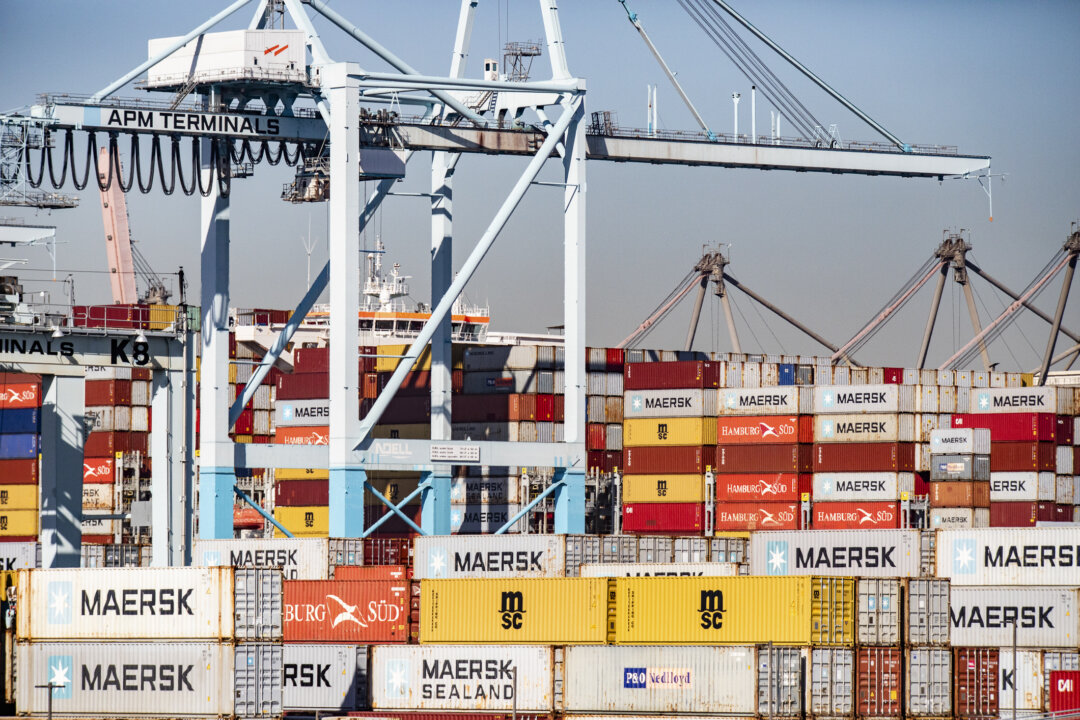
U.S. import prices climbed last month on rising capital and consumer goods costs, teasing firmer global inflation ahead.
Prices for U.S. imports rose 0.7 percent in August, eliminating the 0.3 percent declines logged in July and June, according to the Bureau of Labor Statistics on Sept. 16.
Economists had estimated a 0.4 percent increase.
Export prices advanced 0.6 percent in August, outpacing forecasts and reversing July’s 1.4 percent decline, as higher agricultural and non-agricultural costs lifted U.S. shipments.
These numbers do not include the costs behind global tariffs.
While surging energy costs have driven worldwide inflation pressures this year, last month’s rise in trade prices was driven mostly by non-fuel imports.
Petroleum import prices dipped 0.1 percent, compared with a 0.8 percent rise in non-fuel import prices.
The bureau reported higher prices for industrial supplies and materials, as well as capital and consumer goods.
Accelerating artificial intelligence-related infrastructure spending is pushing up prices for imported capital goods, such as computers, peripherals, and semiconductors.
Recent trade statistics show U.S. firms stepping up their purchases from abroad.
While chips have been largely at the center of the AI story, demand will likely travel down the supply chain, says Baadal Chaudhary, equity research analyst at Thornbug Investment Management.
“The AI buildout is creating demand not only for chips and electricity generation, but also for the electrical equipment, power-management systems and cooling infrastructure required to get that electricity efficiently from the grid to the GPU,” Chaudhary said in a note emailed to The Epoch Times.
The cost of Chinese goods rose 1 percent, the largest monthly increase since the bureau launched the index in January 2004.
This was fueled by the price of shipments of computer and electronic products.

A cargo ship sails into the port in Qingdao, Shandong Province, China, on Oct. 13, 2025. AFP via Getty Images
Additionally, prices for imports from Japan, the European Union, and Mexico climbed.
Prices for Canadian goods shipped to the United States decreased by 0.8 percent.
In the 12 months through August, import prices rocketed 7 percent—the largest increase since August 2022—and export prices spiked almost 9 percent.
Global Inflation Worries
The war in Iran, approaching its seventh month, has upended global energy markets and disrupted international supply chains.
As a result, global headline inflation risks have intensified, putting pressure on central banks to raise interest rates and cushion the blow of war-driven inflation.
Last week, the European Central Bank raised a trio of key interest rates by a quarter point in response to growing upside inflation risks.
The Federal Reserve is the next institution expected to raise rates as U.S. monetary policymakers conclude their meeting on Sept. 16.
Investors are betting on a more than 90 percent chance the Fed will follow through on a quarter-point rate hike—the first since July 2023—to soothe financial markets and prevent inflation from filtering through the broader economy.
Solid retail sales data potentially cemented a Fed rate hike, with transactions increasing 1.2 percent and coming in firmly above economists’ expectations.
“Although the big news of the day will be whether or not the Fed raises rates, this morning’s retail sales data was excellent,” Chris Zaccarelli, CIO for Northlight Asset Management, told The Epoch Times in an emailed note.
“Given the current path of inflation, relative strength of the labor market and underlying resilience of the consumer, there isn’t any reason why the Fed won’t raise rates by 25 bps.”
In addition, private employers added an average of 16,250 jobs per week in the four weeks ending Aug. 29, the ADP Research Institute said on Sept. 15.
Looking ahead, investors have penciled in a total of three rate hikes. The 2-year Treasury bond yield, which is sensitive to Fed policy expectations, has risen to 4.6 percent.
The Bank of Japan will also convene a policy meeting this week, and investors anticipate officials will deliver a quarter-point rate hike and lift its benchmark interest rate to a fresh 31-year high.







Fed Hikes Interest Rates for First Time in 3 Years
The Federal Reserve followed through on its first interest rate hike in...
Mortgage Demand Drops as Rate Climbs Toward 7 Percent
Homes in a neighborhood in Cutler Bay, Fla., on April 20, 2023....

Consumers Open Wallets Again as Retail Sales Top Market Estimates
Consumers opened their wallets again in August after an unexpected decline in...

Why Some Banks Are Quietly Discontinuing Cash-Back Cards
You open your banking app and see a notice about your credit...