Federal Reserve Opens Highly Anticipated September Meeting
 Andrew MoranUpdated 1 hour Ago4 Mins read
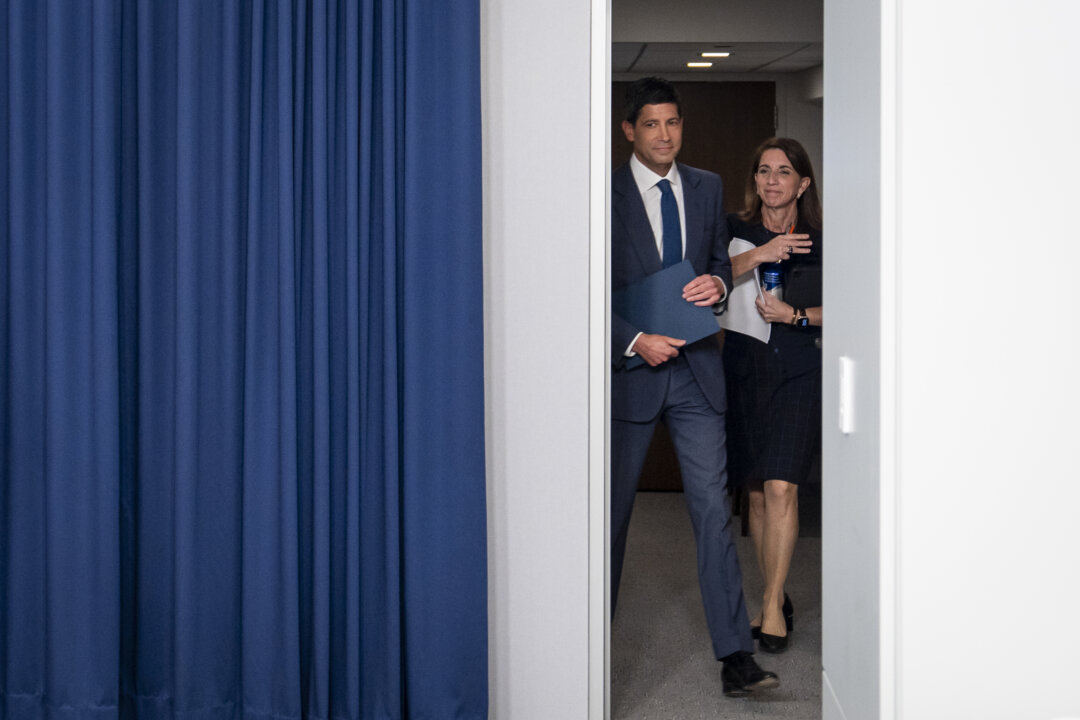
The Federal Reserve is opening its closely watched two‑day policy meeting on Sept. 15 as officials confront elevated inflation, rising interest rates, and the conflict in Iran.
Much has changed—both in inflation and in the labor market—since the Fed last met in July.
The headline annual consumer inflation rate has slowed to 3.4 percent. The 12-month core inflation rate, which strips out volatile energy and food prices, eased to 2.4 percent, its lowest level since March 2021.
Job growth roared back last month, with the economy adding 162,000 new jobs. The unemployment rate remains at 4.1 percent, and workforce participation has bounced back.
Because of upside inflation risks and economic conditions remaining in good shape, investors have fully priced in a quarter-point interest rate hike this month, which would raise the benchmark federal funds rate to a new target range of 3.75 percent to 4 percent.
The federal funds rate is important because it influences business and consumer borrowing costs.
The two-year Treasury bond yield—typically more sensitive to Fed policy expectations—is signaling three rate hikes, as it has reached 4.6 percent.
The entire yield curve has pushed higher, particularly on the long end, with the 10-year cracking 5 percent for the first time in three years and the 30-year recently touching its highest level since the global financial crisis almost 20 years ago.
Even economists, who have largely expected the central bank to hold steady, now expect the first rate hike since July 2023, according to a Reuters poll released on Sept. 11.
Jesse Marre, senior portfolio manager at Hilbert Group, said he sees a rate hike as a possibility.
“I think it’s likely they go along with the hike. When something is that close to fully priced, you create more market disruption by going against the pricing than by going with it,” he told The Epoch Times in an emailed note.
While disinflation—a slowing in the rate of inflation—is showing up across the data, “it is taking longer to show up in the headline numbers” because of the global oil price shock, Marre said.
A barrel of West Texas Intermediate—the U.S. benchmark for oil prices—topped $100 on the New York Mercantile Exchange on Sept. 14.
As of Sept. 14, the national average for a gallon of gasoline was almost $4.32, up by nearly 30 cents from a month ago. Diesel prices have also surged, hitting a record $6.23 per gallon, up from $3.69 last year.
On the one hand, the standard page from the institution’s playbook is to look past oil shocks, since its toolkit cannot produce more energy. On the other hand, the Federal Reserve could emulate its counterpart at the European Central Bank and take out an insurance rate hike to prevent second- or third-order effects of high oil and gas prices.
Last week, the European Central Bank increased its three key policy rates by a quarter point.
Pulled in All Directions
Despite calls for tightening, long-term inflation expectations remain well-anchored. Both the five- and 10-year breakeven rates are slightly above the Fed’s 2 percent target.
In addition, given the central bank’s long-held, data-dependent, meeting-by-meeting approach, the next batch of inflation data could mirror last month’s figures, according to the Cleveland Fed’s Nowcasting model.
Voices at the Federal Reserve have been mixed in recent weeks.
Cleveland Fed President Beth Hammack urged her colleagues to act on inflation. Fed board member Christopher Waller proposes to “give disinflation a chance.” New York Fed President John Williams in a recent interview with CNBC said he sees the inflation trend “moving slowly down.”
With core inflation at a more-than-five-year low, this could be Chairman Kevin Warsh’s line of defense for not following through on a 25-basis-point rate hike.
“It does allow Warsh to argue that the broader trend is still moving in the right direction,” Jay Woods, chief market strategist at Freedom Capital Markets, said in a note emailed to The Epoch Times.
Wall Street could react negatively if the central bank does not pull the trigger on a rate hike, sending the message to monetary policymakers that they are behind the curve.
“Fed Chair Kevin Warsh is clearly in the crosshairs this week,” Woods said. “So far, he has practiced patience, letting the market dictate the path of rates, and has been hesitant to make any move.”
But this also puts Warsh in a position he criticized at the Jackson Hole Economic Policy Symposium in August: the hall-of-mirrors problem.
In his inaugural keynote address, Warsh stated that when markets depend heavily on the Fed’s signals and the Fed, in turn, depends on market readings, everyone becomes more prone to missing emerging shifts, being surprised by sudden changes, and making policy mistakes.

Federal Reserve Chairman Kevin Warsh at the Jackson Hole Economic Policy Symposium in Jackson Hole, Wyo., on Aug. 28, 2026. Natalie Behring/Getty Images
“Market participants are unlikely to bear the biggest costs of the hall-of-mirrors problem,” Warsh said. “The most serious harm is likely to befall those without financial assets. If the Fed gets inflation wrong and judges the economy wrong, who gets the worst of it?”
At the same time, it could call into question the Fed’s credibility in grappling with inflation that has been above target for 66 consecutive months.
Then there is President Donald Trump, who nominated Warsh to succeed Jerome Powell.
Trump urged the Fed to cut interest rates, telling reporters that the United States “should be paying the lowest interest rate in the world.” His comments came after he threatened to cut trade with countries that run a surplus with the United States unless the central bank lowered interest rates.
In the end, the ball might be in Warsh’s court during the Sept. 15 to Sept. 16 Federal Open Market Committee meeting.
“I believe this week’s meeting ultimately comes down to the Chairman,” Woods said.

Senate to Hold Key Vote on Major Crypto Bill
The Senate will hold a procedural vote on a sweeping cryptocurrency bill...
US Private Credit Default Rate Hits Record High in August: Fitch
Stress in the U.S. private credit market persisted last month as the...
Trump Nominates Republican Congressman Wesley Hunt as Ambassador to Saudi Arabia
Rep. Wesley Hunt (R-Texas) in Trinity, Texas, on Feb. 19, 2026. Madalina...
US Will Not Ban Oil Exports, Interior Secretary Says at G20 Energy Meeting
U.S. Interior Secretary Doug Burgum told reporters on Monday that the United...