

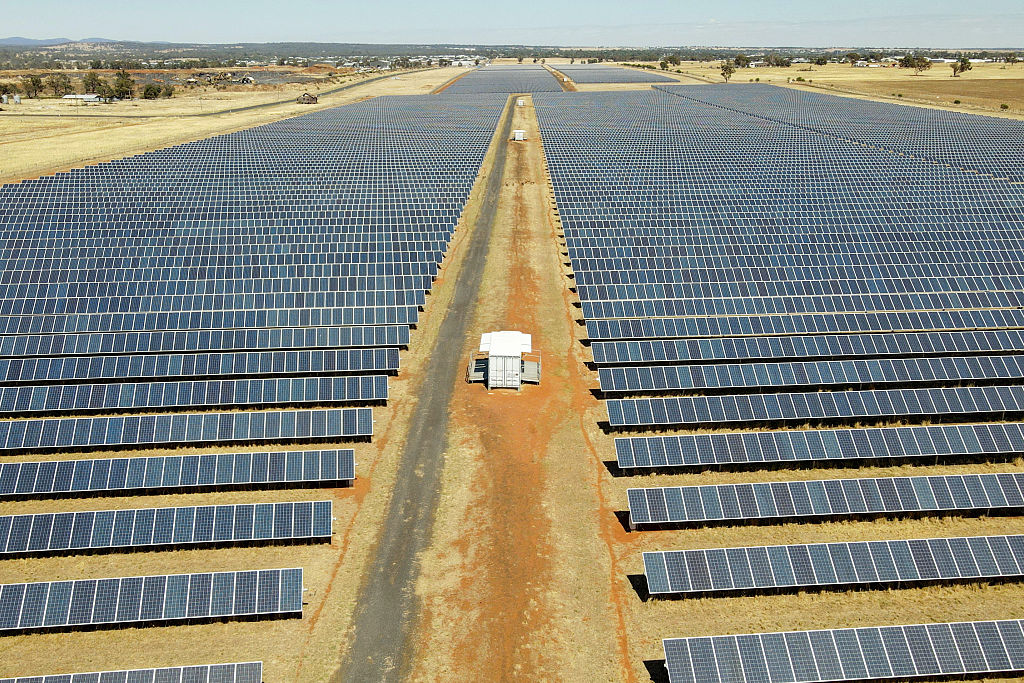
A logistics firm has opposed the idea of imposing a levy on all new solar panels installed in Australia to fund recycling, arguing that it would unfairly shift the cost onto new families and other first-time users who have not previously benefited from solar power.
This comes as Australia faces growing pressure to recycle the large number of solar panels that have reached the end of their useful life.
At a recent parliamentary hearing, Neeraj Das, founder and chief executive of Victoria-based panel recycler ElecSome, told the House Committee on Climate Change, Energy, Environment and Water that his firm processed only 100,000 panels in 2025, out of 1.4 million requiring recycling.
According to Das, many of those unprocessed panels remain at solar farms, as high transport costs prevent them from being sent for recycling.
In September 2025, a 60-strong industry delegation led by the Smart Energy Council (with RE-Alliance and others) met federal ministers to push for a mandatory product stewardship scheme to fund the recycling of solar panels.
At the same time, the council proposed a $10 (US$7.20) per-panel levy at installation to provide certainty for the recycling industry.
But Activ Group Solutions, a supply chain and sustainability company, told the Committee that the government should not consider this option.
According to the company, imposing a levy on sales of new panels would put the burden for disposing of Australia’s end-of-life panels—estimated to be 50 million units by 2035—on new families and other first-time users of the technology.
“By introducing a levy that’s not really very carefully crafted, you could end up having new families who want solar panels paying for the consumption of people two decades ago, and I think that’s inequitable,” said Group Chief Technology Officer Tom Jamieson.
“The people who’ve had that consumption enjoyed sort of very healthy subsidies, and to burden new families with paying for the cost of recycling that past consumption, I think that’s problematic.”
Instead, the company argued that disposal costs should fall on users replacing old panels with newer, more efficient, and higher-capacity models.
“For future removals, the party replacing or decommissioning a solar system should pay the real cost when waste arises. The cost shouldn’t be shifted backwards through a manufacturer-importer levy that will be reflected in new panel prices,” Activ Group’s founder and chief executive, Helen Jarman, said.
“So if I’m at the point where I’m upgrading my system, that cost of disposal is factored into my upgrade. If [it’s as a result of] a weather event, that’s handled through the insurer mechanism. If it’s a warranty process, that’s handled through the manufacturer, and so on.”
To deal with the existing backlog of old panels, Jarman suggested a separate, time limited fund specifically to tackle the problem.
“It should be a system or a fund or a process that is capped, evidenced, sunsetted, quarantined, and doesn’t become the reason for a permanent levy,” she said.
Jarman also argued that the current market is equipped to handle recycling demand without the need for further pilot schemes or funding for infrastructure that already exists.