FIRST READING: As First Nations acquire new land, political control, Beijing appears to take notice
 Tristin HopperUpdated 5 hours Ago3 Mins read
Article content
First Reading is a Canadian politics newsletter curated by the National Post’s own Tristin Hopper. To get an early version sent directly to your inbox, sign up here.

THIS CONTENT IS RESERVED FOR SUBSCRIBERS
Enjoy the latest local, national and international news.
- Exclusive articles by Conrad Black, Barbara Kay and others. Plus, special edition NP Platformed and First Reading newsletters and virtual events.
- Unlimited online access to National Post.
- National Post ePaper, an electronic replica of the print edition to view on any device, share and comment on.
- Daily puzzles including the New York Times Crossword.
- Support local journalism.
SUBSCRIBE FOR MORE ARTICLES
Enjoy the latest local, national and international news.
- Exclusive articles by Conrad Black, Barbara Kay and others. Plus, special edition NP Platformed and First Reading newsletters and virtual events.
- Unlimited online access to National Post.
- National Post ePaper, an electronic replica of the print edition to view on any device, share and comment on.
- Daily puzzles including the New York Times Crossword.
- Support local journalism.
REGISTER / SIGN IN TO UNLOCK MORE ARTICLES
Create an account or sign in to continue with your reading experience.
- Access articles from across Canada with one account.
- Share your thoughts and join the conversation in the comments.
- Enjoy additional articles per month.
- Get email updates from your favourite authors.
THIS ARTICLE IS FREE TO READ REGISTER TO UNLOCK.
Create an account or sign in to continue with your reading experience.
- Access articles from across Canada with one account
- Share your thoughts and join the conversation in the comments
- Enjoy additional articles per month
- Get email updates from your favourite authors
Sign In or Create an Account
or
Article content
TOP STORY
Article content
Recommended Videos
Article content
With B.C. still embroiled in controversy regarding the large-scale transfer of land and political control to First Nations, the Chinese embassy touted the completion of a summit to strengthen ties between Beijing and Indigenous groups.
Article content
Article content
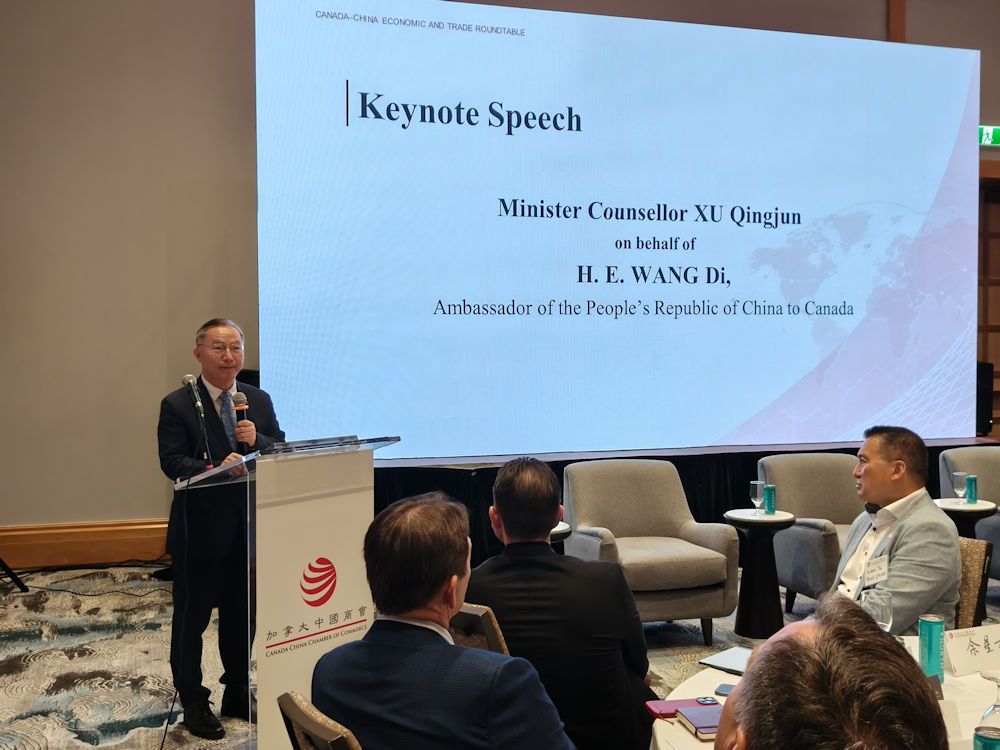
Convened on Sept. 3 in Vancouver, the “economic roundtable” included Ernie Daniels, president and CEO of the First Nations Finance Authority.
Article content
By signing up you consent to receive the above newsletter from Postmedia Network Inc.
Article content
In a statement, Chinese Ambassador to Canada Wang Di praised links with First Nations communities and expressed his hope that they would “lay an even more solid foundation for the China—Canada new strategic partnership.”
Article content
“The roundtable meeting discussed the future direction of China-Canada economic and trade cooperation, including cooperation on green transition, indigenous finance and community development,” read a summary by the embassy.
Article content
Also in attendance were former federal finance minister Bill Morneau and B.C. senator Yuen Pau Woo.
Article content
Summits between PRC officials and First Nations representatives have happened before. The Canada China Business Council, for one, has organized three all-Indigenous trade missions to Beijing, the most recent in 2024.
Article content
But the Sept. 3 roundtable is the Beijing-sanctioned event convened in the wake of a series of developments that have markedly increased Indigenous power, particularly in B.C.
Article content
Article content
Just one year ago, in August 2025, the B.C. Supreme Court released the landmark Cowichan Tribes decision which effectively ceded 300 hectares of privately owned land in Richmond, B.C. to the control of the Cowichan Tribes First Nation.
Article content
Article content
Although the decision is being appealed, the uncertainty has since crashed real estate values in the affected area by as much as 70 per cent, according to a recent interview published by the Business Council of British Columbia.
Article content
Another landmark decision, issued by the B.C. Appeals Court in December 2025, argued that DRIPA – a piece of 2019 legislation which encoded the United Nations Declaration on the Rights of Indigenous People into B.C. – effectively superceded the province’s existing laws.
Article content
The decision specifically struck down the Mineral Tenure Act, one of the oldest laws in B.C., in part because it violated the declaration’s clause that Indigenous peoples “own, use, develop and control” any land that they’ve held traditionally.
Article content
Over the summer, an internal document published by the B.C. Ministry of Finance confirmed for the first time that more than 120,000 hectares of B.C. Crown land is in the queue for transfer to First Nations as “treaty lands.”



How war and sanctions are reshaping how Russia governs its vast territory
As the world’s largest country that spans eleven time zones and shares...

Strait of Hormuz crisis: how danger and uncertainty can affect the mental health of seafarers
Published: September 10, 2026 7:28am EDT Mariusz Bugno/Shutterstock As instability in the...
Sweden’s prison population has doubled in a decade, and is set to spike even further – here’s why
Sweden’s criminal justice system was once held up as an example of...
Chris Selley: Carney’s EU cuteness is an unwelcome return to Justin Trudeau’s playbook
Canadian Prime Minister Mark Carney speaks during a press conference during the...