Icelandic Voters Reject EU Accession Talks in Blow to Bloc’s Growth
 Etienne FauchaireUpdated 3 hours Ago8 Mins read
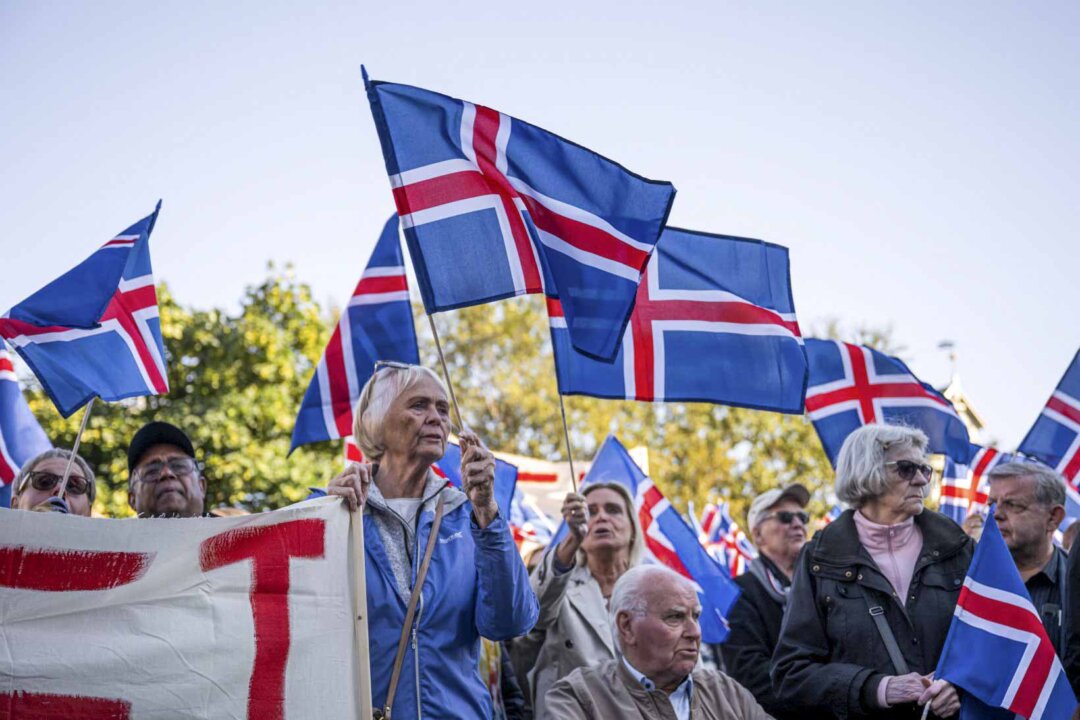
REYKJAVIK, Iceland—Icelanders on Aug. 29 voted against reopening negotiations to join the European Union, handing Social Democrat Prime Minister Kristrun Frostadottir’s government a defeat in a referendum it had brought forward by more than a year.
The ballot asks a single question: “Should Iceland resume accession negotiations with the European Union?”
Icelandic media outlets reported that 52.8 percent of ballots cast were against having negotiations with the EU and 47.2 percent were in favor. The referendum attracted 82.5 percent of eligible voters.
EU membership would require Iceland to give up authority over some laws and trade policy, as well as give up some control of its valuable fishing grounds in exchange for a role in EU decision-making and a path toward adopting the euro.
“The nation has spoken: A clear no to the proposed [EU] journey,” wrote Olafur Ragnar Grimsson, president of Iceland from 1996 to 2016, in a post on Aug. 30 on X.
The result closes, for the second time in 13 years, a question that has divided this North Atlantic nation of some 400,000 people since its banks collapsed in 2008.
Related Story

Gudrun Hafsteinsdottir, leader of the center-right Independence Party, which is the largest in the opposition, and the face of the “no” campaign, reacted immediately to the results on her Facebook page, writing, “The nation has spoken.”
For Hafsteinsdottir, the vote settles Iceland’s place without changing it.
“Iceland is a European country, and it will remain one regardless of whether the vote is ‘yes’ or ‘no,’” she told The Epoch Times hours before the election results were announced. “You do not have to be a member of the European Union to be European.”
At a news conference at 1 p.m. local time, Frostadottir said she was pleased with the high turnout in the Aug. 29 referendum and stressed that “47 percent of the population was interested in” reopening accession negotiations with the EU.
“I think it is important that we go into the coming weeks and months and respect that point of view,” she said.
The prime minister also said she had exchanged messages with European Council President António Costa, and she said the EU understands that there is still a desire for a continued strong relationship with Iceland.
In an interview with The Epoch Times, Gudlaugur Thor Thordarson, a former foreign minister and current lawmaker for the Independence Party, called the outcome “a huge victory for democracy and for the people of Iceland,” all the more so “because the government chose to hold the referendum in the summer, when people’s minds are not on politics, and had the state media and public institutions on its side.”
Snaeros Sindradottir Bachmann, executive director of the European Movement in Iceland, the leading civil society organization on the “yes” side, told The Epoch Times that she was disappointed by the result.
“I truly believe this was a window of opportunity for excellent negotiations with the EU and for Iceland to become part of the European family,” she said.
The European Movement will continue advocating for active Icelandic participation with the EU, Bachmann said.
A Result That Turned After Midnight
Polling stations opened at 9 a.m. and closed at 10 p.m., after which ballots from remote towns and fishing villages were transported to counting centers.
The first partial figures, drawn heavily from Reykjavik, put “yes” at nearly 58 percent, and the government’s supporters were cautiously optimistic. After midnight the rural and coastal constituencies began to report, and several fishing districts returned “no” majorities of more than 65 percent.

Icelandic voters queue to cast their ballots in a referendum on whether to reopen accession talks with the European Union at Reykjavik City Hall on Aug. 29, 2026. Etienne Fauchaire/ The Epoch Times
By early on Aug. 30 only the Southwest constituency, the commuter belt around the capital, remained to be confirmed. Media outlet RUV judged that it could not deliver the roughly 9,600-vote majority the “yes” side would have needed, and it wrote that Iceland had “clearly voted to reject the resumption of accession talks with the European Union.”
The referendum was advisory under Icelandic law, but the government had pledged to abide by it, and Frostadottir had said a “no” would keep EU membership off the agenda for the rest of her mandate, which runs to 2028. Whether to formally withdraw the 2009 application now falls to Parliament.
2 Parties, 1 Packed With the Young
At the “yes” campaign’s election night gathering, held hours earlier at the Reykjavik Art Museum, the mood was hopeful. Many interviewees who spoke to The Epoch Times gave only their first names.
“We’re an island of 400,000 people, and I don’t think we can stand alone,” Ragnhildur, a 54-year-old teacher, told The Epoch Times. “It’s a big and unpredictable world, and we need to align ourselves more closely with Europe.”
Hektor, a 38-year-old public employee, told The Epoch Times that joining “would help bring down inflation and interest rates.”
Thorhallur, a 45-year-old physiotherapist, backed talks but admitted that his mind was “not completely made up.”
“We‘d have to see what kind of deal we’d get when it comes to managing our natural resources,” he said.

The “yes” camp follows the live count at the Reykjavik Art Museum on referendum night, on Aug. 29, 2026. Etienne Fauchaire/ The Epoch Times
Young Icelanders were present at both gatherings, but they made up a significant share of the crowd at the “no” campaign’s party at Kolaportid, just a few minutes’ walk from the “yes” event.
The pattern matched the final pre-vote survey by the pollster Maskina, which found that 56 percent of those aged 18 to 29 intended to vote “no,” the highest share of any age group, while voters in their 40s and 50s were the most in favor of talks.
A ‘Wake-Up Call’
Hafsteinsdottir said the youth turnout was the result she was proudest of.
“On the ‘no’ side, we have managed to bring the youth into this battle. I think it has been a kind of wake-up call for them,” she told The Epoch Times. “They feel very Icelandic, and they are very proud of their country.
“We are a unique nation, and I am quite proud of how the young generation is now taking into its own hands the responsibility for carrying this country forward.”
The young voters at the party put it in terms of history and control.
“We learned the history of how we won our independence, and we don’t want it taken away from us and handed over to Brussels,” Sigurbjorn, an 18-year-old student, told The Epoch Times. “We want to control our fishing grounds and our natural resources ourselves.”

“No” campaign supporters follow the count at Kolaportid in Reykjavik, Iceland, on Iceland’s European Union referendum night, on Aug. 29, 2026. Etienne Fauchaire/ The Epoch Times
Dahur, a 22-year-old fisherman, told The Epoch Times that “young people want to control their own future” rather than “handing that power over to Brussels and letting it dictate what [people] do as Icelanders.”
Andri, 18, said the “yes” side’s promise of a seat at the table was hollow: Iceland would hold six of the 720 seats in the European Parliament, “and yet EU law would override the Icelandic Parliament and Icelandic law.”
Others cited the bloc’s regulatory reach.
“We don’t want all the crazy environmental policies coming out of the EU, like forcing everyone into electric cars,” said Axel, 20, who works in a nightclub.
Arnar, a 23-year-old who works in banking, told The Epoch Times that the case was simpler still: “We don’t need to join the European Union, as we already have access to the inner market.”
Gylfi, an 18-year-old student, summed up the generational mood in one line to The Epoch Times: “Older people say it’d be better for us to join the EU, but we don’t think so, so we don’t listen to them.”

“No” campaign supporters at Kolaportid in Reykjavik, Iceland, on Iceland’s European Union referendum night, on Aug. 29, 2026. Etienne Fauchaire/ The Epoch Times
Already Inside the Market
What the “no” side had, above all, was the status quo.
Through the European Economic Area agreement, in force since 1994, Iceland already belongs to the EU’s single market alongside Norway and Liechtenstein, and it is part of the passport-free Schengen Area; agriculture and fisheries sit outside the deal.
“From my point of view, we already have all the positive aspects,” Hafsteinsdottir told The Epoch Times. “We have the four freedoms, and we have them without giving away the final say over very important things here in Iceland: fisheries, agriculture, and of course the land, the water, and the energy.”
Fisheries were the rock on which Iceland’s first bid foundered. Reykjavik applied in July 2009, opened talks in 2010, froze them under a center-right government in 2013, and in March 2015 asked Brussels to stop treating it as a candidate; the fisheries chapter was never opened.
Marine products still made up 38.9 percent of Iceland’s goods exports last year.
Supporters argued that the vote was only about reopening talks and that EU membership could bring significant benefits to Iceland.
Dagur B. Eggertsson, a Social Democratic Alliance lawmaker who heads Iceland’s delegation to the NATO Parliamentary Assembly, told The Epoch Times before the vote that the aim was to reopen negotiations and see whether an acceptable deal could be reached with Brussels before any decision to join, but that full membership would give Iceland “a voice on decisions that already have a major impact on [Iceland’s] economy.”
Hafsteinsdottir said that framing was the campaign’s weakness.
“They told the people of Iceland that it was fine to vote ‘yes’ even if you were against the union: We are just going on a picnic to Brussels to see what is in the box of chocolates,” she said.
“My answer was that Brussels and its legislation are not a box of chocolates from which we can pick the pieces that suit us best. We have to eat them all.”

Iceland’s Parliament House, completed in 1881 from hewn local dolerite, on Aug. 28, 2026. Etienne Fauchaire/ The Epoch Times
Greenland and Washington
The government moved the vote from 2027 to August after U.S. President Donald Trump renewed his push to acquire Greenland, with Icelandic Minister for Foreign Affairs Thorgerdur Katrin Gunnarsdottir saying that it would be “both naive and irresponsible” not to weigh the moment.
Hafsteinsdottir dismissed that rationale.
“There have been no conflicts or threats from the government of the United States, and no sign at all that the cooperation between Iceland and the United States is going to change,” she told The Epoch Times.
Iceland has no armed forces and relies on NATO and a 1951 defense agreement with Washington.
The “yes” camp had conceded that Greenland barely moved voters.
Bachmann told The Epoch Times that Trump’s policy “does not seem to resonate much with the Icelandic nation,” and that for most people security was “a very minor reason to join.”
Hallgrimur Oddsson, founder of Evropustraumar, an Icelandic think tank focused on relations with the EU, told The Epoch Times that although the Greenland issue has drawn considerable international media attention, it has played only a marginal role in Iceland’s public debate.
Echoes Abroad
The result drew immediate reactions from Europe’s sovereigntist conservatives.
Nigel Farage, the Reform UK leader widely regarded as the architect of Brexit, wrote on social media: “Congratulations to Iceland on voting to keep their independence.”
Marine Le Pen, the National Rally’s candidate for the 2027 French presidential election, said in a post on X that Icelanders had reminded Europe that EU membership “is not the natural horizon of every European democracy.”
“At a time when some are pushing for more federalism and for more transfers of sovereignty to the European Commission, this vote is a reminder that another Europe is possible: a Europe of free, sovereign nations cooperating voluntarily on matters of common interest,” she wrote.
That is also how Thordarson reads the outcome.
“Iceland, Switzerland, Norway, Liechtenstein, and many other countries send the clear message that you can be successful without being a member of the European Union,” he told The Epoch Times. “Being a member of the EU is not the natural order of things.
“We should work very closely together. We should trade with one another and cooperate wherever it benefits everyone. But a semi-federal state that aspires to become a fully federal one is not the way forward, at least not for our country, and not for many others either.”
In a statement provided to media outlets, a European Commission spokesperson said it “respects the choice of the Icelandic people,” adding that “Iceland remains a close partner of the European Union.”






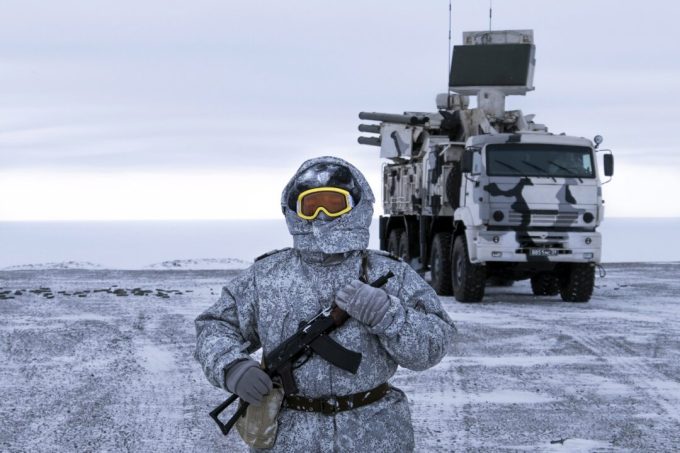
Lavrov Says NATO Military Activity in Arctic Threatens Russia’s Security
NATO military activity in the Arctic poses a direct threat to Russia’s...
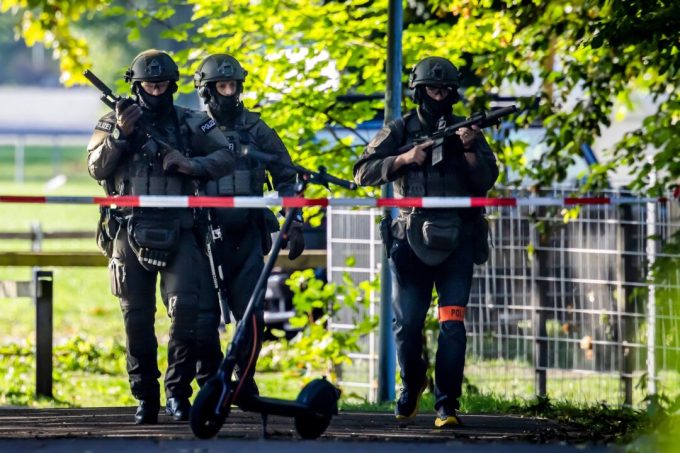
1 Dead and 5 Wounded in Shooting at Rave in Switzerland
GENEVA—A shooting at a rave in the northern Swiss canton of Aargau...
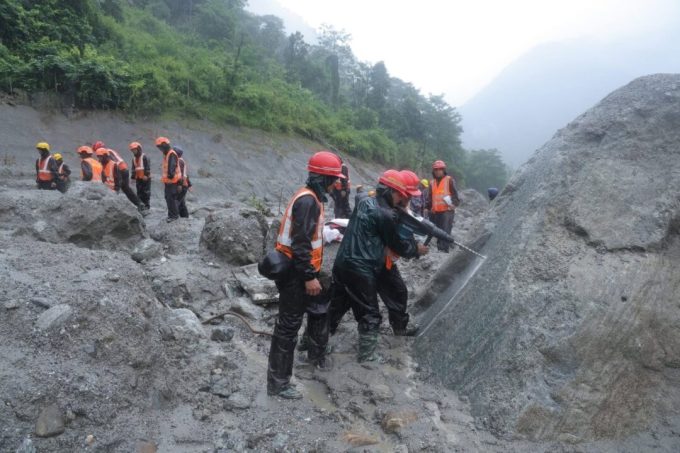
Authorities Warn of New Flood Risks as Nepal–Tibet Death Toll Tops 900
The reported death toll from the Nepal–Tibet flood rose above 900 on...
Foreign Interference Blamed as Leaders Pull Out of Pacific Summit
A third of Pacific Islands Forum (PIF) leaders may miss this week’s...