
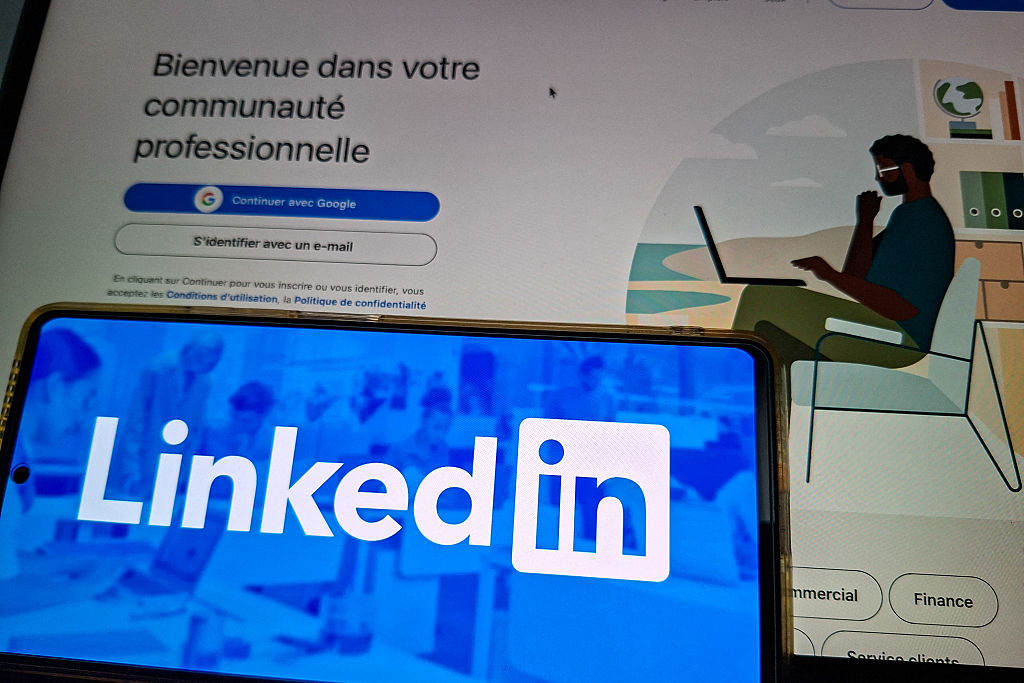

Microsoft-owned LinkedIn is expected to fall under the Australian Labor government’s News Bargaining Incentive (NBI) after an exemption was removed for professional networking platforms.
The decision means LinkedIn will join the likes of Google, Meta (which owns Facebook and Instagram), and TikTok to pay Australian news outlets for sharing their content.
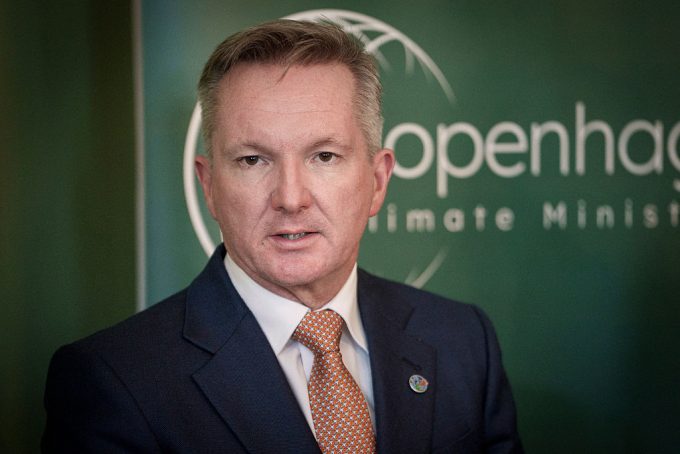
The Assistant Treasurer Daniel Mulino explained the decision.
“They’re now operating at a different scale and they are also seeing a significant amount of news content shared, and so it was appropriate to bring them within the remit of this incentive,” he said in a press conference on Aug. 4.
Mulino said the platform was likely to pass the $250 million (US$175 million) a year revenue threshold for inclusion under the NBI.
“We expect that that would be the first professional networking organisation that would go over the threshold,” he said.
“It’s not entirely clear at this point whether it will be over the $250 million digital advertising revenue, but at some point we would expect that it would go over if it hasn’t already, but that is the largest one operating in Australia at the moment.”
The NBI is the Australian government’s second attempt at compelling Big Tech firms to pay news media for sharing their content.
The NBI was drafted in April 2026 and has tighter incentives to encourage social media and search engine giants to enter commercial agreements with Australian news organisations.
Platforms that fail to make sufficient deals would instead pay a charge, with the proceeds distributed to support Australian journalism.
What Else Is New?
The government’s final policy announcement following the consultation period included other changes too.
The levy charged on the annual revenue of a Big Tech firm will increase from 2.25 percent to 2.5 percent. The levy was designed as the “stick” to force Big Tech firms to compensate media outlets.
Previously, a company could “offset” this tax.
Now, if a Big Tech firm signs a deal with a media company it triggers a 150 percent “offset” on that 2.5 percent, bringing it down to about 1.67 percent, while a deal with a smaller publisher now triggers a 200 percent offset—up from the previous 170 percent—which cuts the levy down to 1.25 percent.
If Big Tech firm decides not to enter any deals, Minister Mulino estimates they will be obligated to pay roughly $350 million to $400 million per year, and that would “increase over time as advertising revenue increases,” he said.
All this revenue goes towards a journalism fund that will be distributed to different outlets with regional or smaller publishers receiving a bigger share.
Communication Minister Anika Wells also pledged to establish a grants program for small publishers that have revenue streams of less than $150,000.
The legislation is expected to be introduced into Parliament early in the spring sittings.
Microsoft Argues LinkedIn Userbase Limited
Documents released by Treasury under freedom-of-information laws show correspondence between the government and Microsoft and LinkedIn in March 2025, prior to the drafting of the legislation.
A spokesperson for Microsoft said LinkedIn had less bargaining power over news publishers compared to larger social media platforms.
Microsoft argued LinkedIn’s comparatively small user base and limited time spent on the platform suggested news consumption was an ancillary activity, rather than its primary purpose.
They also pointed out that time spent on the platform was primarily through desktop, instead of on mobile like other platforms.
“The combined impact of a significantly smaller active user base and low time spent on the LinkedIn mobile app would suggest that LinkedIn has a minimal use in news,” the document explained.
“Given this, we do not consider LinkedIn to be a ‘significant’ social media service in Australia.”
The document also explains that Microsoft’s online search engine, Bing, should be exempt from the NBI as it made up a very small share of Australia’s search engine usage.
Citing figures from the Australian Competition and Consumer Commission (ACCC), they described Google as “by far the dominant search engine in Australia,” representing 93.7 percent of all search engine usage, compared to Bing’s 4.7 percent.