Marc-Olivier Fortin: The CAQ’s fear-of-Trump campaign starts to crumble
 Carson JeremaUpdated 2 hours Ago3 Mins read

Article content
For the first time in a generation, Quebec voters were presented this week with fundamentally different visions of the province’s future.

THIS CONTENT IS RESERVED FOR SUBSCRIBERS
Enjoy the latest local, national and international news.
- Exclusive articles by Conrad Black, Barbara Kay and others. Plus, special edition NP Platformed and First Reading newsletters and virtual events.
- Unlimited online access to National Post.
- National Post ePaper, an electronic replica of the print edition to view on any device, share and comment on.
- Daily puzzles including the New York Times Crossword.
- Support local journalism.
SUBSCRIBE FOR MORE ARTICLES
Enjoy the latest local, national and international news.
- Exclusive articles by Conrad Black, Barbara Kay and others. Plus, special edition NP Platformed and First Reading newsletters and virtual events.
- Unlimited online access to National Post.
- National Post ePaper, an electronic replica of the print edition to view on any device, share and comment on.
- Daily puzzles including the New York Times Crossword.
- Support local journalism.
REGISTER / SIGN IN TO UNLOCK MORE ARTICLES
Create an account or sign in to continue with your reading experience.
- Access articles from across Canada with one account.
- Share your thoughts and join the conversation in the comments.
- Enjoy additional articles per month.
- Get email updates from your favourite authors.
THIS ARTICLE IS FREE TO READ REGISTER TO UNLOCK.
Create an account or sign in to continue with your reading experience.
- Access articles from across Canada with one account
- Share your thoughts and join the conversation in the comments
- Enjoy additional articles per month
- Get email updates from your favourite authors
Sign In or Create an Account
or
Article content
The framing for two televised election debates on Tuesday and Wednesday was a good environment for Parti Québécois leader Paul St-Pierre Plamondon (PSPP) and Quebec Conservative leader Eric Duhaime, who both want to fracture the status quo: the former wants to separate from Canada, while the latter wants to break away from the Quebec model. And both of them offer a clear change and a real contrast to eight years under the Coalition Avenir Québec.
Article content
Recommended Videos
Article content
Article content
Before the debates, the Qc125.com polling average had the PQ at 28 per cent, the CAQ at 23 per cent, the Liberals at 22 per cent and the Conservatives at 16 per cent. The PQ looked like the favourite to win a minority government.
Article content
By signing up you consent to receive the above newsletter from Postmedia Network Inc.
Article content
In recent weeks, CAQ leader Christine Fréchette was successful in using the tariff war and the constant presence of U.S. President Donald Trump in the news cycle to make stability the central issue of this campaign. She was able to recover from the disastrous poll numbers under her predecessor, former premier François Legault, especially among older voters. The debates were an opportunity for her to transform this momentum into durable gains.
Article content
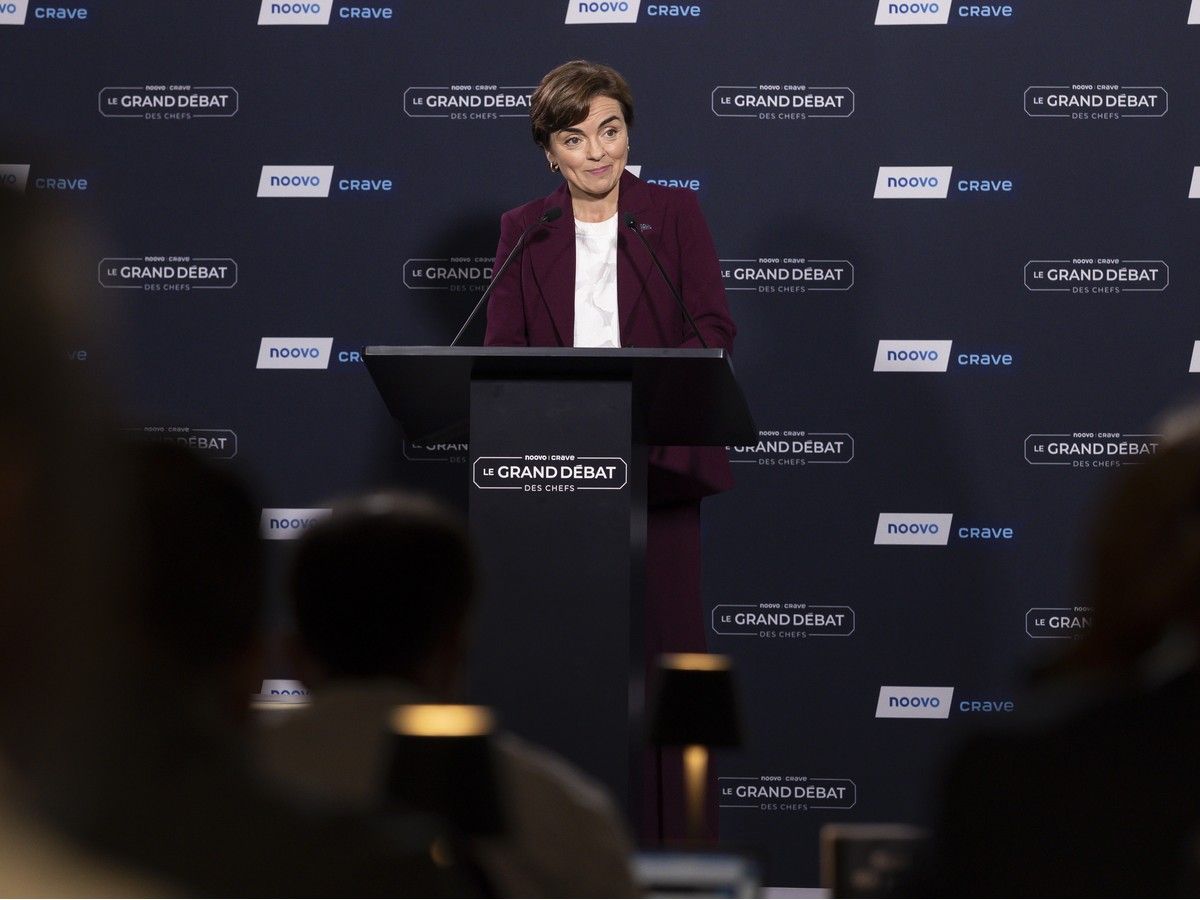
Instead, the debates gave opposition leaders a chance to finally remind voters why the CAQ fell behind in the first place, exposing its damaging record. While Fréchette tried to borrow Prime Minister Mark Carney’s playbook and present herself as a fresh political figure, her opponents were quick to highlight that she held key positions in Legault’s government as immigration minister, where the province recorded historically high migration levels and later as economy minister, where she was left managing the fallout from the Northvolt fiasco.
Article content
Article content
The opposition did more than attack the CAQ’s record. They almost framed her as being responsible for leaving Quebec vulnerable to the economic uncertainty created by the tariff war. While it was cacophonous at times, Fréchette, for the first time in the campaign, had to face the music.
Article content
Article content
Fréchette’s other problem was that she sounded scripted and out of context on multiple occasions, clearly trying to create clips to be used online afterwards. Viewers could see the strategy unravel in real time. For example, during a cost-of-living exchange during the TVA debate on Tuesday, while Duhaime was talking about tax cuts and putting more money back into people’s pockets, she awkwardly forced a play on his campaign slogan and claimed that financial autonomy under Duhaime would end with women. Rather than creating a memorable moment, the exchange highlighted how scripted parts of her performance felt.
Article content
The second debate gave Fréchette a chance to recover. After a difficult first night, she acknowledged, at the earliest occasion, the CAQ government’s mistakes before pivoting to the need to move forward and avoid a referendum. It was a better performance, but unfortunately for her, the Noovo/Crave debate was not her target audience considering it skews younger.




JPMorgan says bitcoin could get more support than gold if ETF hedging eases
Bitcoin could get more support than gold if investors reduce their ETF...

As RWA trading surges on Hyperliquid, Dragonfly’s Qureshi makes the case for a multichain future
Dragonfly's Haseeb Qureshi said the shift reflects crypto's broader maturation toward tokenized...

Regulators keep moving on crypto: CFTC follows SEC with developer-friendly no-action stance
Software developers who build crypto trading tools just got some breathing room...

‘There’s not enough blockspace’: Avalanche Treasury CEO says AI agents could crunch L1 blockchain capacity
Smith expects traditional financial markets to shift to 24/5 trading by mid-2027,...