Oil and gas ambitions outshone caribou protection in Alberta land-use planning: experts
 Sara King-AbadiUpdated 1 hour Ago9 Mins read
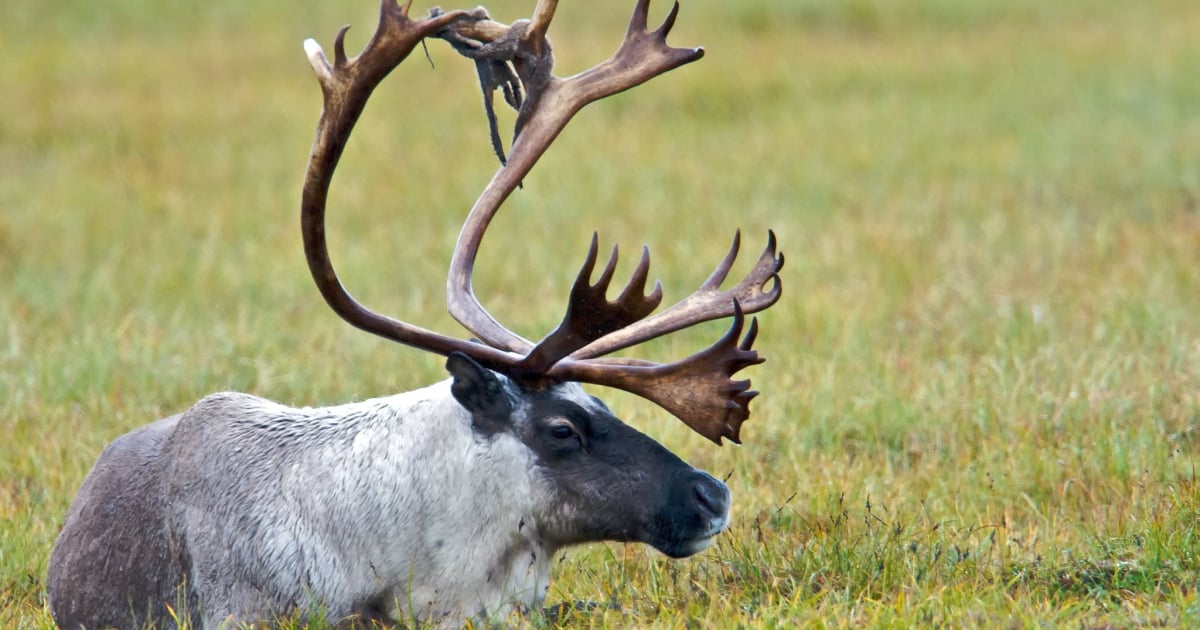
Long-awaited plans to protect Alberta’s caribou ranges reflect a decade of lobbying efforts from the oil and gas industry, rather than the best available science for recovery of the threatened woodland caribou.
Doubling oil and gas production is the first approach outlined in the Caribou Mountains, Red Earth and Berland sub-regional plans, which were released for public engagement in late July and mid-August. To deliver on that goal, the plans will “enable growth of the energy industry.”
Scientists, conservationists and legal experts say the plans, which were first mandated by the federal government in 2012 to protect woodland caribou, lack the modelling, recovery goals and science-backed approaches to achieve what they were meant to do.
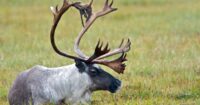
The iconic caribou does more than adorn the Canadian .25 cent coin. Caribou play an important role in the boreal forest ecosystem. They shy away from land disturbances, making their movement patterns an indicator of forest health. They are also culturally significant for First Nations, who have long fought for caribou protection.
But disturbances from industrial development — including forestry and oil and gas extraction — have combined with increased predators on the landscape to lead to a steep decline in their population.
In 2013, researchers found woodland caribou declining by 50 per cent every eight years in Alberta. In 2021, the province’s first report on the implementation of its recovery strategy under a federal agreement called population decline “substantial” after multiple years of “negative population growth.”
The report found only two ranges featured above 65 per cent undisturbed habitat — and only in the summer. The majority were below 25 per cent, and some less than five per cent.

Caribou have required immediate action for more than 30 years, said Tara Russell, executive director of the Canadian Parks and Wilderness Society’s northern chapter.
But after decades of talking, minimal progress and some hopeful actions, including a temporary pause on new energy leases in the ranges, Russell feels like the rug has been pulled out from under everyone working towards that goal.
“[These plans were] supposed to be Alberta’s big opportunity to rectify the mess we’ve made of our forests, of our landscapes,” said Russell. “And instead we’re seeing this commitment to destruction.”
Canada’s National Observer found 21 oil and gas companies or associations lobbying for input on caribou policy or subregional planning since 2016. Fourteen of those lobbying registrations are still active.
Records show some of the largest carbon emitters in the world working with the Alberta government to have their say on the caribou ranges, including state-owned Chinese oil corporation PetroChina Canada, a subsidiary of CNPC; Suncor Energy and Canadian Natural Resources Ltd. (CNRL), both Calgary-based. The oil and gas giants rank 16th, 76th and 80th on the Carbon Majors list, respectively.
Habitat loss is the primary threat to caribou populations, and federal guidelines specify a minimum of 65 per cent undisturbed habitat for caribou recovery. The proposed plans say that goal would be achieved in 100 years, but do not outline how in enough detail to satisfy experts.
The plans divide the regions into two zones: the “go-zone” where existing development requirements apply, and the “nature-first” zone which prohibits new activities that would create surface disturbance.
Figures including road thresholds and targets for inactive well pad restoration are provided as well as how activity requirements will apply to a specific zone or across the region.
Plans will be reviewed every 10 years to ensure they continue to “enable development and increased production while also minimizing environmental impacts and restoring habitat.”
“The science has been crystal clear for quite some time now,” said University of Alberta professor emeritus Stan Boutin, who has spent decades working in conservation science in Alberta. Boutin believes caribou refuges are needed and restoration efforts on their own will be too slow.
Yet, when it comes to government decision-making, science is disregarded and economics comes first, he said.
No scientific modelling to support caribou recovery goals
Experts interviewed by Canada’s National Observer said the goals in the draft sub-regional plans do not seem to be backed by scientific modelling. This was confirmed, at least in part, in a government-led public information session about the Red Earth plan on Aug. 27.
Pointing to the first approach laid out in the draft, an attendee asked if the government had done modelling work on its policy statement — which laid out plans to double oil and gas production while reducing the total amount of energy-related disturbance through timely restoration requirements. They were also asked if the modelling was available had it been done.
“No, we have not modelled that policy statement,” caribou range planning lead Brittany Nouwen responded.
“We are taking a policy flexibility approach and more of a monitoring long-term effects approach to determine effectiveness. So, unfortunately, I don’t have any hard data that we can share to support that.”
Scientific modelling for informed decisions on resource development and habitat restoration exists. It’s even publicly available through the Caribou Habitat Information Platform, a new tool from Biodiversity Pathways and the Alberta Biodiversity Monitoring Institute.
“We need more data” used to be the recurring government line, said Kirby Smith, who worked as a former regional wildlife biologist for the Alberta government for 35 years before retiring in 2010. But when good data became available, it still wasn’t used.
“We’ve got the data better than anybody does and all we have to do is use it,” said Smith. “We’re failing to do that in these plans.”
Modelling, as well as performance measurements, are important for knowing a plan is on the right track, said Brenda Heelan Powell, staff counsel for the Environmental Law Centre.
“That’s something that ought to be in a recovery plan, so you know whether or not you’re achieving anything,” she said.
The Species at Risk Act is limited when it comes to terrestrial species like caribou, Heelan Powell added. In rare cases, the federal government can step in with an emergency order or critical habitat order, as was put in place in Alberta and Saskatchewan for sage grouse in 2013.
However, it’s hard to know the full impact of the plans while in the draft phase, she cautioned.
The federal government is committed to protecting and recovering species at risk “through conservation measures based on sound science, partnerships and robust recovery planning, and works collaboratively with provinces and territories to advance these efforts,” a spokesperson for Environment and Climate Change Canada (ECCC) wrote in an emailed statement.
Responsibility is shared by different levels of government. The federal government is responsible for critical habitat protection on federal lands, while provincial and territorial governments have primary responsibility for managing land and wildlife on non-federal lands, including most caribou habitat.
The department has actively engaged with Alberta to provide feedback on provincial efforts to conserve and recover caribou, including sub-regional planning, over the past six years and will review Alberta’s latest draft sub-regional plans and provide feedback within the engagement period, the statement said.
‘Cutting corners’
The sudden speed of the releases is by design. In a 2025 mandate letter, Premier Danielle Smith directed then-Minister of Environment and Protected Areas (EPA) Rebecca Schulz to accelerate and complete all outstanding land-use plans in the province.
Sitting minister Grant Hunter said in the legislative assembly in March that EPA is committed to completing all land use plans in Alberta in 2026, by the end of the fiscal year. And presenters at an Aug. 26 Caribou Mountains information session said they had an accelerated deadline to complete the sub-regional plans by the end of 2027.
Banff-Kananaskis MLA and NDP shadow minister for environment and protected areas, Sarah Elmeligi, grilled the government in the legislature over how the plans, which are complex, could realistically be completed quickly without additional resources.
“We recently reviewed our approach and were able to find efficiencies to complete these plans at speed,” Hunter replied.
Sub-regional plans would be tackled first, allowing for “better and more specific discussions about trade-offs” on what is included, as well as what elements can be replicated, Hunter said, “making the plans more about what makes these things unique.”
Multiple experts who reviewed the plans had a different interpretation: they said some sections seem to be copy-pasted.
“That’s not increasing efficiency,” Elmeligi said in a phone interview. “That’s cutting corners.”
EPA did not respond to multiple requests for comment.
A history of ignoring science
When the province began culling wolves to maintain caribou populations in 2006, it was meant to be a “temporary measure,” said Smith, the retired government biologist.
Twenty years later, a better plan centring habitat restoration has not been adopted and killing wolves has become necessary to keep caribou on the landscape.
“You’re killing one species to save the other because you’re not willing to plan for those species to exist on an industrialized landscape, which you could have done,” said Smith.
The equation is simple: Adequate space and time is required between human-caused changes and land-use changes.
“It’s just going to take a little bit more time,” he said. “But the science suggests you have to change things dramatically and you’re not doing that. So you’re just playing a fool’s game.”
Boutin, the professor emeritus, said his frustration stems from the lack of action from the government.
“It’s just been a major challenge trying to do some good work for caribou,” said Boutin.
“It’s getting a bit old,” he said. “And I wish it could change but certainly there’s no indication that it will.”
Whose interests are reflected in the plans?
Alberta’s economy has relied on resource extraction for decades, and that’s still true. In 2025, almost one quarter of the province’s GDP came from mining, quarrying and oil and gas extraction, and revenue from non-renewable resources was $22 billion.
That kind of financial weight goes hand in hand with influence.
Twenty per cent of Alberta’s total natural gas production comes from the Berland sub-region, while oil and gas leases cover 5.5 per cent of the Caribou Mountains and forestry 36.1 per cent, according to the drafts.
In Red Earth, where 6 per cent of Alberta’s total conventional oil production originates, oil and gas activity has been trending down, something the draft says is a sign that economic incentive is lacking to sustain previous levels of drilling.

Keeping the ranges economically viable was at the centre of a decade of lobbying efforts from the 21 oil and gas companies or associations found in Alberta’s lobbying registry.
PetroChina Canada lobbied to work with the government to support caribou habitat restoration in a way that would allow business to “remain efficient and globally competitive by allowing for unrestricted access to business activity on sufficient lands to provide the necessary long-term supply of hydrocarbons needed for sustainable oil sands operation.”
CNRL looked for opportunities to work with the government on “key caribou issues, including shared responsibility for habitat restoration, assess resource potential of protected areas, support population augmentation measures (caribou rearing facility), as well as addressing the moratorium on new tenure.”
While Suncor aimed to “finalize the provincial caribou range plans to ensure a balance between caribou recovery, environmental performance and economic development.”
The Canadian Association of Petroleum Producers, whose members are responsible for nearly three quarters of Canada’s oil and gas production and, per their website, contributed $85 billion to Canada’s GDP last year, communicated to “relay industry feedback, including industry concerns,” on the sub-regional plans.
CAPP was also one of the several voices lobbying for input on how Alberta’s species at risk strategy is implemented, including socio-economic considerations and recovery measures for caribou, sage grouse and grizzly bears.
“It’s well known that the industry, particularly the oil and gas industry, gets significant access to decision makers in Alberta,” said Simon Dyer, deputy executive director of the Pembina Institute, a clean energy think tank.
But a “relatively weak” provincial lobbyist registry means important details such as the number of touch points or specifics between lobbyists and government decision makers are impossible to know.
“That amount of access is reflected in the quality of the land use plans that we get in Alberta,” he said.
The Species at Risk Act is also a strong environmental law, and caribou are a wide ranging, sensitive species directly impacted by industry. That means oil and gas companies have a vested interest in how the law is applied.
“The level of lobbying reflects that industry considers these to be laws that would represent a risk to their business if they were implemented,” said Dyer.
When asked if industry operators were engaged on the plans prior to public engagement in the same public information session from Aug. 27, director of land and environment planning, north, Amanda Halawell replied there wasn’t time for prior consultation.
“We’ve had advice from industry on other plans which they’ve asked us to carry forward into these draft plans,” she added.
“The goal of these communications is to relay industry feedback, including industry concerns, about the sub-regional plans,” the Canadian Association of Petroleum Producers.
Knowing that meetings took place with the energy companies on caribou policy is not what concerns Elmeligi, the EPA shadow minister.
“The problem is that other voices don’t have that same access and that same voice in the planning process,” said Elmeligi. “That’s where the system fails us as Albertans and fails caribou.”
Elmeligi, who worked as a wildlife biologist prior to being elected, had attended caribou task force meetings where industry representatives suggested the same 100-year timeline for recovery published in the plans.
The timeline was pushed back on by scientists, conservationists and Indigenous stakeholders for being “ridiculous and completely ineffective,” she said.
“Yet that’s the timeline that’s reflected,” said Elmeligi. “To me that says that those lobbying efforts by industry were highly successful and influential in the plan contents.”
Canada’s National Observer asked Canadian Natural Resources Ltd., PetroChina Canada, Suncor, Cenovus and the Canadian Association of Petroleum Producers — some of the largest producers and industry voices named in the lobbying records — for interviews, but received no reply.
Three BC glaciers face extinction within decades due to climate change, study says
Three glaciers in British Columbia's southwest could "disappear completely" within decades in...
Quebec pension giant bets on ‘patient capital’ to build clean energy future
In 2018, Emmanuel Jaclot asked his future boss a pointed question in...
Canada drops Chinese solar duties. Will buyers see the savings?
Canada ended duties on certain Chinese solar panels last week, potentially lowering...
Experts, advocates and industry gather in Toronto to talk climate resilience
There’s little pessimism at Adaptation Canada 2026, where about 1,000 of the country’s...