PBO’s Budget Review in 5 Charts: Where Ottawa’s Windfall Comes From and Where It Goes
 James YangUpdated 4 hours Ago2 Mins read
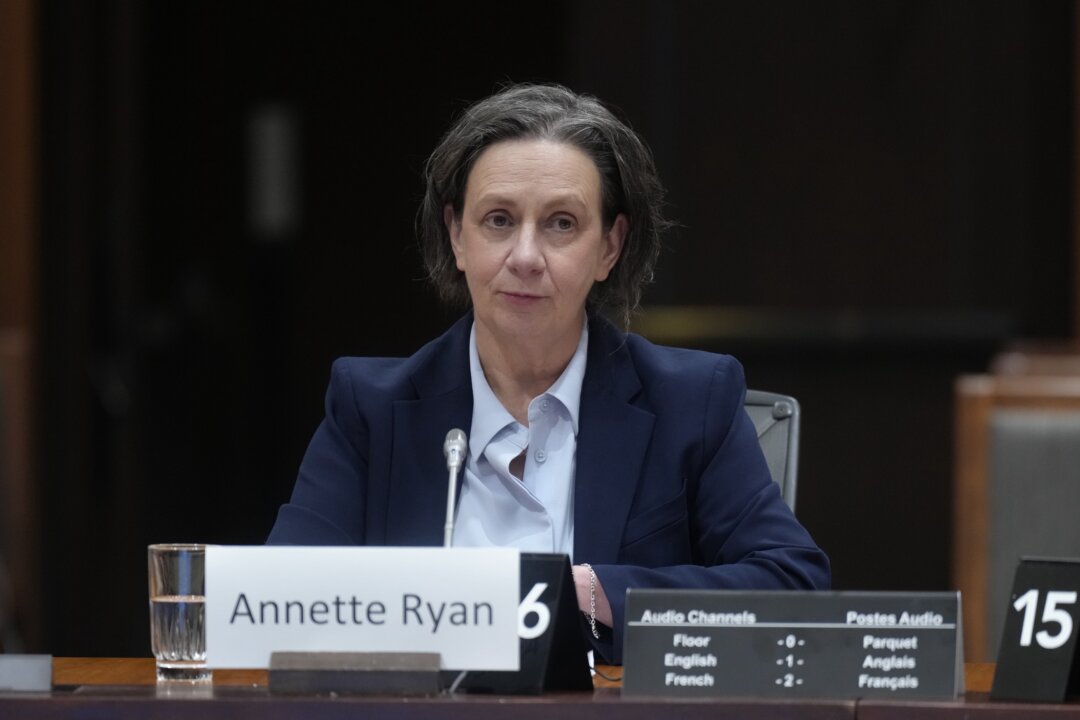

Parliamentary Budget Officer nominee Annette Ryan appears before the Standing Committee on Finance in Ottawa on March 23, 2026. The Canadian Press/Adrian Wyld
The federal government gained billions in additional budget room over the next five years as higher oil prices and stronger economic activity boosted projected tax revenues. The government committed nearly all of it to new spending and tax cuts, saying it’s meant to support programs for Canadians and spur growth.
In her Nov. 17 review of Budget 2026, Parliamentary Budget Officer Annette Ryan noted that the government used 96 percent of its $158.3 billion in new fiscal room for additional measures over five years. The following five charts examine how federal spending commitments have grown, where tax revenues are expected to come from, and what the budget projects for federal debt and interest costs.
Ottawa has introduced $324.8 billion in new spending and tax cuts across its three most recent fiscal plans, using up much of the additional budget room created by stronger-than-expected revenues. In Budget 2026, the government committed 96 percent of its new fiscal room to additional measures rather than reducing deficits. Together, the three plans increased projected deficits by about $148 billion compared with the Fall 2024 Economic Statement.
New spending and tax cuts peaked during the pandemic before falling sharply in subsequent federal budgets. That trend has reversed over the past two years, with new measures in Budget 2025 and Budget 2026 returning to levels approaching those seen during the pandemic.
Personal income taxes are expected to account for a growing share of the three federal revenue sources shown, with collections per person rising steadily through 2030–31. Goods and Services Tax (GST) revenue per person is also projected to increase, while corporate income tax revenue per person is expected to decline slightly.
The Parliamentary Budget Office’s (PBO) review of Budget 2026 shows a gap between real and nominal growth. The budget has real GDP growth at 1.0 percent in 2026 and 1.7 percent in 2027, while higher energy prices lift growth in nominal GDP to 5.6 percent in 2026 and 3.7 percent in 2027.
That puts nominal growth 4.6 percentage points above real growth in 2026 and 2.0 points above it in 2027. The budget says higher oil prices and stronger economic activity boost wages and corporate profits, bringing in more income tax revenue.
Federal debt is projected to grow faster than Canada’s population over the next five years, pushing the amount of debt per person steadily higher. Budget 2026 forecasts a 19 percent increase by 2030–31, with no annual decline over the projection period.
After remaining relatively stable for much of the previous decade, interest costs on the federal debt have risen sharply in recent years. They are projected to keep climbing through 2030–31, when Ottawa expects to spend $85.5 billion annually on debt interest—more than four times the amount it paid a decade earlier.





2026 World Chess Championship Opens in Geneva
According to a quote about chess widely attributed to former world champion...
Ottawa Lists Anti-Israeli Group Masar Badil as Terrorist Organization Ahead of Its Conference
Minister of Public Safety Gary Anandasangaree leaves West Block on Parliament Hill...
Liberal MP Publicly Dissents on Carney’s Climate Change Policies
Liberal MP Will Greaves responds to questions from journalists before a meeting...

Trump Would Back NATO-Style Security Guarantees for Ukraine Under Certain Conditions, Kushner Says
President Donald Trump would be prepared to consider NATO-style security guarantees for...