Russia Likely to Escalate Hybrid Warfare Against NATO Countries: Danish Intelligence
 Victoria FriedmanUpdated 1 hour Ago2 Mins read
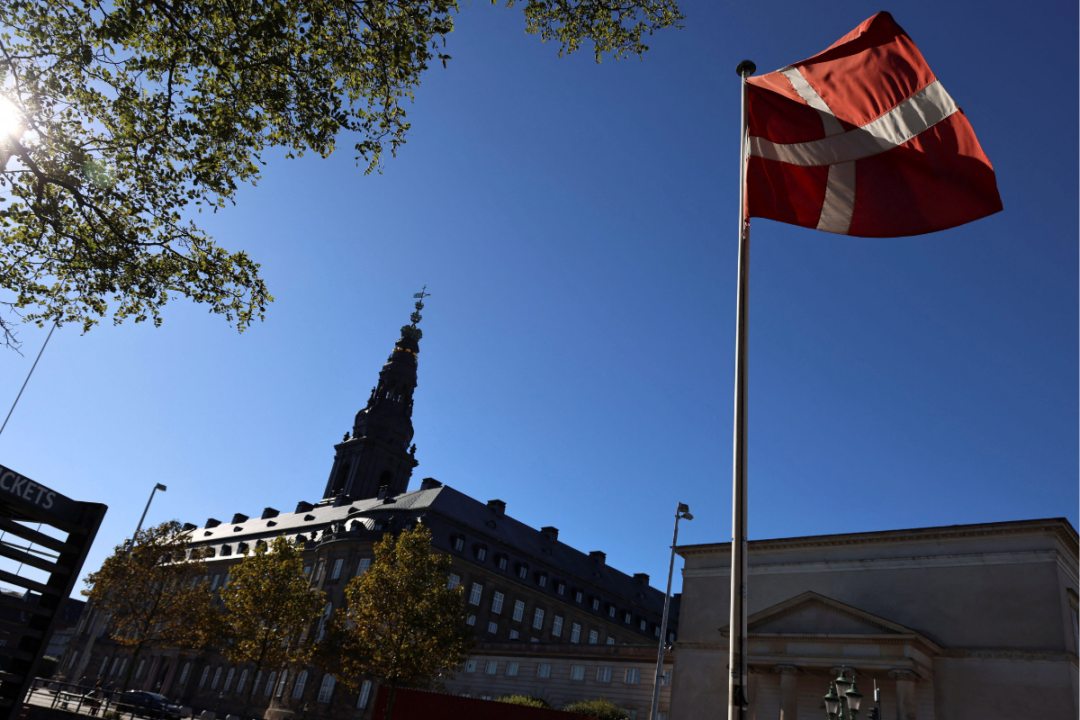
Danish intelligence says Russia is likely to increase its hybrid warfare on NATO allies, with the agency not ruling out the possibility that Moscow could launch a limited military attack on a Western country.
The Danish Defence Intelligence Service (DDIS) said in an unclassified assessment released Sept. 24 that Moscow “will intensify its hybrid war by carrying out more frequent attacks against the West and NATO, with greater consequences for the targeted countries than in the past.”
“This could include destructive cyber attacks that cripple critical societal functions as well as sabotage attacks that carry a high risk of casualties,” it said.
Hybrid attacks fall short of an act of war and can include sabotage, propaganda, and other non-overt tactics.
Sabotage and hybrid warfare have gained renewed attention following the attempted drone attack at Leipzig/Halle Airport in August, which Germany said was orchestrated by Russia.
Moscow has repeatedly denied that it is involved in any kind of hybrid warfare,
including
claims of involvement in the Leipzig airport incident.
The Russian Embassy in Denmark rejected the intelligence agency’s assessment, saying it is not supported by credible evidence. The embassy accused the West, led by Denmark, of escalating tensions over Ukraine.
“Our persistent warnings about the destructiveness of such an approach are being ignored,” the embassy said in a statement.
Invasion ‘Highly Unlikely’
The DDIS also said that there is a “low but growing risk” that Russia could launch a limited military attack on one or more NATO countries.
The intelligence agency said this could take the form of isolated strikes against infrastructure used to support Ukraine, or a so-called “false flag operation,” where Russia uses Ukrainian drones to attack a NATO member.
“The purpose would be to redirect European resources away from supporting Ukraine and to sow division within NATO, should the alliance fail to agree on a collective response,” DDIS said.
They said it could take place in the coming months, even while Russia is still engaged in its current conflict with Ukraine and has not built up the capabilities to wage a wider regional war.
The agency said, however, that it is “highly unlikely” (which it gauges as having a less than 10 percent chance) that Russia would launch an outright invasion of a Western country.
Danish intelligence service chief Thomas Ahrenkiel said at a press conference that Russia could also deploy a limited number of troops into a NATO border area, possibly under the pretext of protecting Russian minorities in those countries.
“The aim is not to take over the country, but to divide NATO,” Ahrenkiel said.
Speaking at the 9/11 Memorial on Sept. 24, NATO Secretary-General Mark Rutte highlighted the DDIS’s assessment that a full-scale invasion by Moscow was not likely.
“I think the Danish intelligence is right there,” Rutte said. “That’s highly unlikely.”
He said, however, that NATO should not be “naive,” noting that Russia is building up its armed forces and national industry.
NATO Steps Up Intelligence-Sharing
NATO’s top commander said that the alliance was stepping up its intelligence-sharing in response to hybrid warfare and sabotage incidents that have been blamed on Russia.
U.S. Air Force General Alexus Grynkewich said on Sept. 24 that while recent incidents, including the Leipzig airport attempted attack, are concerning, “we should be calm and confident that we as an alliance, the most powerful alliance in history, have the tools that we need and have the mechanisms that we need in order to manage the risk here.”
Grynkewich also said that the risk of a limited Russian attack on a NATO country was “unlikely but something that we can’t rule out.”
He dismissed suggestions that Russian President Vladimir Putin might strike NATO, adding that the alliance was well-positioned to deter aggression and protect its allies.
Reuters contributed to this report.





$680K raised for hero Belleville cop who prevented a Jewish massacre
In a post on X, former Bay of Quinte MP Ryan Williams...

Vancouver corsetier Melanie Tarkington has a world-class passion for wearable art
365 Bloor Street East, Toronto, Ontario, M4W 3L4 © 2026 National Post,...

Jewish CBC journalist faces discipline over comments about anti-Israel protest
Article contentA CBC spokesperson told National Post by email: “We respect the...

Daniel Hannan: Mark Carney, look to Britain and CANZUK, it’s the obvious choice
The U.K. lord joins Rob to explain why the true 'special relationship'...