As Canada races to build its domestic defence industry, a Saskatoon drone maker that usually supplies the US military is getting its first real test with the Canadian Armed Forces.
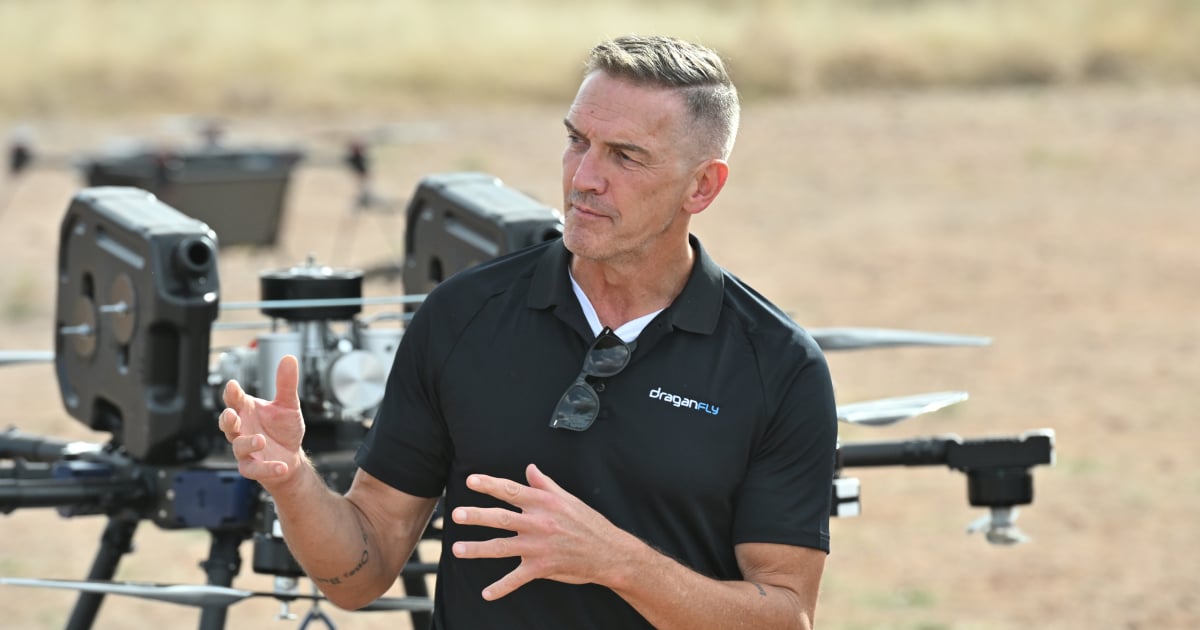
Draganfly has been selected by the federal government to supply surveillance drones to the Canadian Armed Forces under a procurement plan worth up to $50 million across all six suppliers, the company’s CEO Cameron Chell told Canada’s National Observer in an interview.
Draganfly’s contract comes after Canada increased defence spending by more than $9 billion for 2025–26, the largest annual increase in generations. Total spending topped $63 billion, reaching NATO’s 2-per-cent target for the first time since the late 1980s.
Now, the new contracts, worth up to $50 million, are expected to increase the number of drones currently deployed by Canada’s military by about 10 times.
Draganfly plans to supply a low-cost surveillance drone called the Astiia UAS that uses cameras and sensors to gather information for military units. It’s about one foot square, can fly for 20 to 40 minutes and is designed for missions within five to eight kilometres. Already deployed and tested over Ukrainian battlefields, the Astiia is not designed to drop explosives or crash into targets, Chell said. Drones could help Canada monitor its vast northern territory and maintain a stronger presence in the Arctic.
Draganfly sold its first commercial drone to the RCMP in 1998, Chell said. Since then, it has primarily worked with American defence contractors and supplied drones to the US Army, Air Force and Navy.
For years, Canada’s defence market was small, and there was little government money available to buy the kind of equipment Draganfly makes, Chell said. But that is changing as the federal government increases defence spending and works to strengthen Canada’s ability to design, manufacture and maintain military equipment at home, he said.
“We have to stand on our own two feet,” he said. “We cannot rely on the United States to be that for us.”
The deal with Draganfly is part of a broader defence plan announced last week, when Canada and Ukraine signed a declaration for a 100-year partnership focused on defence, trade, energy and critical minerals. The two countries say they want to combine Ukraine’s battlefield experience with Canada’s manufacturing and technology industries.
The Canadian Armed Forces currently has about 2,000 drones. The federal government says it will need millions in the years ahead and is creating a national online marketplace where individual military units can find drones and other equipment from nearly 400 Canadian suppliers.

Draganfly’s five-year agreement requires a supply of small, low-cost aircraft that military units can use to scout nearby terrain with cameras and sensors. The federal government will begin with 100 systems and have users assess their performance. The government has the option to purchase up to 4,900 more drones.
Five other Canadian suppliers in Quebec, Ontario and New Brunswick also have contracts for surveillance drones and ground vehicles that operate without a driver.
The military will test whether the drones are reliable, easy to use and simple to maintain, Chell said. The process will also test whether Draganfly can produce drones at the scale Canada may eventually need.
“A lot of people can build 10 drones that work pretty well,” he said. “But when you have to build 10,000 of them, all of them have to work perfectly.”
The government is prioritizing lower-cost systems because drones can be lost during operations, Chell said. The aircraft could be sent over contested terrain to gather information, even when there is a chance it may be shot down. “They lose that drone, no big deal, they send another one,” he said.
Draganfly has also worked in Ukraine since Russia’s full-scale invasion, delivering humanitarian supplies, supporting mine-clearing efforts and developing drones. Chell said the work helped shape the Astiia’s design for battlefield threats, including radio-frequency jamming and efforts to shoot drones down — conditions that can’t be fully replicated in a laboratory.
The company’s Canadian manufacturing operations are in Saskatoon and Burnaby. It plans to open an Alberta facility, likely in the Edmonton–Calgary corridor, by late 2027 and also operates facilities in the US.
New defence marketplace with unclear rules
Canada’s new defence marketplace is modelled on Brave1, a Ukrainian government-backed program that connects military units with technology companies. Through its online market, military users can review approved products and acquire equipment for their specific needs.
But Olena Kryzhanivska, a post-doctoral fellow at the Canadian Global Affairs Institute, said it remains unclear how that access will work in Canada. The recent announcement does not explain who will be able to place orders, how suppliers and products will be vetted or who will review the purchases.
She pointed to Ukraine’s system, where military brigades can review available products and choose equipment based on their needs. That direct connection can reduce delays and give manufacturers quick feedback about what works in real operations and what needs to change, she said.
But Kryzhanivska said Ukraine’s approach also carries risks. The country’s decentralized system has faced criticism about possible favouritism, personal connections and inconsistent decisions.
Canada is not using drones on the same scale or under the same battlefield pressure as Ukraine, she said. Ottawa will have to decide how much review is needed without slowing the process so much that the marketplace loses its purpose.
“It’s a very tough balancing act,” Kryzhanivska said. “When procurement is made much faster, introducing additional safeguards, checks and verification procedures is going to delay the process.”
Canada’s National Observer emailed the federal government to ask how the marketplace will operate, how suppliers will be vetted and what oversight will apply, but did not receive a response before the publication deadline.
Sonal Gupta / Local Journalism Initiative / Canada’s National Observer.
September 17th 2026