Terror groups drawn to recruit in Canada because of multiculturalism, academic says
 Courtney GreenbergUpdated 1 month Ago2 Mins read

Article content
Groups like the 764 network coerce youth and “psychologically manipulate them to do the most abhorrent, terrifying crimes towards themselves, their own family, to family pets,” she said.
Article content
“Once you’re out of that situation, you realize what you’ve done and how horrifying it is, and that now somebody knows about it, somebody has that evidence or proof, then you have a sort of responsibility to yourself to try and maintain that ‘friendship’ on an even keel, so they never use it against you,” said Findlay.
Article content
“But they’re going to use it against you. That was the plan all along. It’s a very slippery slope.”
Article content
Article content
She said it’s a red flag when someone online becomes increasingly interested in your personal life. “It’s the unfortunate thing about social media. It’s great for the friends that you already have, but it is the worst place to actually make enduring, trustful friendships,” she said.
Article content
Both Findlay and Kislenko said that recruiters seek out vulnerable and isolated youth.
Article content
“They’re still trying to understand the world. They’re trying to experience it,” said Findlay. “Well-formed adults who are very socially intelligent and have developed their principles — they don’t want to talk to them because those are the folks that will poke holes in their theories, because logic ruins those narratives.”
Article content
Article content
The young people who do get targeted are often looking for the simplest explanation for complicated issues, said Kislenko.
Article content
“People blame Jewish people for everything. It’s a convenient scapegoat. Or you blame big government, or you blame women, right? And that’s what a lot of these newer terrorists are engaging in,” he said. “If you’re deeply antisemitic, you’re probably focusing on Israel and what it’s doing in Palestine, even if you don’t know what that means or have an opinion about it. You see it on the news, and certain narratives play into that.”
Article content
Findlay said that although it may seem like there are more hate-motivated attacks now, it’s been going on “for a long time.”
Article content
“How it manifests and how it channels and how (terror groups) establish their reach obviously has changed because of the advent of technology from the 1970s roughly onward. It has really made everything look like it’s happening more often in a way,” she said.
Article content
“And (terror groups) really do attach to waves of prosperity and economic decline, as well as the rise of conspiracy theories. They follow trends. When things are not looking so great … these things kind of seem to flourish a little bit more.”
Article content
Article content
Kislenko said just because it’s hard to police against recruitment, it doesn’t mean that we shouldn’t. He recommends an educational approach and possibly putting some restrictions on social media.
Article content
“We should empower law enforcement and intelligence not with more authority, but with a better capacity and more funding and training to look for these (recruiters),” he said.
Article content
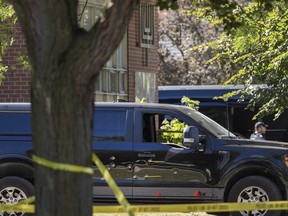
“We should be judicious in prosecution…because it is hate and it is terrorism, and they are closely connected, and that leads to (the shooting in) Belleville, amongst other places.”
Article content
Our website is the place for the latest breaking news, exclusive scoops, longreads and provocative commentary. Please bookmark nationalpost.com and sign up for our daily newsletter, Posted, here.
Article content






Opposition Says WA Should Not Be Included in National Gas Reserve Scheme
The federal opposition is marking its turf on plans to create a...

Greens Elect Former MP Mike Morrice, the Sole Candidate, to Lead Party
Newly elected Green Party Leader Mike Morrice points as he speaks at...
Breast Milk Can Be Lifesaving for Premature Babies, Quebec Charity Says
When Annie Sicotte gave birth to her first daughter 11 weeks early,...

Is Autumn Glow the Next Winx? Inside the Making of a Racing Superstar
Autumn Glow now has six Group 1 victories—and she is fast becoming...