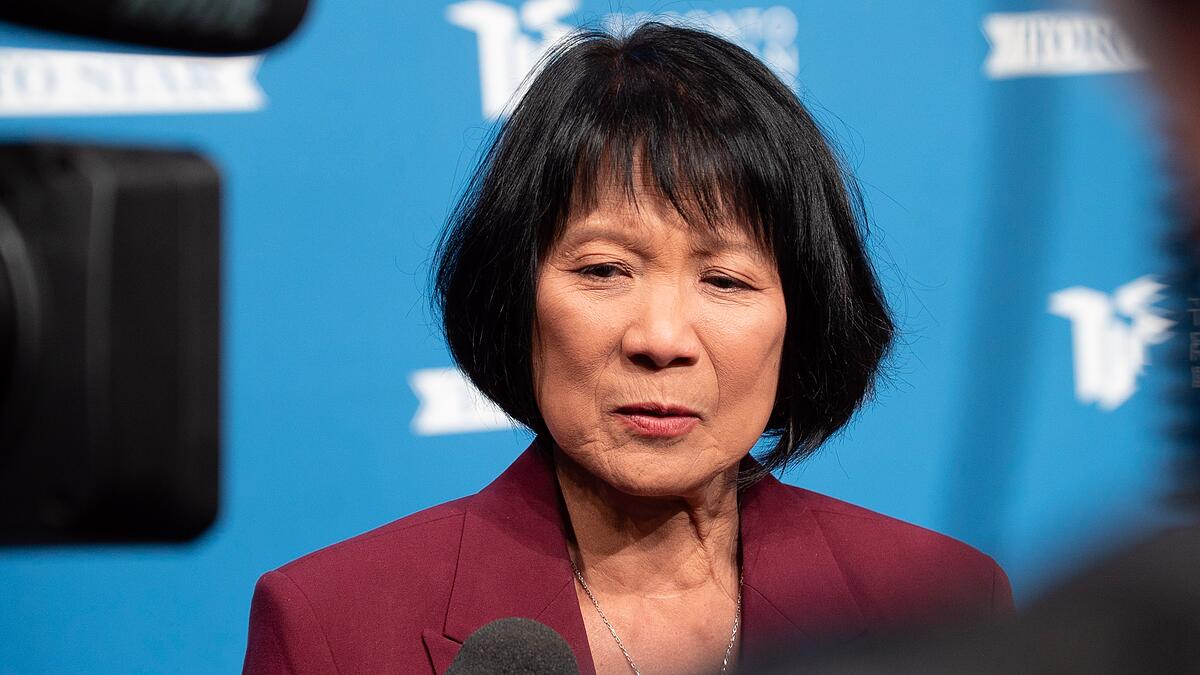
Incumbent Toronto Mayor Olivia Chow says if she’s reelected, the city will be a better place for seniors.
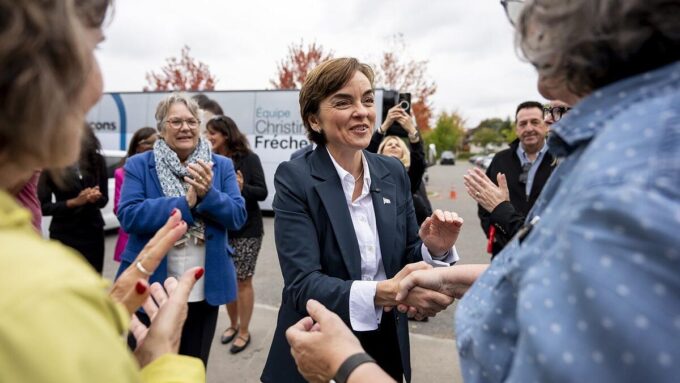
On Tuesday, Chow said she would put $5.6 million towards free homemaking services, mobile health clinics and recreation programming for seniors. She said 28,000 seniors would be supported by the measures, with 5,000 gaining access to free home support.
“People want to be able to stay in their homes, in communities they love, as they age. We can help make life easier so that’s possible,” Chow said.
By 2041, a fifth of Torontonians will be over 65, according to the city’s statistics.
Chow is currently leading in popularity, with less than a month to go until the Oct. 26 municipal election. On Friday, The Forum Poll released the results of a survey, which put Chow’s support at 46 per cent, Bradford’s at 35 per cent and Chris Alexander, a federal minister under former prime minister Stephen Harper, at 6 per cent. The random sampling surveyed 1,014 Toronto voters.
There are three parts to Chow’s plan for seniors: Free home support (which includes cleaning, laundry and cooking); upping access to mobile dental and health clinics; and an increase in recreational activities specifically for seniors. For the latter, the city will partner with the University Health Network and roll out the activities in neighbourhoods with large senior populations.
The city’s current Homemakers and Nurses Services program provides subsidized homecare services, while the province’s Ontario Health atHome program offers similar, free supports. Chow says her plan will unlock matching provincial funds and job opportunities.
Also on Tuesday, Toronto mayoral candidate Brad Bradford committed to slashing the city’s municipal land transfer tax on homes under $1.1 million.
Bradford said eliminating the tax would help seniors who want to downsize, since eliminating the tax would amount to about $18,000 in savings on a $1.1 million home being purchased as a primary residence.
Former Toronto mayor Rob Ford also promised to eliminate the municipal land transfer tax when running, but was not able to push the measure forward due to a lack of council support.
The tax brings in about $300 million per year to the city, and Alexander said Bradford hasn’t put forward a credible plan for making up that money elsewhere.
“Everyone agrees the land transfer tax is way too high, and I want to bring it down,” said Alexander.
“But you fix the books first, then you cut. What he is proposing is worth six points of property tax — three hundred million dollars, every year. Gone.”
September 29th 2026