US House Committee Urges Federal Blacklist of Chinese Entities Implicated in Forced Organ Harvesting
 Frank FangUpdated 24 minutes Ago2 Mins read
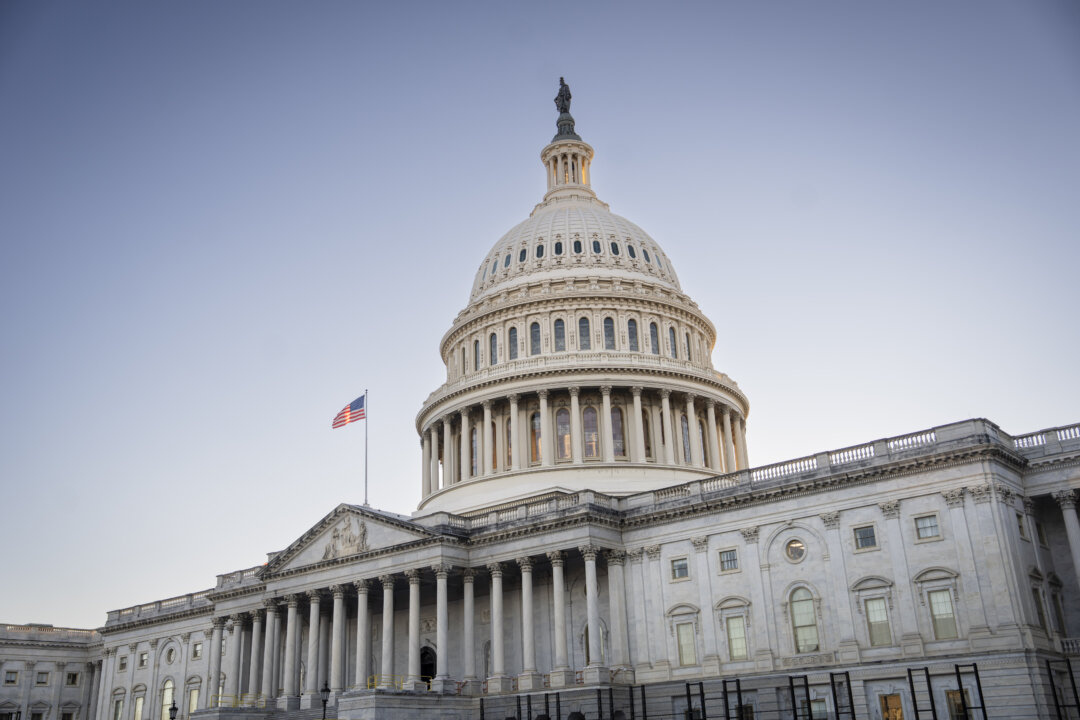
A congressional panel focused on China urged federal agencies to consider banning Chinese doctors and institutions linked to what it called the “heinous practice” of forced organ harvesting.
The House Select Committee on the Chinese Communist Party (CCP)
made
the call on Nov. 20 in response to a new report published by the International Coalition to End Transplant Abuse in China (ETAC).
The
report
found that at least 100 of the 348 Chinese medical personnel implicated in a 2022 peer-reviewed medical study remained active at hospitals and institutions in China within the past six years.
The
study
identified them as authors of 71 Chinese clinical papers describing organ procurements that breached the dead donor rule—a foundational ethics norm requiring doctors to establish a donor’s death before removing organs.
“Doctors whose own published work documents violations of a fundamental rule in transplant ethics still hold positions of authority, train young surgeons, co-author international research and appear at global conferences,” the ETAC
report
states.
The House committee said the latest ETAC report and other recent investigative findings “justifiably renewed serious concerns about the heinous practice of forced organ harvesting in China with allegations of violations of internationally recognized standards for organ procurement and informed consent,” according to a post on X.
“These findings underscore the need for continued scrutiny of transplant institutions, medical personnel, and affiliated entities in China that may be involved in facilitating, concealing, or misrepresenting unethical transplantation practices.”
The House committee is chaired by Rep. John Moolenaar (R-Mich.), with Rep. Ro Khanna (D-Calif.) as its ranking member.
To “strengthen accountability and transparency,” the House committee urged federal agencies to consider compiling a list of “Chinese individuals, hospitals, research institutes, professional associations, and other entities credibly linked to organ transplant abuses or efforts to obscure such activities.”
“[Such a list would] restrict their access to the United States, U.S. medical institutions, research partnerships, training programs, and other forms of cooperation until these concerns have been addressed in a meaningful way,” the House committee said.
The latest ETAC report,
published
earlier this month, is the second in a series by the group examining China’s transplant system.
The
first ETAC report
, published in October, found no independent safeguards against organ transplant abuses in China because the country’s transplant oversight bodies, hospital ethics committees, organ procurement organizations, and professional associations all sit within the CCP’s Party–state hierarchy.
Of the 71 papers identified in the 2022 study, three-quarters were published after 1999, the year when the CCP launched a persecution campaign to eradicate Falun Gong, a spiritual practice centered on the teachings of truthfulness, compassion, and forbearance.
Before the persecution, the practice was extremely
popular
in China, with an estimated following of 70 million to 100 million people.
In 2019, the London-based China Tribunal
released
its findings after a year-long investigation—the Chinese regime had been forcibly harvesting organs from prisoners of conscience for years, with Falun Gong practitioners as the main victim group.
In an
X post
on Nov. 22, ETAC thanked the House committee for noting its reports.
“[The latest report] provides detailed information on Chinese hospitals and doctors linked to abuses that can be used for government and U.S. institutional vetting,” the group said.
ETAC also urged Congress to pass the Falun Gong and Victims of Forced Organ Harvesting Protection Act (Senate bill 4009) and the Stop Forced Organ Harvesting Act (House bill 1503), saying the legislation would “reduce impunity in China and increase transparency on collaborations with U.S. institutions.”
The House bill
passed
in May 2025, and the Senate bill
passed
in September.
A key provision of the Senate bill would sanction foreign individuals for carrying out or facilitating forced organ harvesting, barring them from entering the United States.
Another provision directs the State Department to investigate transplant policies and practices in China, in consultation with other agencies, including the Department of Health and Human Services and the National Institutes of Health.






Taiwan Disputes Chinese Media Claim That Trump Opposes Taiwan Independence
Taiwan's Mainland Affairs Council Minister Chiu Chui-cheng speaks during an interview with...
‘Ghost Airports’ Emerge in China
Some regional airports in China didn’t receive a single flight so far...
Analysts Say Trump–Xi–Putin Summit Exposed Deep Divide
The first-ever trilateral summit between the leaders of the United States, China,...
Chinese Rights Activist Detained After Publishing Account of Petitioners’ Removal From Beijing
A paramilitary guard stands at a security door inside the No. 1...