West coast oil pipeline gets ‘national interest’ status to start construction next year
 Darius SnieckusUpdated 2 days Ago6 Mins read
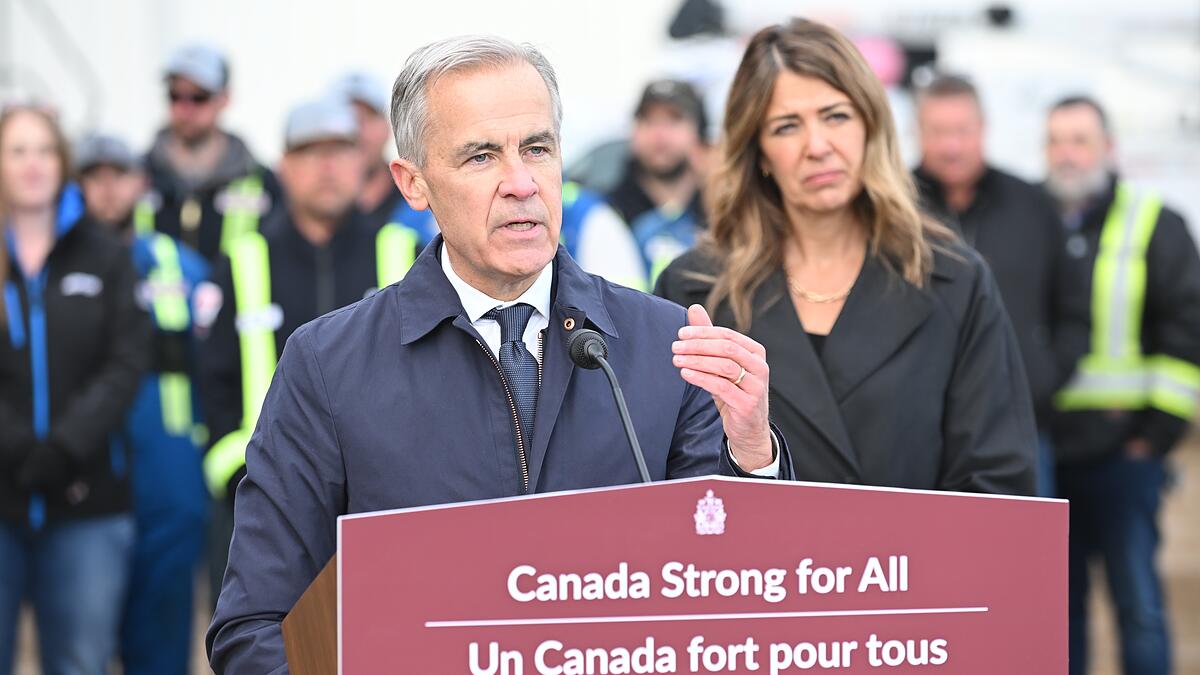
The federal government has designated the controversial West Coast Oil Pipeline — rechristened as Pacific Link — a project of national interest, invoking sweeping regulatory powers to fast-track a major energy corridor key to Ottawa’s plan to reduce Canada’s reliance on US oil and gas markets amid an escalating trade war.
The designation kick-starts a single, streamlined federal review of the 1,200-kilometre line, led by the Major Projects Office and the Canada Energy Regulator. The process aims to finalize details of the $35.2 billion to $47.7 billion project by Sept. 1, 2027, clearing the way “to get shovels in the ground,” Prime Minister Mark Carney said.
The Alberta and federal governments would share ownership of Pacific Link, with a minimum 10 per cent equity stake earmarked for Indigenous communities. Trans Mountain Corp, the Crown corporation that runs the TMX pipeline, would build and operate the export line, with Pembina Pipeline (PPL) contributing private development capital and technical expertise.
Pacific Link would be engineered to transport one million barrels a day of heavy crude along a route from Alberta through southern British Columbia to an expanded marine export terminal at Roberts Bank, south of Vancouver. The federal government estimates it could add more than $20 billion annually to national gross domestic product and generate over $100 billion in government revenues by 2060.
Pacific Link — along with LNG Canada’s $33 billion export terminal greenlit this week — are core projects in Ottawa’s strategy to ship oil and gas to Asia and Europe in a bid to diversify Canadian exports hit by a 19-month trade war with the US, its biggest trading partner.
Critics counter the projects will drive up greenhouse gas emissions and fear that environmental and labour laws are being weakened to attract foreign investors and speed up approvals for major infrastructure projects.

Year-long federal review begins
Proponents said the project — which begins a year-long review focused on the final pipeline design, including route mapping, cost estimates, procurement and logistics planning — would create up to 140,000 jobs at peak construction and support 50,000 permanent positions during operations, while also doubling Canada’s non-US oil and gas exports over the next decade.
Prime Minister Mark Carney, who announced the designation in Fort McMurray, the home of Alberta’s oilsands industry, framed the project as critical to Canada’s response to shifting geopolitics and volatile energy markets.
“We have to do this, because the world’s facing an energy crisis on three dimensions,” Carney said, citing the affordability challenge, the availability of hydrocarbons, energy security and “the existential challenge of climate change.”
That is forcing countries to think about where to source their energy from and which countries will supply it, he said.
Even under the most progressive global decarbonization scenarios, worldwide demand for crude will remain significant “for decades,” Carney said, presenting Canada with a “once-in-a-generation opportunity to become a global energy superpower” and a “trusted supplier” to international markets.
“The question is: who will emerge as the world’s trusted suppliers? It should be us,” he said.
Under the “grand energy bargain” signed with Alberta in May, Ottawa’s backing for Pacific Link is strictly contingent on advancing the “prerequisite” companion Pathways CCS project, a massive energy-and water-intensive carbon capture and storage complex being led by the Oil Sands Alliance, a group of five Canadian petro-giants.
“Canada, the government of Alberta [and] the Oil Sands Alliance will advance construction of the Pathways project, which will use special absorption towers to capture CO₂ emissions before they enter the atmosphere, permanently stored underground, making Alberta oil among the world’s lowest-carbon intensity crude,” Carney said.

Launched in 2021, Pathways CCS is now expected to cost more than twice the $16 billion original estimate and capture only 16 million tonnes of CO2 annually — a fraction of the oilsands’ carbon emissions initially promised.
Alberta Premier Danielle Smith hailed the designation as a result of a model federal-provincial partnership that would secure long-term public revenues.
“Today marks a significant victory for Alberta’s and Canada’s energy future,” Smith said at the announcement with Carney: “The listing of Pacific Link as a project of national interest demonstrates what can be achieved when governments work together to advance nation-building infrastructure.”
She said provincial treasury board estimates calculate the pipeline could yield more than $265 billion in cumulative royalty revenues for Alberta over its 50-year operating life, providing “stable funding for hospitals, schools, and essential services.”
Pipeline hinges on capital control: RBC
A recent RBC analysis said the project’s ultimate economic viability hinged on strict control of capital costs.
The bank’s models confirm the capital expenditure range announced by the government for the project, which would translate into a cost of $35,200 to $43,700 per barrel of daily capacity.
RBC noted that Canadian heavy crude faces inherent transportation cost disadvantages compared to Persian Gulf and Venezuelan supplies. Shipping Western Canadian Select oil to Asia currently costs $13 to $17 per barrel, compared to just $5 to $7 per barrel for Middle Eastern crude, it said.
But if developers were to avoid the ballooning cost overruns that plagued the Trans Mountain Expansion project and load crude carriers directly at the terminal, Pacific Link could narrow the structural WCS price discount against West Texas Intermediate by up to US$3 per barrel, RBC said.
Across Western Canada’s projected bitumen production, the pipeline would represent a $5 billion yearly boon to domestic producers, along with $20 billion in incremental annual export revenues, the bank said.
“The challenge would be to keep the project on budget. The estimated price tag for the project excludes escalation and financing — key concerns from a competitiveness standpoint,” it said.
‘Too early to tell’ if pipeline viable
Research from the Institute for Sustainable Finance shows that while financial markets reacted warmly to earlier federal-provincial implementation milestones on Pacific Link, creating $34 billion in abnormal shareholder gains through a 3.79 per cent surge in shares for Alberta-based energy companies.

But ISF director of research Yrjö Koskinen cautioned against reading the designation announcement as a green light for construction.
“It is too early to tell regarding the project’s long-term economics,” he told Canada’s National Observer.“That’s why I have been making the argument that today’s Pacific Link announcement is best seen as an option to build the pipeline, not a firm commitment.”
Koskinen said a final investment decision – that is, a go or no-go for Pacific Link – should be delayed until late 2028 or early 2029 to gather “better information” on Asian heavy oil demand forecasts, Middle East geopolitical and energy sector developments, US-Canada relations, and the pace of the global energy transition.
Asian oil and gas demand has dropped significantly since the US-Israel war against Iran spiked prices starting last spring. Many analysts have predicted much of that “demand destruction” is now permanent due to an acceleration in clean energy infrastructure build-out and other measures taken in some counties in the region to minimize reliance on foreign imports.
“The option to build a pipeline has value precisely because it lets us wait,” Koskinen said. “Once construction begins and proceeds, much of that investment cannot be recovered.”
“Let’s keep the option open and prudently make the final investment decision only when we know more,” he said.
Koskinen warned that by 2029, oil and gas market realities could show that the project is not in shareholders’ best interest, and private investors could ultimately decline to finance it.
‘Not worth the risk’
The federal announcement drew swift criticism from political opponents and environmental groups, who argue that Ottawa is gambling public funds on fossil-fuel assets that could be stranded if global oil and gas markets soften as the energy transition gathers pace.

NDP Leader Avi Lewis condemned the decision, calling the fast-tracked designation an unjustified subsidy for an oil industry currently benefiting from $100 billion in profits fuelled by the Iran war.
“Throwing billions in public money behind a pipeline at a time of climate breakdown — while sweeping aside environmental protections, meaningful Indigenous consultation and workers’ right to strike – is absolutely not in the national interest,” Lewis said, adding that the risk of legal challenges make it a “pipeline to the courts.”
“This project leaves Canadians bearing all the risks of a bad investment without any of the rewards,” he said.
Others questioned the financial logic of the project. Sven Biggs, Canadian Oil and Gas Campaign Director at Stand.earth, said private pipeline companies have declined to take an ownership stake in Pacific Link because the potential return on investment does not offset the likely project pitfalls.
“The reason Carney can’t find a pipeline company willing to take on ownership of this money pit is that the financial risks of the project outweigh the rewards,” Biggs said.
“The only way this pipeline will ever get built is if regular people like you and I pick up the $43.7 billion bill — money which instead could build 86,000 affordable rental housing units, or 21 new hospitals,” he added.
Opponents also highlighted other looming risks to the project’s business case, from the far-overbudget final price tag of the TMX pipeline, through toxic spill hazards threatening coastal ecosystems and endangered Southern Resident killer whales, to the rapid shift to renewable energy market growth in targeted Asian export markets such as China and India.





Canadian astronaut arrives at International Space Station for six-month mission
Canadian astronaut Joshua Kutryk's first thought after being told Thursday he had...

Quebec party leaders shore up support as campaign enters final stretch
Quebec's main party leaders are shifting their campaigns into top gear, with...

Michael J. Fox set to be promoted within Order of Canada at Rideau Hall today
The actor and Parkinson’s disease advocate Michael J. Fox is set to...

Trump tried to make an ally out of fishermen. Now some have started to turn on him
John Evich, a commercial fisherman in Washington and Alaska, has voted for...