Why Is China Reducing Its Dependence on the Dollar?
 James GorrieUpdated 6 days Ago4 Mins read
Commentary
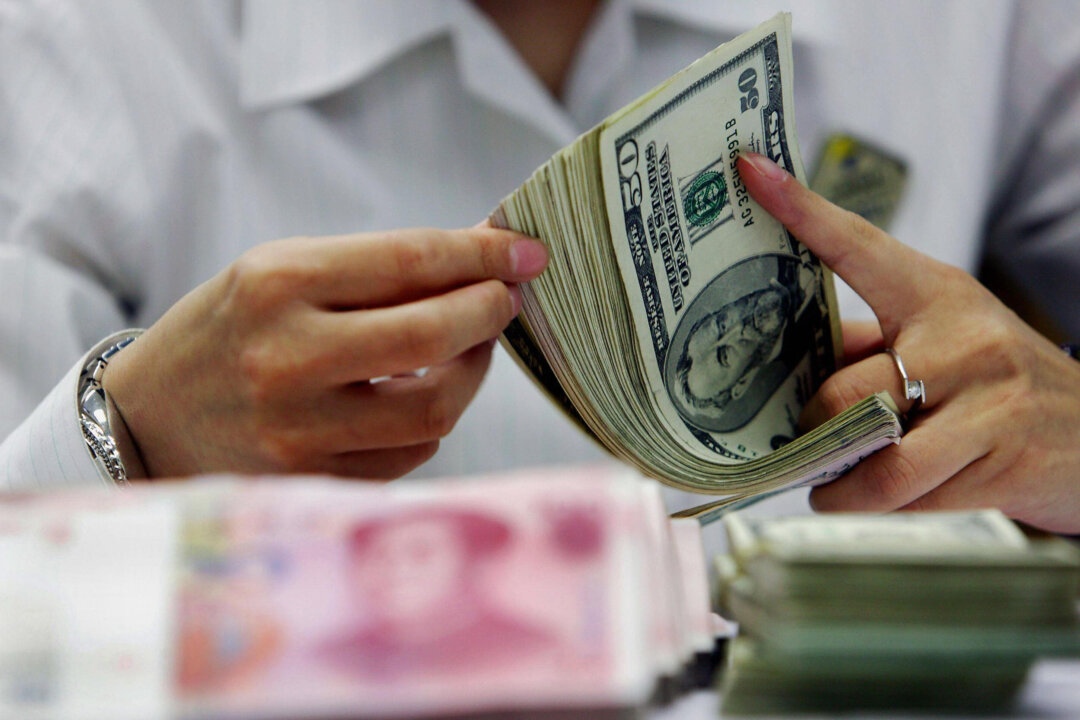
As China’s economy has developed over the past few decades, it has accumulated hundreds of billions of U.S. dollars.
That’s now changing. For the first time in almost two decades, Beijing is steadily reducing its exposure to U.S. Treasury debt, and it’s not the only one.
This is an important development because Treasurys have been more than an investment for Beijing. They’ve been part of the financial machinery connecting China’s export economy to U.S. capital markets.
That relationship seems to be changing.
In July, China’s reported Treasury holdings fell to $618 billion, the lowest level since 2008. At their peak in 2013, China’s holdings exceeded $1.3 trillion.
What’s going on?
Is Beijing losing confidence in the U.S. economy? Is it protecting itself from U.S. sanctions? Is it preparing for a confrontation with Washington? Is it sending a message over oil, technology, and trade?
Or is China quietly helping build a financial system in which the dollar is no longer indispensable?
The answer may include all of these possibilities.
But the larger point is that China doesn’t need to destroy the dollar to weaken America’s financial leverage; it only needs to become less dependent on it.
That’s a much more achievable strategy and appears to be what’s underway.

A worker prepares to load boxes of goods for export onto a container at a logistics hub in Yiwu, Zhejiang Province, China, on April 29, 2025. Kevin Frayer/Getty Images
China Is No Longer Treating Treasurys as Untouchable
China accumulated Treasurys for so long because it generated enormous dollar revenues from its trade surplus and needed somewhere liquid to put them.
U.S. government debt was an obvious and safe destination, but that’s not the vibe that Beijing is sending today.
But there is at least one other factor to consider.
Treasury data are based primarily on custodial records, but securities held through third countries may not be attributed to the actual Chinese owner. The Treasury Department itself warns that its data cannot precisely identify ultimate ownership.
That means Beijing’s actual dollar exposure could be larger than the headline figure. Nonetheless, the direction seems clear. China is reducing the amount of U.S. government debt visible in its official holdings.
Notably, that trend accelerated after Russia’s reserves were immobilized by the United States and its allies in 2022. In fact, the Council on Foreign Relations has documented a sharp decline in Chinese Treasury holdings in U.S. data following the freezing of Russian reserves by the United States in response to Moscow’s aggression against Ukraine.
China Has a Reason to Hedge
Beijing has learned from Russia’s experience that an asset can be financially safe but still be subject to political vulnerability.
If Washington and its allies can immobilize a major adversary’s reserves, Chinese policymakers have to consider what could happen to China’s assets during a future crisis.
That doesn’t mean China expects such an event, but it’s now on its radar and gives Beijing an incentive to reduce the risk before it becomes necessary.
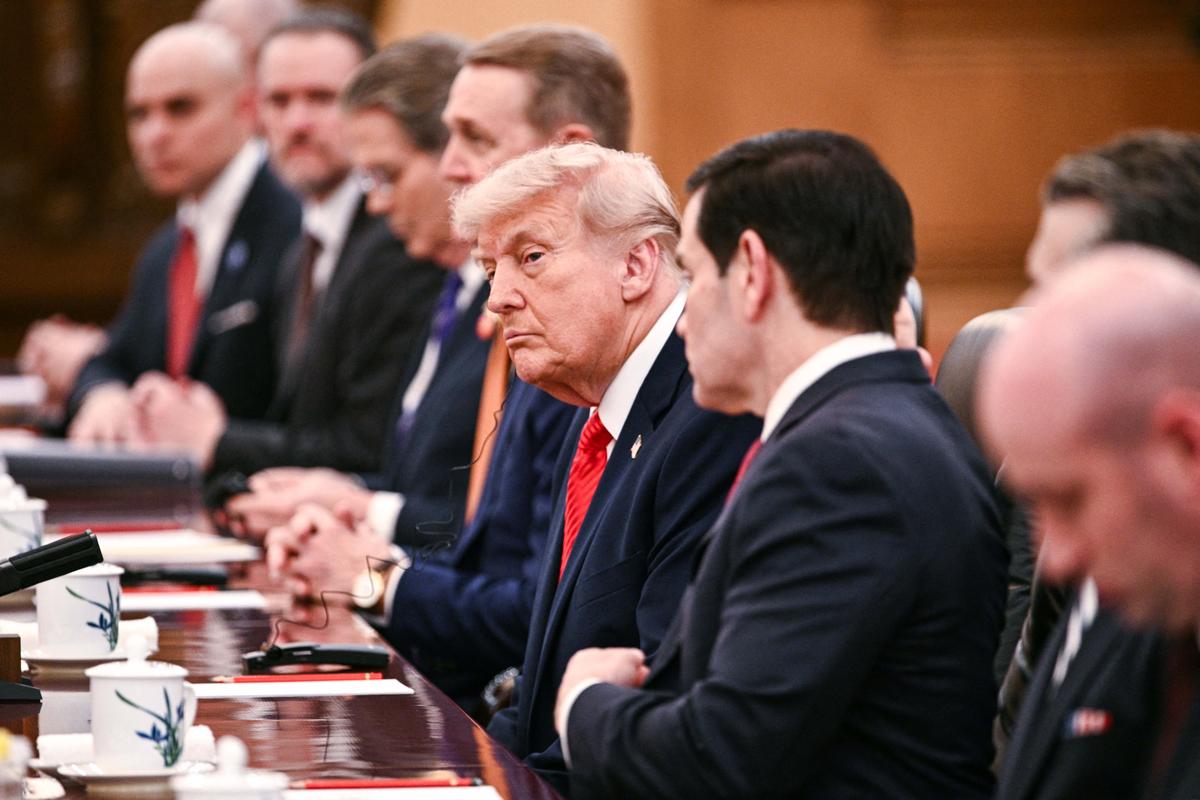
President Donald Trump (C) sits next to Secretary of State Marco Rubio (2nd R) during a meeting with China’s leader Xi Jinping at the Great Hall of the People in Beijing on May 14, 2026. Brendan Smialowski/AFP via Getty Images
Is Xi Sending Trump a Message?
Possibly. The timing is difficult to ignore.
President Donald Trump and Chinese leader Xi Jinping recently held negotiations involving trade, energy, technology, and China’s relationship with countries targeted by U.S. sanctions.
China’s leverage, however, isn’t limited to finance. Beijing dominates much of the global processing of rare-earth elements and has demonstrated its willingness to use export controls as leverage in negotiations with Washington.
At the same time, China remains the principal buyer of Iranian oil. The Treasury Department estimates that China purchases approximately 90 percent of Iran’s oil exports, much of it through independent Chinese refineries.
That creates a complicated strategic relationship.
What’s more, China faces its own economic problems. Its domestic market is weak, and its trade surplus has reached record levels. At the same time, the United States is carrying more than $40 trillion in federal debt and continues to run large fiscal deficits.
Such huge deficits against the dollar are another reason for Beijing to diversify, and it is doing so, in very significant ways.
It’s holding more gold, foreign currencies, equities, and agency securities. Beijing is also trying to keep more capital inside China and promoting international transactions that do not require dollars.
Washington Should Not Dismiss These Moves
That said, the United States still possesses some enormous financial advantages over China.
For instance, the dollar accounted for 57.13 percent of allocated global foreign-exchange reserves in the first quarter of 2026. China’s Treasury reduction, therefore, does not mean the world is abandoning the dollar. In fact, foreign investors continued to put substantial capital into U.S. securities in July.
Foreign residents recorded an $83.7 billion net inflow into U.S. securities and banking assets during the month, while foreign holdings of Treasury bills increased by $38.8 billion.
Could China Use Treasurys as a Weapon?
So China is reducing its dependence on Treasurys, but the world isn’t dumping them.
Yet Beijing’s behavior still matters because China is one of the world’s largest economies and one of America’s most important strategic competitors.
There is no public evidence, however, that the Treasury reduction is specifically retaliation for U.S. actions involving Iran, Venezuela, or Panama.
It is better understood as part of a broader effort to reduce strategic vulnerability.
In theory, yes. China could sell a large quantity of Treasurys. That could put upward pressure on yields, increase U.S. borrowing costs, and unsettle financial markets.
But a massive liquidation would reduce the value of the Treasurys China still owns. It could also strengthen the yuan, making Chinese exports more expensive.
That gives Beijing a powerful incentive to diversify gradually rather than launch a financial attack. China clearly wants a world less dependent on the dollar.
But that doesn’t mean it can replace it.
Views expressed in this article are opinions of the author and do not necessarily reflect the views of The Epoch Times.





Wall Street Review: Soft Jobs Report Cuts Rate-Hike Bets, Lifting Stocks Friday
U.S. stocks surged Friday after a weaker-than-expected jobs report and falling oil...

David Ellison Debuts New Name for Merged Paramount, Warner Bros. Studios
Paramount and Warner Bros. studios will be combined under one company named...

New York City’s AI Boom Fuels Office Growth but Squeezes Entry-Level Hiring, Report Says
New York City’s artificial intelligence boom is drawing billions of dollars in...
US Steps Up Pressure on China Over Industrial Overproduction
U.S. Trade Representative Jamieson Greer (C) poses with trade ministers and other...