Woman Airlifted to Hospital After Bear Attack Near Whistler, B.C.
 William HetheringtonUpdated 1 hour Ago2 Mins read
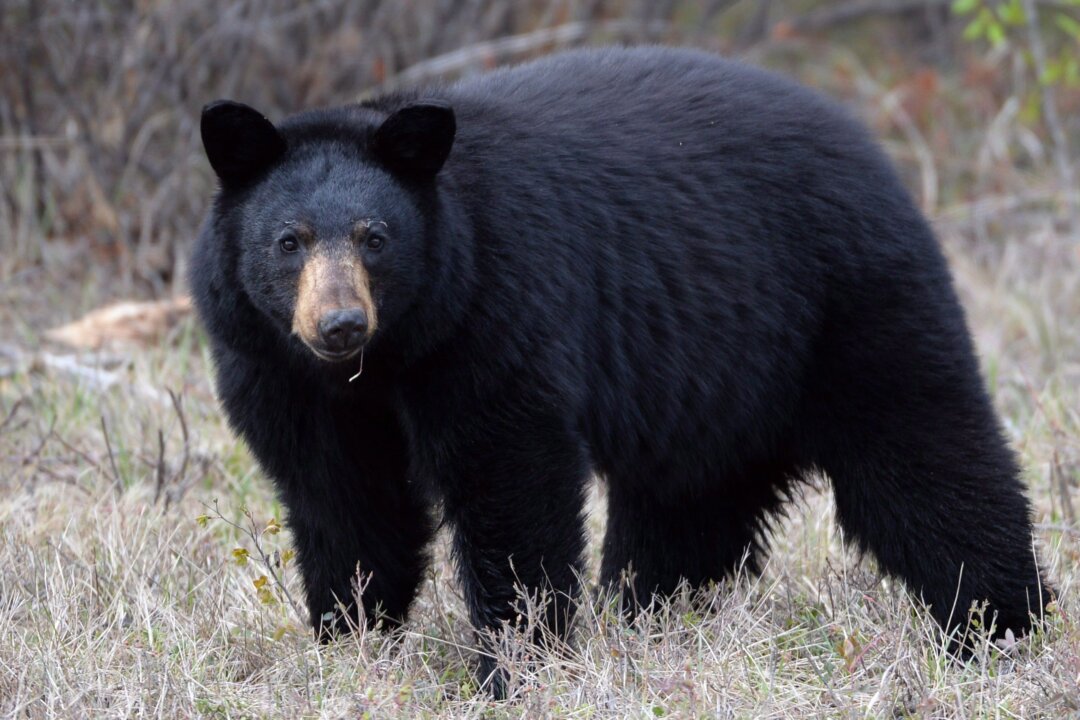
A woman was airlifted to hospital after she was attacked by a bear while hiking with two others near Conflict Lake in the Callaghan Conservancy, just north of Whistler, B.C.
The hikers encountered two bears at approximately 5:00 p.m. local time on Sept. 4, when the woman was attacked by one of the bears before it disengaged, according to the B.C. Conservation Officer Service (BCCOS) in a social media post on Sept. 5.
The service’s Predator Attack Team flew to the site by helicopter with members of the Squamish RCMP and Squamish Search and Rescue. There, officers conducted a safety sweep of the area and located one of the bears.
“One adult male black bear at the attack site was dispatched by conservation officers due to safety concerns,” the service wrote.
The woman received first aid on site before being transported via helicopter to hospital, where she was treated for non-life-threatening injuries.
The service said officers returned to the site on Sept. 5 to continue their investigation and was unable to confirm whether the bear involved in the attack was a black bear or a grizzly bear. Trail access in the area where the attack occurred has been closed to public access for safety reasons, in collaboration with BC Parks, the service said.
“The BCCOS would like to thank its law enforcement and emergency responder partners for their assistance. An update will be provided once the BCCOS is in a position to do so,” the service wrote.
Squamish Search and Rescue, which had participated in the response to the attack, said in a separate post on Sept. 5 that it advises the public to avoid the area at this time.
Parks Canada says bears can be encountered anywhere in the mountain national parks in the country. Bears are “extremely sensitive to the stress of human activity” and prefer to avoid people, it adds.
The agency advises park visitors to do their part to avoid bear encounters by staying away from high-quality bear habitat at key times of year, making noise while hiking, watching for fresh signs of bears, and travelling in groups of four or more.
Hikers should also keep dogs leashed, stay on marked paths and trails. travel during daylight hours, leave an area immediately if they come across a large dead animal, and properly dispose of fish offal.
Visitors to mountain parks should carry bear spray, ensure it’s easily accessible, and know how to use it, Parks Canada says. If they encounter a bear, hikers should stay calm, be ready to use bear spray, and not run away. They should speak calmly and firmly to the bear, back away slowly, make themselves appear big, and hold on to their pack, as it may provide protection.
If a bear approaches, assess whether it is behaving defensively or non-defensively. If the bear is feeding, protecting its young, surprised by your presence, or otherwise sees you as a threat, it will appear stressed or agitated and may vocalize. In this case, if the bear keeps coming closer, stand your group, keep talking, and use your bear spray. If it makes contact, play dead. However, if an attack continues, fight back, Parks Canada says.
“In the rarest case, it might be predatory–seeing you as potential prey,” the department says. “The bear will be intent on you with head and ears up,”
In that scenario, Parks Canada advises speaking in a firm voice and moving out of the bear’s path.
“If it follows you, stop and stand your ground, shout and act aggressively, and try to intimidate the bear,” it says. “If it approaches closely, use your bear spray.”







Taiwan Firms Add $20 Billion to Planned US Investment as States Seek Chip Projects
Taiwanese technology companies have increased their planned U.S. investments by about $20...

US Envoys Hope for New Round of Ukraine–Russia Peace Talks After Meeting With Putin, Zelenskyy
U.S. envoys Steve Witkoff and Jared Kushner said they hope to schedule...

Italy’s Newest Party Vaults to Fourth Place in Polls, Squeezing Meloni’s Coalition
A party that did not exist at the start of the year...

German Military Tests Israeli Ballistic Missile Over North Atlantic
Ships of the German Navy, including the "Baden-Wuerttemberg" frigate (in foreground), sail...