Joshua Wong Faces ‘Life Sentence in All but Name’ in Hong Kong Clampdown Under CCP: Experts
 Jarvis LimUpdated 2 hours Ago4 Mins read
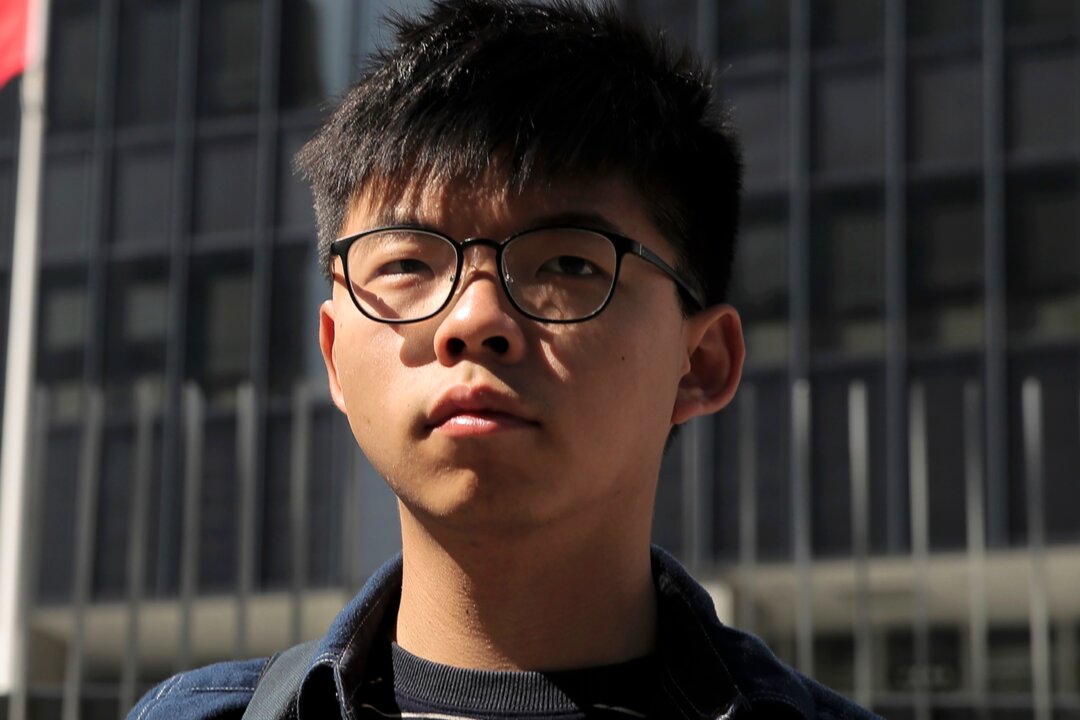
Beijing is weaponizing Hong Kong’s judicial system to indefinitely detain democracy advocate Joshua Wong, using his imprisonment to instill fear across the city, experts say.
Wong
pleaded
guilty on Sept. 2 to “conspiracy to collude with foreign forces” under the national security law that the Chinese regime imposed on Hong Kong, according to a report from China Central Television (CCTV), China’s largest state-run television broadcaster.
In June 2025, Wong was
accused
of conspiring with other activists to request that foreign or external institutions impose sanctions on Hong Kong over actions taken between July and November 2020.
The prominent Hong Kong activist has been imprisoned since 2020 and was hit with the charge while already behind bars.
While a guilty plea may lead to a lighter sentence, the offense carries a maximum sentence of life in prison.
The court has yet to schedule a sentencing date.

On July 1, 2019, protesters filled the streets in Hong Kong in a march against a controversial extradition bill. Yu Gang/The Epoch Times
“The core of Hong Kong’s common law system has been eroded since the implementation of the national security law,” Sky Fung, secretary-general of the Taiwan-based exile group Hong Kong Outlanders, told The Epoch Times.
The national security law took
effect
on July 1, 2020, marking 23 years since Hong Kong’s handover from British to Chinese rule.
Fung said the regime has weaponized the judicial system by filing one case after another before all verdicts are reached, keeping Wong locked up indefinitely.
“This traps prisoners in a pervasive state of fear and surveillance. Conversely, it exposes the totalitarian regime’s own fear of free will,” he said.
Sang Pu, a lawyer and director of the Taiwan Hong Kong Association, said the Chinese Communist Party (CCP) aims to wear Wong down, but its tactic likely violates international conventions.
“Prosecutors allege Wong conspired to collude with foreign forces between July and November 2020, yet delaying the indictment until 2025 is a severe violation of due process,” Sang told The Epoch Times.
Tseng Chien-yuan, an adjunct associate professor at Taiwan’s National Central University, concurred, calling Wong’s case an act of judicial persecution and a political verdict.
“Wong is being charged for actions that occurred before the national security law passed. Under the principle of non-retroactivity, he committed no crime,” Tseng told The Epoch Times.
“This shows the regime is deliberately using Wong’s prosecution and guilty plea to instill fear of the national security law across Hong Kong society.”
De Facto Life Sentence
The regime treats cases against pro-democracy figures in Hong Kong as foregone conclusions, working backward from a desired conviction to build the charges against Wong, Sang said, leaving little room for leniency.

Pro-democracy activist Joshua Wong is seen in Lai Chi Kok Reception Centre after being jailed for unauthorized assembly near the police headquarters during 2019’s anti-government protests in Hong Kong, China, on Dec. 3, 2020. Reuters/Tyrone Siu
“If Hong Kong authorities want to jail Wong for 10 years, he would still need to spend more than four more years behind bars,” he said. “But they might also aim for a total of 15 years. Ultimately, the regime is determined to keep Wong in custody for as long as it can.”
Fung said Beijing might stop short of handing Wong a life sentence but will still impose a severe penalty.
“To the regime, a high-profile political prisoner with immense international recognition like Wong serves as an excellent bargaining chip,” he said.
“Beijing needs to placate its domestic ultranationalists by imposing harsh punishments on Wong, while holding back on a life sentence to maintain leverage against the free world.”
However, Fung said the CCP’s pattern of heavy-handed measures—including repeated prosecutions and extensive post-release surveillance—could keep Wong effectively trapped in a “life sentence in all but name,” regardless of his official term of imprisonment.
Another leading figure prosecuted under Hong Kong’s national security law is Jimmy Lai—a UK citizen and media mogul known for his unapologetic criticism of Beijing—who was
sentenced
to 20 years in prison in February, the harshest penalty imposed on any pro-democracy figure or political dissident.
Analysts
told
The Epoch Times earlier that Lai’s charge marks the end of Hong Kong’s “one country, two systems” framework and could embolden Beijing to pursue even more severe prosecutions in the future.
Intensifying Crackdown
Tseng said the government will continue its crackdown on dissidents as a warning to Hong Kong society.
“Many of those arrested during the 2019 anti-extradition movement have yet to be sentenced because of the sheer volume of cases,” he said.
“As a result, Hong Kong authorities could carry out retaliatory sentences every year to maintain a constant state of fear among the public.”
The regime will extend its suppression into all aspects of daily life in Hong Kong, pairing a gradual rollout of internet censorship with severe financial and social penalties, according to Fung.
“Through financial suppression like asset freezes and grassroots informant campaigns, Beijing intends to make it impossible for activists to survive in Hong Kong society,” Fung said.
Sang said the CCP views the city as a “breeding ground for anti-government activity,” systematically dismantling the space for civil society to operate.
“There will be more university student unions, clubs, and independent bookstores in Hong Kong forced to close,” he said.
“All work in the arts, culture, and media will face intense scrutiny, stifling independent expression.”
Hong Kong’s Lingnan University Students’ Union—founded nearly 60 years ago and one of the city’s most influential student organizations—announced its dissolution on Facebook on Aug. 6, citing “recent changes in the situation inside and outside the campus.”
University student unions across Hong Kong have either disbanded or lost official recognition since the national security law took effect in mid-2020, with nearly all having taken part in the 2019 anti-extradition movement.
Separately, the independent Hong Kong bookstores Book Punch, Have a Nice Stay, and Greenfield Bookstore were targeted by police on national security grounds. Arrests were made at Book Punch in March, while Have a Nice Stay and Greenfield Bookstore shut down in July following raids.

An independent bookstore employee is led away by police officers after they raided the ‘Have A Nice Stay’ bookshop and confiscated items in Hong Kong on July 15, 2026. Tommy Wang/AFP via Getty Images
Sang predicted that a campaign of propaganda, lawfare, and psychological warfare to restrict the rights of Hong Kongers will only grow more severe in the years to come.
“This will be a devastating blow to Hong Kong,” Sang said.
“Unless the CCP collapses, there will be no turning point for Hong Kong.”




Trump Nominates Anti-Communist for US Navy Chief; Chevron to Invest $7 Billion in Venezuela
President Donald Trump is nominating Vietnamese American Hung Cao to lead the...
Pacific Leaders Call for 24-Hour Notice of Missile Tests After China Launch
KOROR, Palau—China’s July ballistic missile test in the South Pacific has prompted...
Xi’s Military Purge Leaves China’s Top Command With 2 Members
The Chinese Communist Party (CCP) has formally removed two of its most...
South Korea Biennale Restores ‘Taiwan Pavilion’ Name After Artists Protest
Taiwan’s exhibition at the 16th Gwangju Biennale in South Korea is set...