Trump Praises Aussie Engineer Behind Nuclear Reactor Small Enough to Fit on a Truck
 Crystal-Rose JonesUpdated 4 hours Ago3 Mins read
A Queensland-born engineer has become one of the key players in America’s race to commercialise tiny nuclear devices, developing a microreactor small enough to ride on the back of a utility vehicle.
The microreactor, dubbed “Unity,” is the work of Deployable Energy, a company headed by Australian co-founder and CEO Bobby Gallagher.
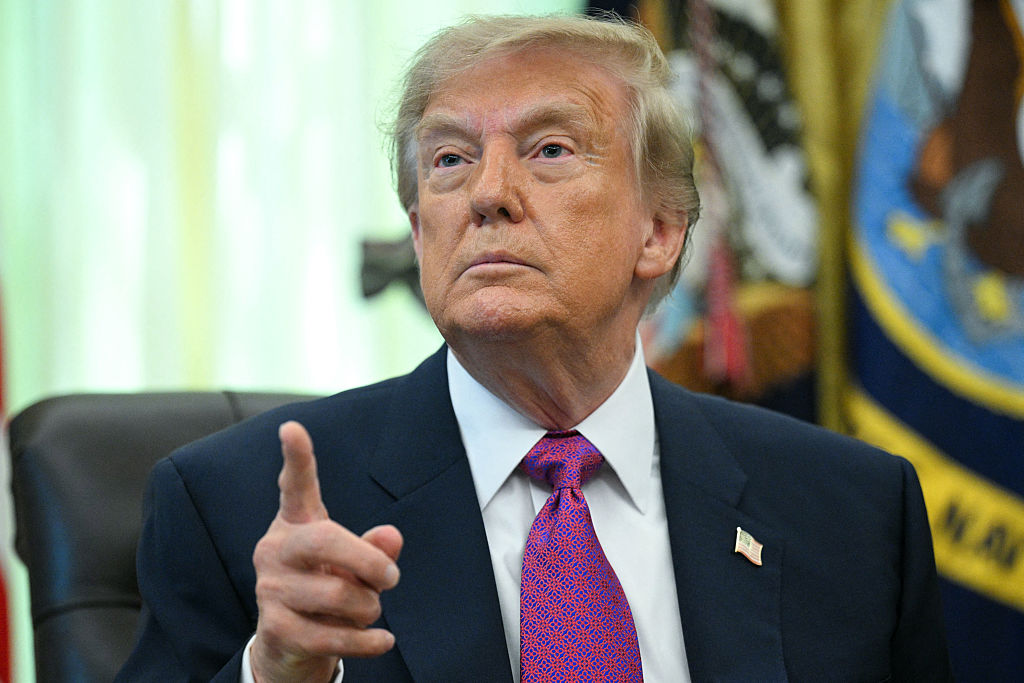
Gallagher’s project was so esteemed by U.S. President Donald Trump that he received a, “Thank you, sir,” from the leader during an update on his nuclear plans.
Trump also called Gallagher’s company one of “the greatest in the world” in nuclear development.
“We have brilliant nuclear people—we have a lot of brilliant people, but we have brilliant nuclear people on our staff,” Trump said.
Push for Quick Modular Nuclear Development
Unity was developed amid a broader Trump administration push to accelerate the commercial deployment of advanced nuclear reactors after what they claimed was decades of stalling.
In May 2025, President Trump issued an executive order directing the U.S. Department of Energy (DOE) to approve at least three advanced reactors, with the goal of achieving criticality by July 4 this year.
The Department of Energy subsequently selected 11 advanced reactor projects for its Reactor Pilot Program to accelerate reactor testing and commercial deployment.
Across that program and a related Department of Energy initiative, four advanced reactors ultimately reached criticality by the deadline, exceeding Trump’s target.
Unity is being developed as a one-megawatt microreactor—which would generate enough electricity to power hundreds of homes—with the eventual goal of mass-producing compact reactors that can provide reliable power in remote and industrial locations.
On June 30 this year, a demonstration version of Unity achieved nuclear criticality at Idaho National Laboratory, meaning it successfully established a self-sustaining nuclear chain reaction.
The zero-power experiment was designed to confirm that the reactor core behaved as engineers had predicted, however, it did not generate electricity or useful thermal energy at that stage.
A ‘Nuclear Renaissance’
Unity became the third DOE-authorised advanced reactor to achieve criticality ahead of the July 4 deadline.
“We are proud to be a part of this historic achievement and I want to express Deployable Energy’s gratitude to the administration for setting an audacious goal to have three reactors reach criticality before July 4th, the U.S. Department of Energy for ensuring our ability to meet this goal with safety, quality, and speed, and the Idaho National Laboratory for providing an incredible partnership in execution,” Gallagher said in a statement.
“I also want to thank my team and supply chain partners of dedicated professionals.
“We would not have been able to meet this moment without their brilliance, boldness, and grit.”
U.S. Secretary of Energy Chris Wright said his nation was seeing a “nuclear renaissance.”
“Advanced nuclear technologies like Unity will help power the next generation of American industry, strengthen our energy security, and ensure the United States remains the world’s nuclear innovation leader,” he said.
The U.S. administration blame federal overregulation for stifling the domestic development and deployment of advanced reactors.
“While the United States cultivated the effort to design and build the first Generation IV reactor for commercial use, we have since ceded the initiative to foreign nations in building these advanced reactors,” a White House statement said.
“Advanced reactors have revolutionary potential, opening a range of new applications to support data centres, microchip manufacturing, petrochemical production, healthcare, desalination, hydrogen production, and other industries.”
Unity is expected to be capable of quick mass production and devices should be able to run for five years without needing to refuel.
Australia’s Nuclear Energy Ban
The development comes as debate around civilian nuclear power continues in Australia.
During the last election, former Opposition Leader Peter Dutton make nuclear energy a focus of the national debate by pledging to build seven if he won power.
Whereas the conservative-leaning One Nation was always keen to remove the ban on civilian nuclear power, and has recently pledged to build one at the Loy Yang power station in Victoria last week.
Meanwhile, the Labor government has been critical of removing the moratorium of nuclear energy with Minister Chris Bowen saying it comprised just nine percent of the world’s power sources.
“In 2025, the number of economies that include nuclear generation in their system has fallen by one, with Taiwan having closed the last of its nuclear power stations,” he said in October last year.







Taiwan Firms Add $20 Billion to Planned US Investment as States Seek Chip Projects
Taiwanese technology companies have increased their planned U.S. investments by about $20...

Volkswagen Names New North America Chief
A line of unsold 2024 GTI and Jetta sedans sit at a...

Unemployment Claims, Layoffs Creep Up Ahead of Jobs Report
New data show that claims for unemployment benefits and planned layoffs crept...

The Bond Market Tells the Truth
CommentaryPoliticians of the world are nonchalant toward astronomical debt levels in every...