Death Toll in Nepal–Tibet Flood Tops 1,100 as China’s Tibet Toll Remains Unchanged for Days
 Arthur ZhangUpdated 4 hours Ago2 Mins read
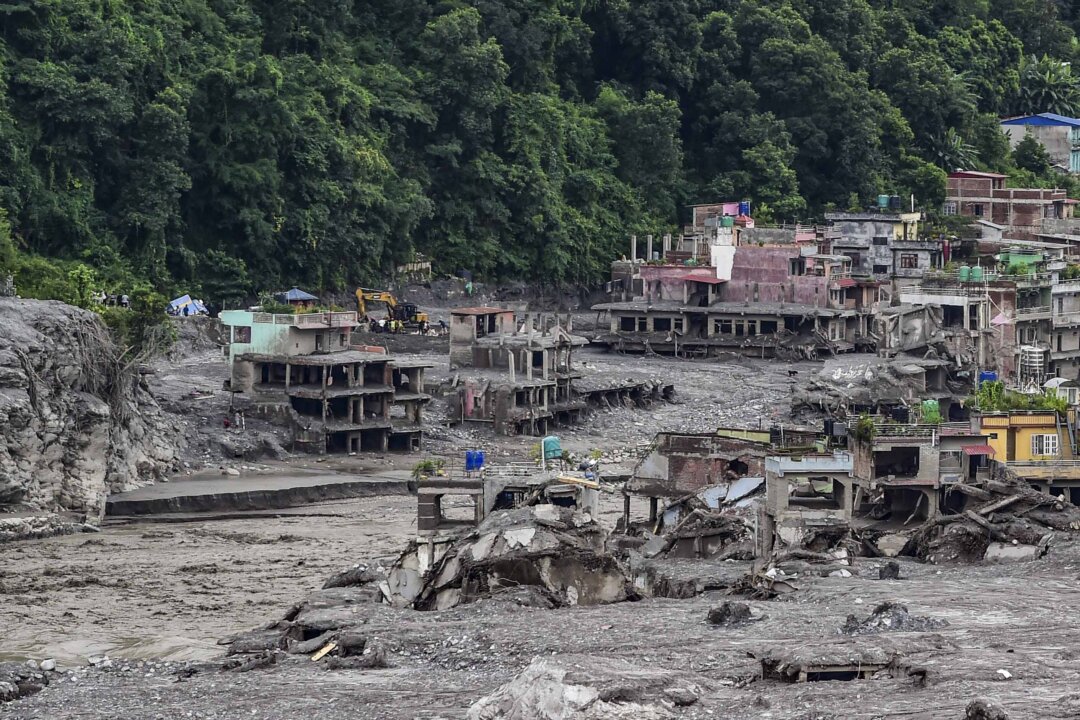
At least 1,109 bodies have been recovered or deaths confirmed after the Aug. 26 disaster along the Nepal–Tibet border, while China’s official toll for the Tibet side has remained unchanged for days.
Nepal Police stated that 1,093 bodies had been recovered and that 4,571 people remained missing as of 8 p.m. local time on Sept. 1. Police stated that 1,082 postmortem examinations had been completed and that 58 bodies had been handed over to relatives.
Identification has lagged far behind recoveries. Police stated that details of 911 unidentified bodies had been posted on its website.
In Chitwan, 199 unidentified bodies and remains had been buried after DNA samples and other identifying information were preserved, public broadcaster Radio Nepal reported on Aug. 31. Authorities said the remains can later be exhumed and returned to families after DNA matching if they are identified.

Police collect DNA samples from relatives at Nepal Police Hospital to identify missing persons. Courtesy of Nepal Police
Across the border, Chinese authorities continue to report 16 dead and 546 missing in Tibet. The Tibet regional government gave that count as of 6 p.m. on Aug. 29. Authorities later said that 261 of those unaccounted for were foreign nationals from 23 countries, including 18 Americans.
Search at Gyirong Port
China’s state-run media outlet Xinhua reported at 3:58 a.m. on Sept. 2 that overnight repairs continued on National Highway G216 and that the rescue route to Gyirong Port was “about to be connected.” It stated that excavators working in the core rescue area were visible from the advancing roadworks.
In the public updates reviewed, Chinese authorities have not said how much of the buried port area has been excavated, whether signs of life have been detected beneath the debris, or how many of the 546 missing people are believed to have been at Gyirong Port.
Information Controls Draw Criticism
Human Rights Watch stated on Aug. 31 that it had received reports that journalists in China were barred from the disaster zone and from interviewing families. It stated that authorities had punished at least 10 people for alleged disaster-related “rumormongering” and that original footage from Gyirong Port was being censored in China.
The restrictions have also affected foreign reporters. ABC News China correspondent Allyson Horn reported on Aug. 29 that she had made multiple formal requests to Chinese authorities for permission to travel to Tibet after the disaster and had been repeatedly refused. She said other foreign journalists had also been denied access.
With independent reporters unable to reach the affected Tibetan area, there is no independent on-the-ground assessment of the casualty count or the scope of the search.
The Central Tibetan Administration, the Tibetan government-in-exile based in India, accused Beijing on Aug. 27 of concealing casualty figures for a day before announcing an initial toll and stated that detailed information from Tibet remained unclear.
The International Campaign for Tibet (ICT), a Washington-based nonprofit that advocates for Tibetan rights, called on Beijing on Aug. 27 to release more information and allow independent access.
“ICT calls on the Chinese government to disclose complete and verifiable information about the damage and casualties,” ICT President Tencho Gyatso said.
She also called for independent reporting and unhindered humanitarian access.
Searches Continue in Nepal
On the Nepal side, rescue teams continued searching hydropower projects where workers remain unaccounted for.

Nepal rescue teams search for survivors in the tunnel of the Upper Trishuli-1 Hydropower Project. Courtesy of Nepali Army
At a Sept. 1 government briefing, a Nepal Army representative said teams from Nepal, India, and China were involved in searches at several hydropower sites, with blocked passages and water hindering access at some locations.
At 11:15 p.m. on Sept. 1, Nepal’s Flood Forecasting Division warned that the Marsyangdi River at Bhakundebesi in Lamjung had crossed the danger level and was still rising, urging residents downstream to remain on high alert.




As North Korea Grooms a Kim Heir, China’s Succession Remains Unsettled
South Korean intelligence assesses that North Korea appears to be positioning Kim...

US Firm to Take Over Some Venezuelan Oil Fields Previously Run by China
A U.S. oil company will take over some Venezuelan oilfields previously run...

Taiwan Criticizes China’s ‘Wolf Warrior’ Diplomacy at Pacific Summit
KOROR, Palau—Taiwanese Foreign Minister Lin Chia-lung told The Epoch Times on Tuesday...

Telstra Fined $277,000 Over SIM-Swap Fraud Failures
A Telstra logo is seen outside the Telstra Melbourne headquarters in Melbourne,...