US Weekly Unemployment Claims Dip as Layoffs Stay Low
 Andrew MoranUpdated 3 hours Ago2 Mins read
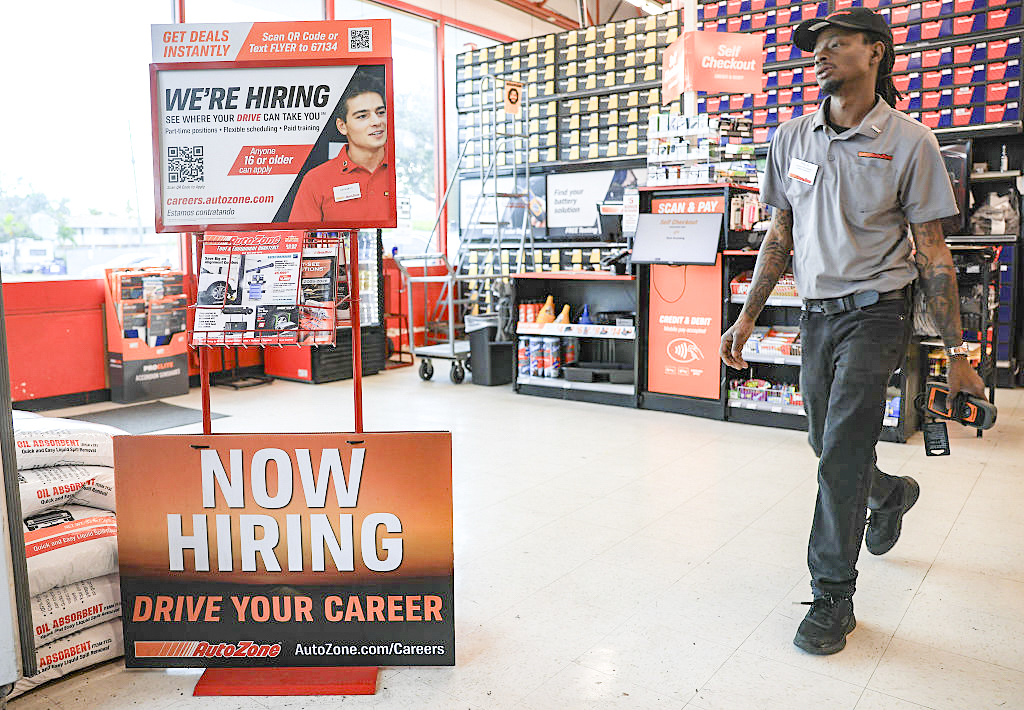
The number of Americans filing for unemployment benefits dipped last week, signaling persistently low layoffs in the U.S. labor market.
Initial jobless claims fell by 1,000 to 206,000 for the week ending Sept. 5, according to new Department of Labor data released on Sept. 10.
This came in slightly above the consensus forecast of 205,000.
Excluding week-to-week volatility, the four-week average declined to 206,000.
Weekly unemployment claims have remained in a narrow range of 189,000 to 212,000 since July, highlighting strong job conditions.
Global outplacement firm Challenger, Gray and Christmas reported last week that August’s planned job cuts were the lowest for the month since 2022.
U.S.-based firms announced almost 53,000 layoffs, down 39 percent from a year ago.
Heading into the fall, the national labor market could be picking up momentum.
The economy created 162,000 new jobs in August, far higher than the May–July average of 39,000. The unemployment rate was also 4.1 percent for the second straight month.
Americans currently receiving jobless benefits—a proxy economists use to gauge hiring trends—dipped by 1,000 to a lower-than-expected 1.774 million.
Economic observers have long described today’s labor market as being in a “low-fire, low-hire” climate. But while layoffs remain anemic, employers have signaled they want to bolster headcount.
A fifth of small business owners told the National Federation of Independent Business last month that they plan to create new jobs in the next three months, slightly down from July’s four-year high. The challenge remains finding qualified talent.
Of the 56 percent of owners hiring or trying to hire in August, 82 percent reported few or no qualified applications for the job openings they were trying to fill.
Additionally, labor availability or quality was still the single most important problem facing small businesses.
“My problem is that no one wants to work,” one Texas-based employer in the services sector said in the group’s Small Business Optimism Index.
“I have advertised in all the areas I know of, and we have had a total of zero applications. In 30 years of business, this has never happened.”
The United States currently has approximately 7.3 million job vacancies, and job postings on Indeed have been steadily rising since early June.
But in a potentially positive reversal, workforce participation could be increasing.
The labor force participation rate rebounded to 61.6 percent in August, from 61.4 percent in July—the lowest since the 1970s (excluding the pandemic years of 2020 and 2021).
Glimpse Into 2027
Still, looking ahead to 2027, recent job growth trends could keep the U.S. labor market tight, says Bill Adams, chief U.S. economist at Fifth Third Commercial Bank.
“That will gradually make it easier for college grads who struggled to find jobs this summer to find their first foothold,” Adams said in an emailed note to The Epoch Times.
“The job market will stay tightest for physically demanding blue-collar occupations as fewer immigrants enter the workforce and as older workers, who are over-represented in these lines of work, retire.”
This could also bolster wage growth, he added.
Average hourly earnings rose 0.3 percent from July to August and eased to a lower-than-expected 3.1 percent year over year.
Real (inflation-adjusted) earnings have slowed in recent months as the war in Iran, approaching its seventh month, upends global energy markets and revives price pressures.
From July 2025 to July 2026, real average hourly earnings fell 0.2 percent, according to the Bureau of Labor Statistics.
August’s Consumer Price Index data will be published on Sept. 11, and economists expect little change.
Before the consumer inflation figures, the bureau reported that wholesale inflation surged 0.4 percent last month.
Omitting food and energy prices, the Producer Price Index rose at a smaller-than-expected pace of 0.2 percent.







Existing-Home Sales Fall to Slowest Pace in More Than a Year
Sales of previously owned homes fell in August to their slowest pace...

High Diesel Prices Lift US Producer Inflation in August
U.S. wholesale inflation climbed in August as higher crude oil and gasoline...

Life Insurance You Don’t Need Anymore (And the Kind You Might)
Life insurance can be an important part of your life. This is...

Apple Joins Foldable Phone Race With $1,999 Passport-Shaped iPhone Duo
CUPERTINO, California—Apple on Wednesday redefined its flagship smartphone with the launch of...