Climate reckoning awaits as Canada falls further behind targets
 Nathalie Hewa DewageUpdated 6 days Ago3 Mins read
As Parliament returns next week for its fall session, a new analysis has added urgency to debates over Canada’s climate strategy, warning the country is now more than two decades behind meeting its climate goals.
The analysis, jointly conducted by the Canadian Climate Institute’s 440 Megatonnes project and Navius Research, found that the federal government’s recent trend of weakening climate policies has left Canada roughly 20 years behind meeting its 2030 emissions target. It also concluded that achieving net-zero emissions by 2050 is unlikely.
Canada has had varying climate policies since the 2015 Paris Agreement, which legally bound it — and nearly 200 other countries — to hold the increase in average global temperatures to below 2°C above pre-industrial levels and to strive for 1.5°C above pre-industrial levels.
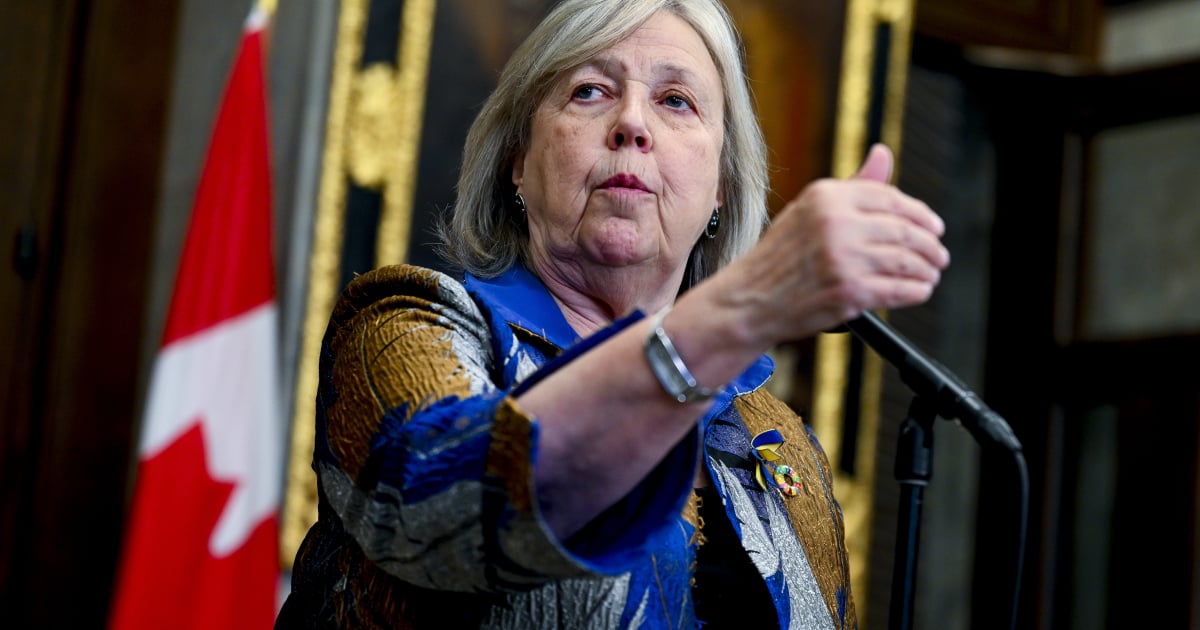
Green Party Leader Elizabeth May said she will be “pushing the prime minister to keep his word” on his earlier climate commitments in response to the analysis.
“I will make as much noise as I can. I am one MP. I cast one vote, but I will not allow a prime minister, no matter how much I support him in his fight with Trump, to ignore the Liberal platform,” she said in an interview with Canada’s National Observer.
“I’m going to be calling on Liberals who ran on that platform to show some backbone. If their prime minister is betraying the promises they ran on, they should do something about it.”
In 2016, the Canadian government, under former prime minister Justin Trudeau, promised to reduce greenhouse gas (GHG) emissions to 30 per cent below 2005 levels by 2030 to comply with the Paris Agreement. In 2021, Trudeau increased that target to 40 to 45 per cent. Both the 2030 emissions target and 2050 net-zero goal were enshrined in the Canadian Net-Zero Emissions Accountability Act.
However, Prime Minister Mark Carney’s government has dismantled several climate policies since then.
In February 2025, Carney replaced the electric vehicle sales mandate with new rebates and regulations. In April, he eliminated the consumer carbon tax.
In November, the federal government and Alberta signed a memorandum of understanding that facilitated the development of a new bitumen pipeline — a move that culminated in the resignation of Liberal MP and former environment minister Steven Guilbeault.
Earlier this month, the federal government quietly released its latest climate report, which concluded in part: “Warming temperatures have driven wide-ranging, interconnected, and sustained changes across Canada … Human-caused warming is the only explanation for the collective changes observed.”
In fact, 2025 was the first time in many years that more climate policies were concluded, cancelled or suspended than were established.
According to the CCI analysis, even in the best-case scenario, these weakened policies will lead to a 202-megatonne gap between Canada’s emissions and its net-zero target by 2040.
“Government policy really matters,” said Rick Smith, president of the Canadian Climate Institute in an interview with Canada’s National Observer.
“We actually calculated where emissions would be in Canada if it weren’t for the policies already in place and the answer is that our pollution levels would be much worse. What this proves is that Canada can cut its pollution levels while growing the economy, but that only happens with deliberate government decisions.”
Smith stressed that their projections were based on current policy and that implementing stronger measures would improve the outlook.
“Time is of the essence,” he said. “It’s important that we start now as opposed to waiting until it’s too late.”
May added that she was in favour of regulatory action — including bans — against the production of GHG emissions to meet climate targets, citing the success of the Montreal Protocol, which preserved the ozone layer by phasing out harmful substances, as a positive example.
She also highlighted the importance of meeting the targets set out by the Paris Agreement before it was too late.
“The stakes are not small. The stakes are whether our children and grandchildren have a world that is livable.”
Failure to meet climate targets does have severe consequences.
According to a UN Environment Programme (UNEP) report released earlier this month, global temperatures are already set to exceed 1.5°C in the near future, resulting in more extreme weather events, ecosystem loss, flooding of low-lying coastal areas and more. Damage to infrastructure, nature, human health and the economy, as well as food and water insecurity, would also follow.
Above 1.5°C, the impacts intensify with every fraction of a degree raised or each year that passes.
Nonetheless, the UNEP report did indicate that it was still possible to mitigate the damage and achieve the goals set in the Paris Agreement through an immediate reduction in GHG emissions through net-zero efforts and Carbon Dioxide Removal (CDR).
To what degree Canada’s government will enact such measures, or how successful they will be, is unclear.
“Our government is committed to fighting climate change and reaching net-zero by 2050 by taking a pragmatic and durable approach,” said press secretary to the Minister of Environment and Climate Change Keean Nembhard in an emailed statement to Canada’s National Observer.
“This includes building major clean-energy projects across the country, driving mass electrification, and making significant investment in the low-carbon economy.”




AI’s dangers ‘real and imminent,’ Canadian AI pioneer Yoshua Bengio tells UN
Canadian AI pioneer Yoshua Bengio and the heads of two major American...
Toronto mayoral candidates debate housing, transit and data centres
Toronto mayoral candidate Brad Bradford is promising to freeze property taxes for...
No, cyborg propaganda is not ‘inevitable.’ None of this is.
After Rory White revealed a Toronto mayoral campaign is putting AI-written comments...
Labour law changes would bring ‘sunlight’ to collective bargaining, says jobs minister
Jobs Minister Patty Hajdu says the Liberals' proposed changes to the Canada...