Hormuz Shipping Remains Subdued but Adapts to Iran Conflict: Industry Analysts
 Evgenia FilimianovaUpdated 3 days Ago3 Mins read
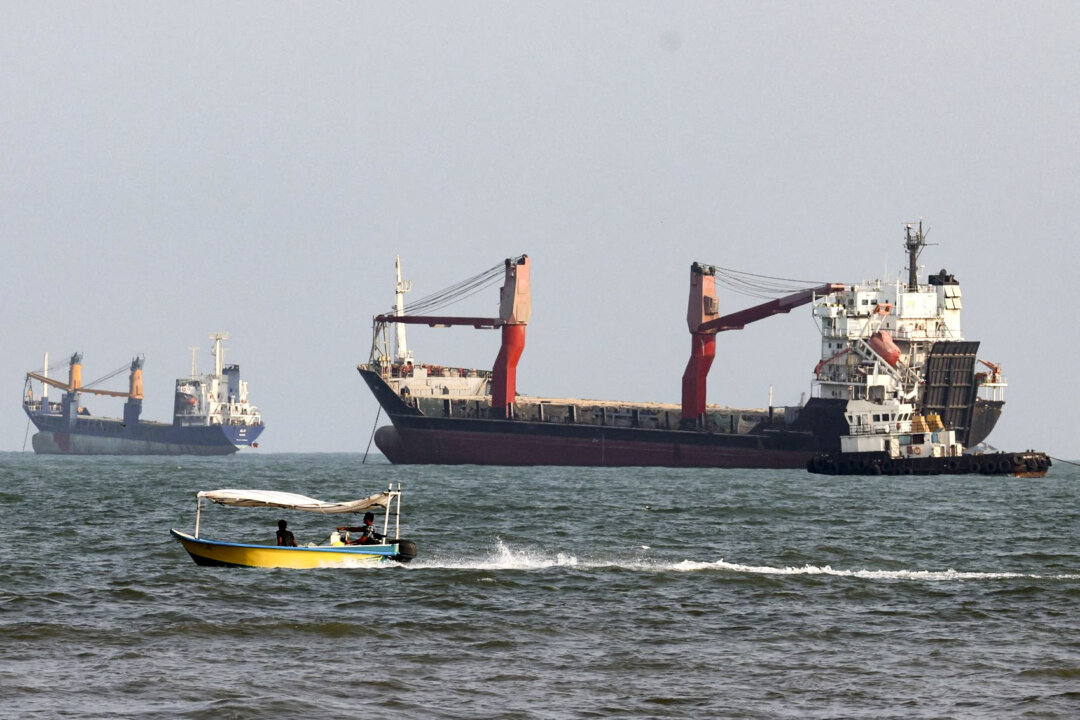
Commodity vessel traffic through the Strait of Hormuz remained well below pre-war levels over the weekend as the U.S.–Iran standoff continued, though shipowners appear to be adapting to the security environment, according to industry analysts.
The Strait of Hormuz typically handled about 125 large commercial vessels a day before the Iran conflict. This included oil tankers, gas carriers, bulk carriers, and container ships.
Over the weekend, a total of 17 commodity vessels transited the strait, according to shipping analytics firm Kpler. The figure is down from 37 vessels a week earlier.
Provisional Kpler data as of 7:06 a.m. (GMT) on Monday showed that five vessels exited the Gulf on Sunday, while two small oil tankers entered.
The departing ships included the very large crude carrier (VLCC) Pinios, two tankers carrying refined petroleum products, and two empty bulk and gas carriers.
On Saturday, eight vessels, including a VLCC, departed the Gulf carrying crude oil, agricultural products, refined petroleum products, liquefied natural gas (LNG), liquefied petroleum gas (LPG), and fertilizer.
Data by Lloyd’s List Intelligence on Sept. 18 showed that total Strait of Hormuz transits increased 26.9 percent during the week of Sept. 7–Sept. 13 from the previous seven days, rising to 132 from 104 vessel movements.
Transits continue despite ongoing Iran conflict and regional security threats.
The UK Maritime Trade Operations (UKMTO) agency said on Monday it had received a report of a tanker struck by an unknown projectile while transiting the Strait of Hormuz.
The inbound tanker sustained minor damage, and two crew were wounded.
Separately, Iran’s state news agency IRNA reported on Sept. 21 that Iranian forces had intercepted and destroyed what they described as a U.S. MQ-1 drone over the Strait of Hormuz.
The Epoch Times reached out to U.S. Central Command for comment but didn’t receive a response by publication.
The United States first imposed a naval blockade on vessels trading with Iranian ports in April, lifted it during a temporary June truce, and reinstated it on July 14 after renewed Iranian attacks on commercial shipping and the collapse of negotiations.
Central Command said on Sept. 20 that its forces had redirected 109 commercial vessels to ensure compliance with maritime security measures.
Hormuz, Bab el-Mandeb
Saudi Arabia has increased crude exports through the Strait of Hormuz after Houthi attacks damaged pumping stations along Saudi Aramco’s East-West pipeline, the kingdom’s main alternative export route during the conflict.
Kpler data showed that 22 crude tankers, mostly VLCCs, carrying about 42 million barrels of crude exited the Strait of Hormuz during the week ending Sept. 13.
Saudi Arabia and Iraq each accounted for about 43 percent of those volumes.
At the Bab el-Mandeb Strait, 51 vessels transited the waterway over the weekend, down from 57 a week earlier.
Thirty-three vessels exited the strait, including an Aframax tanker carrying about 700,000 barrels of Saudi crude, according to Kpler.
Shipping data showed that no visible crude oil loadings have been recorded from Saudi Arabia’s Yanbu export terminal on the Red Sea since Sept. 16.
Shipping Adapts
Shipping executives said recent headlines have created conflicting impressions about conditions in the region, but underlying traffic trends suggest operators have adapted to the heightened security environment.
Richard Meade, editor-in-chief of Lloyd’s List, said last week that reports of some companies returning to the Red Sea while others continue diverting vessels were not contradictory because risks vary by vessel type and ownership.
“There is a much higher risk directly for Saudi-related tankers than there is, for example, German or Swiss-controlled container ships,” Meade said during a webinar.
He said the security outlook remained fluid as regional advances by the Iran-backed Houthi terrorist organization in Yemen could alter longer-term risk calculations.
Meade added that the overall strategic assessment for commercial shipping had not fundamentally changed beyond the elevated risk environment already in place before the latest Houthi gains.
Daily headlines, according to Meade, could give a misleading impression of shipping activity, contrasting public statements that millions of barrels of oil continued to flow through the Strait of Hormuz with reports suggesting little or no traffic.
“A slightly more boring but sober retrospective look over an average of 14 days is actually telling a different picture,“ he said. ”This is not normal, but it is actually steady and slightly increasing.”
Diplomatic efforts could gather pace this week as world leaders convene in New York for the 81st session of the U.N. General Assembly.
The White House said President Donald Trump is scheduled to address the General Assembly on Sept. 22, while Iran’s state news agency IRNA reported that Iranian President Masoud Pezeshkian will travel to New York on Tuesday to attend the annual gathering.
Reuters contributed to this report.





Ahead of Trump–Xi Summit, Democrats Call for Tighter China Chip Controls
President Donald Trump and First Lady Melania Trump welcome Chinese leader Xi...

Senator Tells Data Centre Developer to Drop Project Planned 20 Metres From Homes
An executive from AI data centre operator Goodman Group has been urged...
US Invites Putin to Miami G20
(Left) U.S. President Donald Trump in Washington on Aug. 18, 2025. (Right)...

Australia, Netherlands Strengthen Ties with New Strategic Partnership
Australian Prime Minister Anthony Albanese has signed a new strategic partnership with...