Taiwan Experts Say Trump-Xi Summit Did Not Alter US-China Strategic Divide
 Michael ZhuangUpdated 8 hours Ago4 Mins read
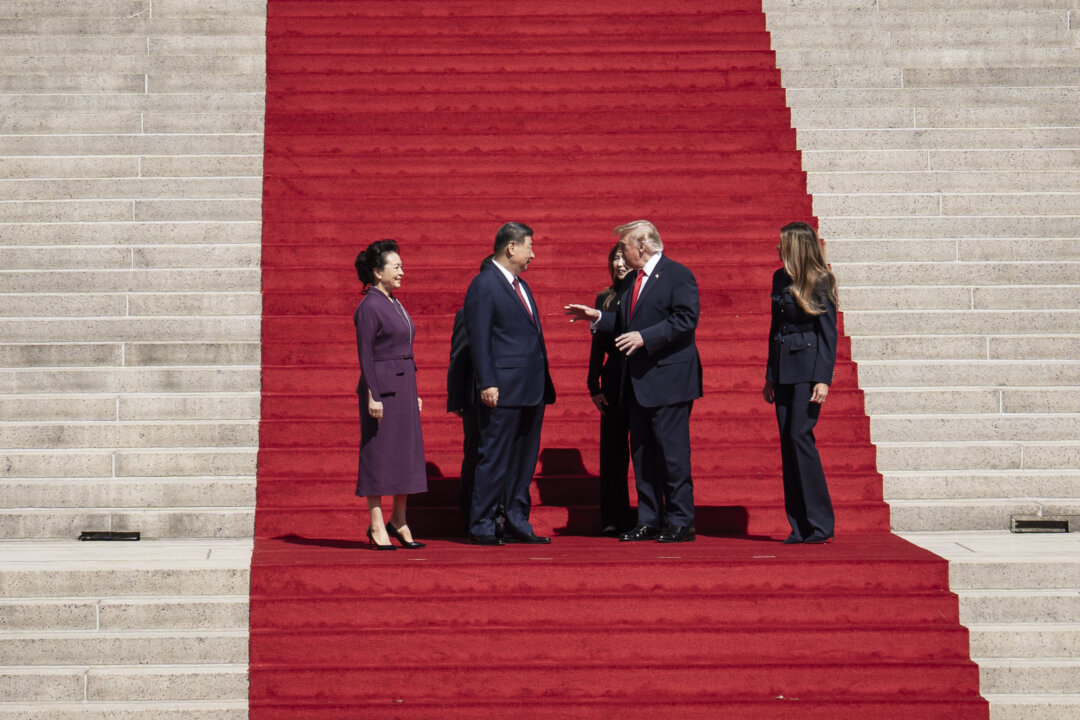
The second meeting between President Donald Trump and Chinese leader Xi Jinping produced no fundamental shift in the strategic competition between Washington and Beijing or in U.S. policy toward Taiwan, experts at a Taiwan forum said.
They argued at the Sept. 29 event that differences between the two powers remain too deep for Taiwan to become a bargaining chip.
The assessment came at an international seminar on the geopolitical and economic implications of the Trump–Xi meeting, hosted by the nonprofit Taiwan Inspirational Association (TIA).
Tan Yao-Nan, chairman of the INP Consulting Group, moderated the discussion. Participants included Chen Fang-Yu, an associate professor of political science at Soochow University; Lai Yi-Chung, a consultant to the TaiwanThinktank; and Lai Jung-Wei, executive director of TIA.
Tan said the underlying framework of U.S.–China strategic competition and Washington’s longstanding “One China” policy had not fundamentally changed, emphasizing peace and stability across the Taiwan Strait and opposing coercion.
The White House’s account of Xi’s September visit did not mention Taiwan, while China’s account of the leaders’ Sept. 24 meeting did. The White House said the two leaders discussed trade, investment, and several geopolitical issues, while Taiwan was absent from its fact sheet.
U.S. policy toward Taiwan has also continued to be described by officials and lawmakers as unchanged. The Taiwan Relations Act remains U.S. law, and congressional efforts in 2026 have included legislation seeking to codify the Six Assurances.
Chen said the lack of a major negative development for Taiwan following the summit was itself significant.
“For Taiwan, no news is good news,” Chen said.
He attributed the outcome in part to close and continuous communication between Taiwan’s diplomatic and national security teams and the United States ahead of the meeting.
He pointed to developments including coast guard cooperation and joint defense exercises as evidence that practical U.S.–Taiwan cooperation has continued to develop.

U.S. President Donald Trump, Chinese leader Xi Jinping, and another official during a visit to the U.S. National Archives in Washington on Sept. 25, 2026. Madalina Kilroy/The Epoch Times
The summit itself produced few major breakthroughs on the issues separating Washington and Beijing. The White House said the two countries reached agreements involving trade and investment, including tariff treatment for certain goods, coal purchases, and mechanisms for discussions on investment and emerging technologies.
Lai Yi-Chung said the summit’s symbolic significance outweighed its substantive achievements. Comparing the U.S. fact sheet with China’s account of the meeting, he said the two sides remained far apart on issues including nuclear arms control, rare-earth exports, military crisis communications, and the role of bilateral trade mechanisms.
Lai said Trump made no commitment to Beijing to change U.S. policy toward Taiwan.
He also pointed to diplomatic activity involving other U.S. allies before the summit, saying statements by the United States, Japan, and South Korea, followed by positions from the UK, France, Germany, Poland, New Zealand, and Australia, demonstrated continued international attention to security in the Taiwan Strait.
Taiwan’s Mainland Affairs Council similarly said after the summit that U.S.–China strategic competition and Washington’s Taiwan policy had not fundamentally changed. Deputy Minister Shen Yu-chung said Beijing had sought to incorporate the Taiwan issue into a broader framework of U.S.–China “constructive strategic stability,” but Washington had not accepted that framework.
Limits to US-China Trade-Offs
Lai Jung-Wei said future U.S.–China negotiations could be assessed by distinguishing between issues that are readily negotiable and those that touch the two countries’ underlying strategic interests.
He divided potential agreements into three categories—consumer goods and trade, issues involving strategic or military-civilian dual-use technologies, and matters tied to the two countries’ underlying national power. He described the third category as effectively non-negotiable, placing Taiwan and advanced AI chips in it.
He said future Trump–Xi meetings, including expected encounters at the APEC summit in Shenzhen in November and the G20 summit in Miami in December, could be assessed partly by whether the range of negotiable issues between the two countries changes.
Lai Jung-Wei also argued that domestic political considerations were relevant to the economic agreements reached by the two countries. He said China’s purchases of U.S. commodities could affect U.S. inflation and the upcoming midterm elections, while Beijing also had domestic reasons to seek stability ahead of the Chinese Communist Party’s upcoming Fifth Plenum later this month.
He further argued that Beijing distinguishes among the Trump administration, Republicans and Democrats, Congress, U.S. businesses, and different groups of voters in its efforts to influence American opinion.
The speakers also warned about competing narratives surrounding the U.S.–Taiwan relationship.
Chen said Taiwan should avoid letting Beijing define the historical and legal framework around Taiwan’s status and instead emphasize its role as a U.S. partner in technology and other areas.

U.S. President Donald Trump; First Lady Melania Trump; Chinese leader Xi Jinping; and Xi’s wife, Peng Liyuan, during a visit to the U.S. National Archives in Washington on Sept. 25, 2026. Madalina Kilroy/The Epoch Times
The speakers also discussed what they described as Beijing’s efforts to sow doubt about U.S.–Taiwan relations.
Tan said Taiwan should expect continued messaging questioning whether the United States is a reliable partner or whether Taiwan can defend itself.
“That’s why narratives and discourse are important,” Tan said.
The forum’s participants ultimately argued that the Trump–Xi meeting should be viewed within the broader structure of U.S.–China relations rather than as a standalone turning point. While Washington and Beijing reached agreements on several economic and diplomatic matters, official statements indicate that differences remain over Taiwan and other strategic issues.
Tan said Taiwan’s response should focus on strengthening its economic resilience, defense capabilities, role in critical supply chains, and democratic institutions, while continuing to develop areas of mutual strategic and economic interest with the United States.
Zhong Yuan contributed to this report.





Trump Says He Discussed China’s Political Prisoners With Xi at Summit
President Donald Trump has said he discussed with Chinese leader Xi Jinping...

Washington Urges Europe to Release Emergency Diesel Reserves Amid High Prices
Fuel tanks with diesel are seen at the InfraLeuna industrial site, in...
US Tightens Cuba Sanctions to Counter Regime Repression
The Treasury’s Office of Foreign Assets Control on Tuesday released new Cuba...
Chinese Cellphone Users Complain of Sudden Service Suspensions Under Anti-Fraud Measures
Chinese cellphone users are complaining that anti-fraud measures have left them without...