Liberals Curtail Debate on Assisted‑Dying Bill Amid Conservative Calls for More Study
 Jennifer CowanUpdated 5 days Ago3 Mins read
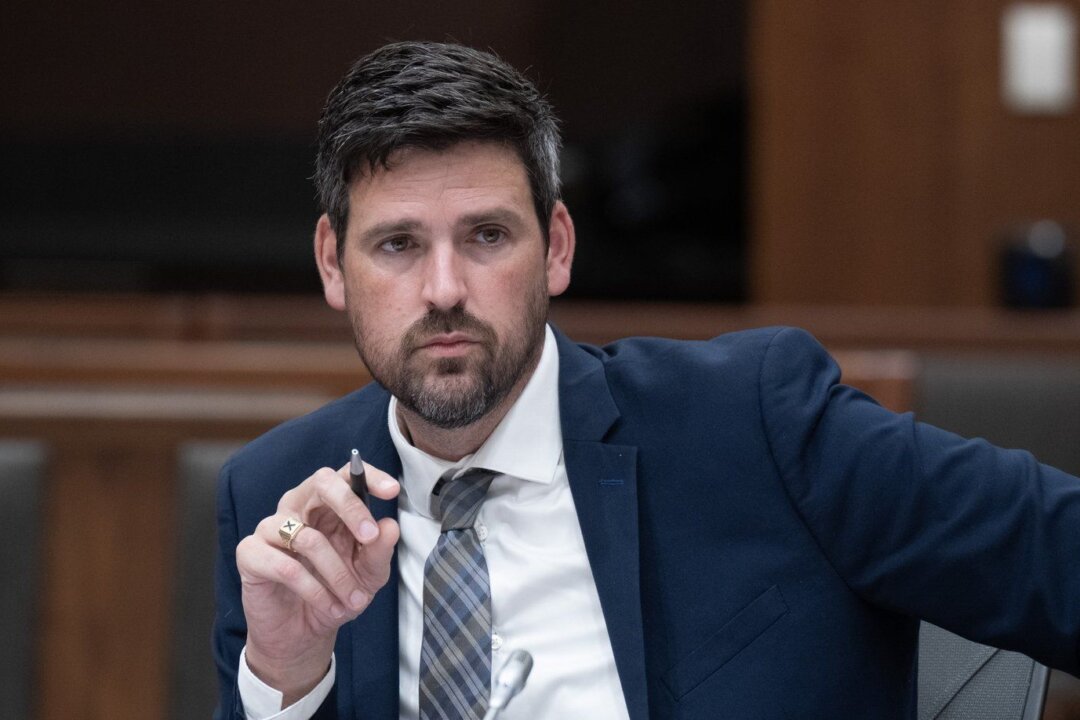
The Liberal government has restricted debate on proposed amendments to Canada’s medical assistance in dying law, as Opposition MPs press for further study.
Bill C-41, known as the Medical Assistance in Dying Safeguards Act, was introduced in the House of Commons on Oct. 27. It proposes two significant changes to Canada’s medical assistance in dying (MAID) framework: amending the Criminal Code to permit advance requests for MAID and stopping the planned expansion of eligibility to people whose sole underlying condition is a mental illness.
The bill must pass both the House of Commons and the Senate before March 17, when the current law would extend access to MAID for people whose only underlying condition is a mental illness.
MPs approved a motion from Justice Minister Sean Fraser on Nov. 16 to allow just one more day of debate at second reading, despite Opposition calls for additional time to examine the bill. Second-reading debates were held on Oct. 30, Nov. 4, and Nov. 16. The bill passed second reading on Nov. 17. It now will proceed to committee for further study, before facing a third vote in the House of Commons.
Conservatives say they support the proposal to prevent people whose sole condition is a mental illness from accessing MAID. They have also urged the government to split the bill, allowing parliamentarians more time to examine advance requests.
Conservative MP Tamara Jansen accused the Liberals of withholding the information MPs need to effectively scrutinize the bill.
“The Liberals had all summer, and now it has been nearly three weeks since Bill C-41 was introduced,” Jansen said in the House of Commons on Nov. 16. “We still have not seen the government’s own analysis of how this bill could affect Canadians’ charter rights, and yet they are already shutting down debate. … Surely, if there was ever a bill that deserves careful scrutiny, this is it.”
Bloc Québécois MP Martin Champoux accused the government of attempting to “muzzle” the House of Commons and silence MPs who are “genuinely interested in having their say” on a “delicate and divisive” issue.
“I am at a loss for words to describe how I feel about the government employing this manoeuvre, especially on such a sensitive topic,” Champoux said. “I understand that the government wants to move forward quickly, and I understand that it wants to avoid the possibility of ideological filibustering by the Conservatives, but a public conversation is called for.”
Fraser replied that MPs have had “ample opportunity” to debate the issue in Parliament and as part of a joint study conducted by several parliamentary committees. He said the debate would continue while the committee studies the bill.
Fraser also told the House that the motivation to move forward stems from a “strong desire” to give agency to those losing capacity to make decisions for themselves. He said parliament must pass the law “expeditiously” to meet the Criminal Code deadline and prevent mental illness, as the sole underlying medical condition, from automatically becoming a legal basis for MAID.
The government has delayed several times the date on which mental illness could become grounds for an assisted death and referred the matter to a special parliamentary committee. The committee’s June conclusion was that MAID should remain indefinitely unavailable to people suffering solely from a mental illness.
MAID Requirements
When MAID was initially introduced in Canada in 2016, it was strictly for those whose natural deaths were “reasonably foreseeable.” The legislation was revised in 2021 to include those enduring “intolerable” suffering from an irreversible illness or disability.
An advance request would let someone with a degenerative illness, such as dementia or ALS, ask for assisted death to take place after they lose the capacity to consent.
The government framed the decision to receive MAID as a “complex and deeply personal choice.”
“The decision to request MAID must remain theirs, be voluntary, free from external pressure, and remain protected by rigorous safeguards,” the Oct. 27 press release said.
Bill C-41 would amend the Criminal Code to permit advance requests for MAID. Provincial governments would decide whether to honour those requests through their health systems and whether to pass legislation to implement them.
Fraser told reporters last month that he did not know how many provinces would adopt the measure. Quebec is the only province with an advance request system already in place, while Alberta has passed legislation prohibiting advance requests.
Fraser said he had some concern about different rules emerging across the country. However, he told reporters he was “more concerned about extending access without the safeguards in place, including the safeguards that must be legislated by provincial governments.”
The federal bill’s safeguards for advance requests require two independent physicians or nurse practitioners to agree that the person meets the criteria.
The government has also noted that making an advance request would not mean MAID “is immediately or automatically provided later.”
“All eligibility requirements would have to be met, and new rigorous safeguards would need to be followed,” it said in its press release. “A person would have to be experiencing intolerable suffering at the time MAID is provided, even if all the conditions in their advance request have been met.”
Fraser has said he hopes to see the bill pass through the House before the parliamentary sitting ends in December to give the Senate “ample time” to examine the legislation.
The Canadian Press contributed to this report.







Patriotism Is a Virtue We Need to Reclaim
CommentaryIn 1917, as World War I raged, British soldier Wilfred Owen drafted...

Harvard Discovers What Vancouver Island University Had—and Then Abandoned
CommentaryThere is a crisis in Canadian education. Much has been said recently...

LIVE NOW: Paris Champs-Élysées Christmas Lights Switch-On Ceremony with Cate Blanchett
Watch live from Paris at 12:30 p.m. ET on Nov. 22 as...

America in Brief
Suspect Guilty of Palisades FireThe federal arson suspect accused of igniting a...