Saturday Class – Making the Next 24 Months the ‘Age of Hamilton’ – November 21, 2026
 Robert IngrahamUpdated 37 minutes Ago3 Mins read
Saturday Class
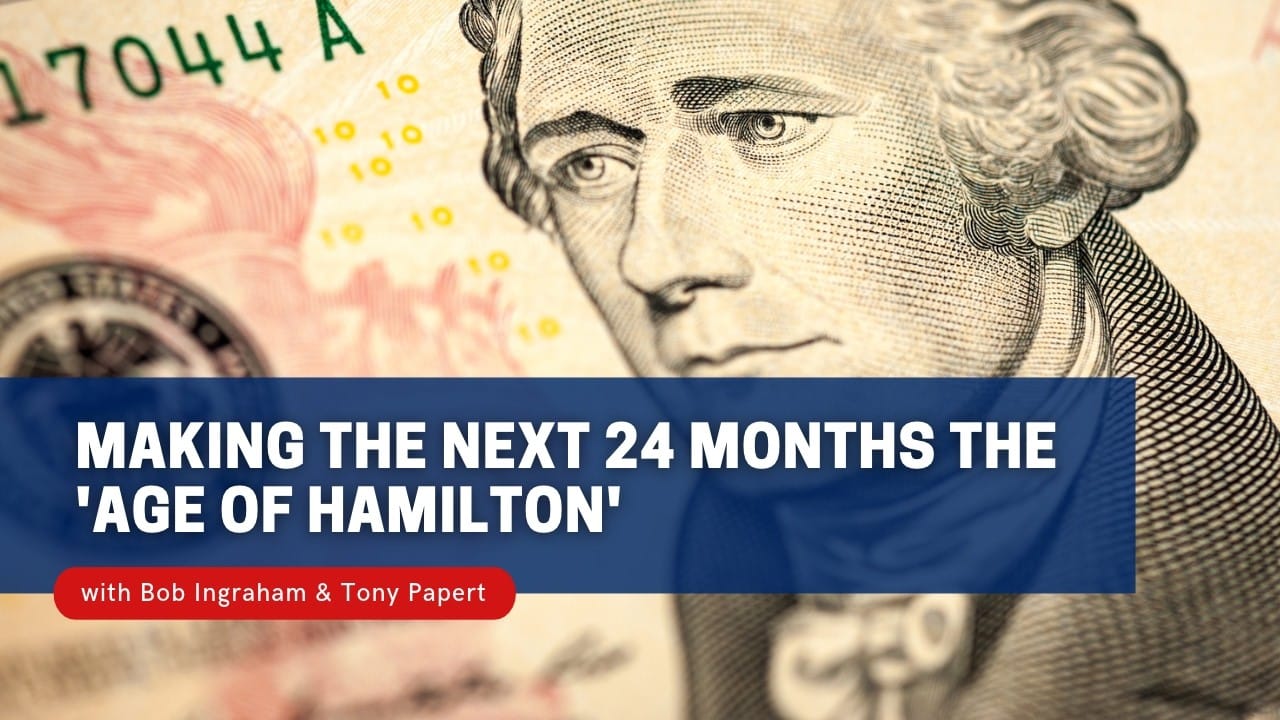
Tariffs protect, but they don’t build. Bob Ingraham walks through Hamilton’s Report on Manufactures and the half of the American System most people miss: bounties, premiums, and a national development board.

Every week, Promethean Action holds a Saturday Class — a deep dive into the ideas, history, and strategic thinking that the mainstream won’t touch.
We’d love for you to join us live. Sign up here and we’ll send you class details every week.
📚
Get one of Bob’s books free. Bob Ingraham writes regularly on his Substack. Yearly and founding paid subscribers get one of his 12 books free, your choice.
Tariffs Are Only Half the Plan
Hamilton didn’t just want to protect American industry. He wanted the government to help build it.
In this week’s Saturday Class, Bob Ingraham, with host Tony Papert, took up Alexander Hamilton’s Report on Manufactures, issued in December 1791. This is not a history presentation, Bob says. It is about the fight we are in right now.
We have had decades of offshoring, green policies that sabotaged American science, technology, and energy production, and a financial system rooted in speculation and gambling. The productive power of the American economy has been almost destroyed. At the same time, President Trump and his allies are launching the greatest revival of American manufacturing in decades, reviving nuclear energy, and, with Elon Musk, preparing for America’s return to the moon.
What we are witnessing, Bob says, “can only be described as a Hamiltonian impulse.” It is not precisely what Hamilton did. But the direction, the intention, and the axioms are unmistakable.
Where Wealth Actually Lives
Bob starts with a short quote from Hamilton’s Report on a National Bank:
The tendency of the national bank is to increase public and private credit. Industry is increased, commodities are multiplied, agriculture and manufactures flourish and herein consists the true wealth and prosperity of the state.
— Alexander Hamilton
True wealth is not the stock market, not GDP statistics, and not the accumulation of monetary wealth. It is the upward progress of industry, agriculture, and manufacturing, and the scientific breakthroughs that make that progress possible.
The two reports are companion pieces. The bank report describes a sovereign credit system. The manufactures report describes what that credit is for. Hamilton’s Bank of the United States was not like today’s Federal Reserve. It did not set monetary policy or print money. It was a commercial bank whose purpose was to make loans to agriculture, manufacturing, shipbuilding, and infrastructure.
“That Is Not the American System”
This is where Bob issues his warning. Many people look at tariffs, infrastructure, and a national credit system and call that three-part recipe the American System.
That is not the American system. It’s part of the American system.
— Bob Ingraham
Those are essential components. If you stop there, you miss what Hamilton was actually driving at: an active, extremely energetic role for government in promoting economic and scientific progress.
Tariffs are good and necessary. They run from Hamilton through McKinley, and Donald Trump has revived them. But tariffs are passive. They protect the nation from foreign imports and create space for new manufacturing. They do not actively encourage technological progress. That is where bounties and premiums come in.
Hamilton proposed that a sizable chunk of tariff revenue be set aside in three streams.
- Bounties were direct payments to entrepreneurs building useful new enterprises, often funded by a duty on the foreign version of the same product. They were not loans, and they were not corporate welfare. Once an industry could sustain itself, the bounties were to be discontinued.
- Premiums went not to plant owners but to individuals making scientific and technological breakthroughs, honorary and lucrative, to stimulate general effort.
- The third stream would fund a permanent national development board of at least three commissioners, officers of the government, to promote the arts, agriculture, manufactures, and commerce.
Bob insists this is not a three-point plan. It is a conception. For Hamilton, ever-increasing national productivity is axiomatic, and the full power of the sovereign government, led by the presidency, is brought to bear to secure it.
The 24-Month Window
This is not primarily a history lesson. Regardless of what happens in 2028, and he hopes no one is already fixating on that election, we’ve got 24 months. He points to the President’s recent White House press conference with Vance, Rubio, Stephen Miller, and Scott Bessent. If you look at what Trump is doing, Bob argues, we can change the future of the United States in the next 24 months. This is a Hamiltonian moment. That is the job today.
His charge is simple: study Hamilton’s Report on Manufactures.
It’s not a history lesson. It’s a pathway to the future.
— Bob Ingraham
PS: Want to go deeper? Subscribe to Bob’s Substack. Yearly and founding paid subscribers get one of his 12 books free.
Authors

Author, historian, political organizer. Published books on American history, Dante, the global drug trade, the Anglo-Dutch Empire and National Banking. Former Editor at Executive Intelligence Review.
View articles

Founding member of the LaRouche movement in the 1960s. Former editor of LaRouche’s writings and EIR magazine. Regular host of our Saturday class series.
View articles





🔥 The Promethean Weekly · November 16–22, 2026
🔥 The Promethean WeeklyNovember 16–22, 2026 · Your week behind + the...

Tanker incident “involving military forces” reported in Strait of Hormuz — Newsguard
Amid conflicting reports that an Iranian tanker departed Iran’s Kharg Island to...

Russell Brand’s wife vows to abide by prison rules after video controversy — Newsguard
Laura Gallacher says in new video on YouTube she will continue Sunday...
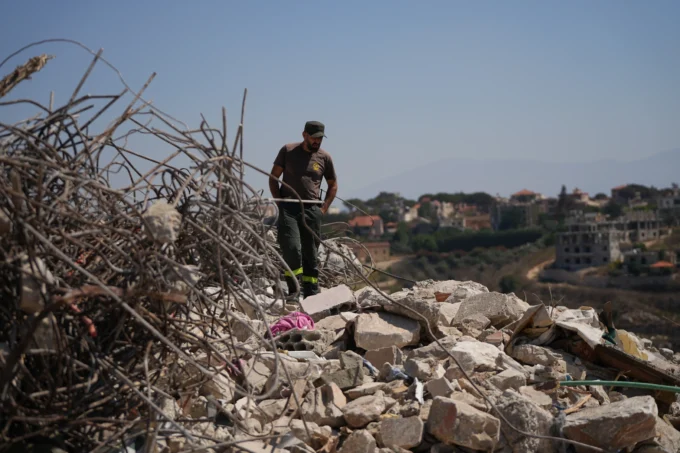
Lebanese villagers return to wrecked homes as the Israeli army pulls back — Newsguard
In a pilot project in a village in southern Lebanon, Israeli forces...