After warnings, Canada kept importing Russian oil into 2026
 Charlotte JamesUpdated 2 hours Ago4 Mins read
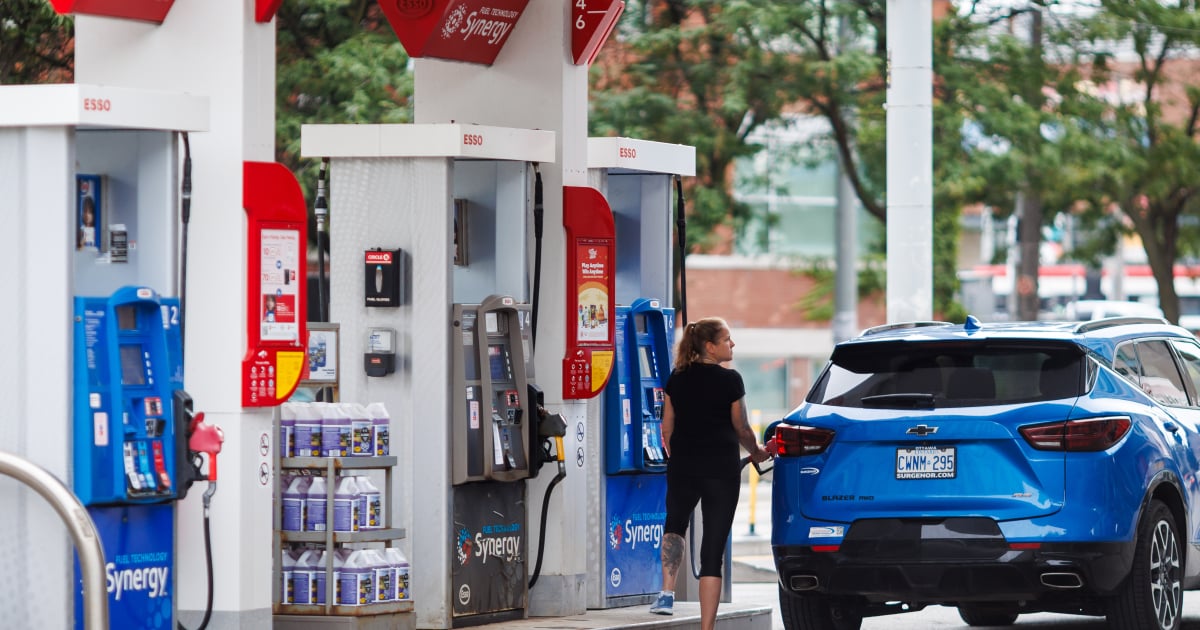
On Feb. 19, a tanker transporting more than 41,000 tonnes of petroleum products left Jamnagar, India’s largest oil refinery. It arrived two months later in Point Tupper, a small industrial port on Nova Scotia’s Cape Breton Island, on April 14. Worth more than $35 million, the cargo slipped quietly into Canada’s fuel supply system like any other shipment.
But new analysis suggests it wasn’t like other shipments. As much as 10 per cent of the cargo that arrived on Nova Scotia’s shores that morning — more than $3 million worth — can be traced back to Russian crude.
In the three months preceding the tanker’s departure, Russian crude made up an average of 10.7 per cent of Jamnagar’s crude intake, according to data provided to Canada’s National Observer by the Centre for Research on Energy and Clean Air (CREA). Applying that ratio to the April shipment, CREA estimates around 4,450 tonnes of it — worth roughly $3.9 million — can be traced back to Russian oil.
The analysis provides the first confirmation that the loophole first identified in a CBC investigation in early 2025 is still operating today, enabling the movement of Russian-linked fuel into Canada via refining in a third country.
And Point Tupper’s tanker is far from an outlier.
New Canada-specific analysis conducted by CREA and shared with Canada’s National Observer found that two refineries – Jamnagar in India and the SOCAR-owned STAR refinery in Türkiye – exported 1.37 million tonnes (valued at $1.64 billion) of petroleum products to Canada between January 2022 and June 2026. Products contained in the cargoes included jet fuel, naphtha and blending components.
Nearly a third of that value was attributable to Russian crude, amounting to around €317 million, according to CREA’s estimate, which was calculated against each refinery’s reliance on Russian feedstock at the time of export.
“It is shocking that, more than a year after this loophole was exposed and covered in Canadian media, Canada continues to import petroleum products from refineries heavily reliant on Russian crude,” Isaac Levi, Europe-Russia policy & energy analysis team lead at CREA, told Canada’s National Observer.
“Their purchases sustain demand for Russian oil, boosting Kremlin revenues that finance full-scale invasion of Ukraine and undermining Canada’s support for Kyiv.”
A loophole in the ban
In the aftermath of Russia’s full-scale invasion of Ukraine in 2022, Canada moved to ban imports of Russian crude and certain petroleum products.
Canadian rules ban explicitly listed petroleum products, but not products refined from Russian crude in a third country — a mechanism campaigners and researchers call the “refining loophole.” To use that loophole, Russian crude is sold to a refinery in a country like India, transformed into a new petroleum product and exported to a country that, on paper, bans Russian oil.
In January, in an effort to close this loophole, the European Union introduced a prohibition on third-country petroleum products originating from Russian crude, requiring importers to provide evidence of the crude oil’s origin. The United Kingdom introduced a similar prohibition in May, although temporary licensing arrangements remain in place for some diesel and jet-fuel imports as the measure is phased in.

Canada has introduced no such equivalent third-country refining prohibition.
Dr. Svitlana Romanko, founder and executive director of Ukrainian climate advocacy group Razom We Stand, warned that “sanctions on paper mean nothing if the oil itself is simply laundered through a third refinery.”
For Canada, she said, that means a continued flow of money toward the war: “Every barrel of Russian crude that gets refined in India or Turkey and re-labelled before it reaches a Canadian port is a barrel that still puts money in the Kremlin’s war chest.”
What can — and cannot — be traced
Vessel-tracking data can accurately track crude entering a refinery and petroleum products leaving it, but what happens inside — storage, blending and the movement of feedstock through refinery units — remains opaque and cannot be precisely traced. CREA is therefore careful not to claim with certainty that 10.7 per cent of the cargo that arrived in Point Tupper in April was Russian.
Jamnagar’s Russian intake fluctuated sharply around the time of the shipment: Russian crude accounted for a significant 33 per cent of its intake in December, fell to zero in January and reached roughly 12 per cent again in February, according to CREA. The 10.7 per cent estimate therefore derives from the three-month average. The true amount could be higher or lower.
Reliance Industries, which owns the Jamnagar refinery, has previously claimed it is capable of segregating products made from different crude supplies. However, Levi stated he is unaware of independent verification of that capability by authorities in sanctioning jurisdictions. Reliance Industries did not respond to a request for comment.

CREA’s Canadian export data also confirms that the trade continued long after the loophole received widespread attention in early 2025, with subsequent exports from Jamnagar and STAR refineries appearing throughout 2025, before the latest identified cargo departed in February 2026.
STAR, which CREA has previously found was highly reliant on Russian crude throughout 2025, has not sent another shipment to Canada since August last year. However, Levi cautioned against reading too much into a gap that has remained historically sporadic: the refinery has exported to Canada just three times within the past five years.
The Canadian Border Services Agency told Canada’s National Observer that it helps administer the Special Economic Measures Act at the border and can detain shipments pending consultation with Global Affairs Canada. But the agency declined to say whether any shipments matching this pattern have been flagged, citing Section 107 of the Customs Act, which prohibits disclosing information that could affect ongoing investigations.
“The CBSA continues to work diligently with our intelligence and enforcement partners in an effort to maintain sanctions vigilance,” said spokesperson Kelly Cameron.
A Global Affairs Canada spokesperson pointed to Canada’s broader sanctions record — including the June 12, 2026 listing of seven individuals and 34 entities tied to Russia’s energy and defence sectors, the March 2026 sanctioning of 200 additional shadow fleet vessels and a February 2026 reduction of the price cap on Russian crude to US$44.10 per barrel.
None of these measures targets petroleum products refined from Russian crude in a third country.
“Canada remains focused on reducing Russia’s energy revenues, which are used to finance its unjustified war against Ukraine,” a spokesperson said, adding that Canada “regularly strengthens its sanctions regime to ensure it remains effective, targeted, and responsive to developments on the ground.”
For Romanko, silence is not an option. Shipments like the one that arrived on Nova Scotia’s shores in April may seem like just another commercial transaction, but Romanko says they carry human consequences.
“This loophole isn’t a technicality; it’s a lifeline for Russia’s war on Ukraine, and every day it stays open is a day Ukrainians are paying the price with their lives,” she explained.
Yet, she maintains that there is a clear way for Canada to demonstrate its solidarity.
“To stand with Ukraine,” she said, “Canada must ensure it is not an indirect destination for oil products derived from Russian crude that it has already sanctioned.”




Canada unveils more sign-based retaliation against the U.S.
A sign on display during a B.C. Premier David Eby news conference...

Afternoon front page: The importance of teaching Canadian history; is Trump escalating the trade war?; and more
Wounded Canadians take cover behind a pillbox during the Battle of Passchendaele...

Cannabis-smoking Ontario stabber gets day passes despite ‘significant threat’
Article contentGhawar had been treated by a psychiatrist for anxiety and depression...
AI minister says solutions exist after Anthropic researcher quits over safety fears
The federal artificial intelligence minister said the government is closely following the...